Collaboration in Workshops
Collaboration in Upcoming Workshops
I work between two worlds, an academic one and clinical one .
As a clinical and reference librarian , I find that even though the information needs of the patrons within each of these environments is different, they are also very similar.
Our patrons all need to know first what it is that they are in need of and then secondly, they need to learn how to find it. That is where the work of both our academic and hospital librarians fits in.
I am fortunate to have a team of colleague librarians who work along with me to provide tools and trainings to help meet these needs.
I wanted to take this opportunity to share a few upcoming workshops that are being offered by our library which help both our clinical and academic library patrons.
These workshops are open and free to all to attend, so please enjoy. See the link below to join.
Happy Learning !
10/24, 1:30-2:30PM: Investigating the use of AI tools in Education
10/25, 10-10:30AM: LibKey Nomad: Simplify Access to Library Content
10/25, 11-11:15AM: Embedding Library Research Guides into Canvas
10/30, 11AM-12PM: Introduction to Managing Research Data
10/30, 3:30-4:30PM: Introduction to RefWorks Citation Manager
As librarians, we advocate for intellectual freedom every day, ensuring access to a full spectrum of ideas, opinions, and knowledge. On Saturday, October 19 we’ll join libraries across the county for the Freedom to Read Day of Action to draw attention toward fighting book censorship.
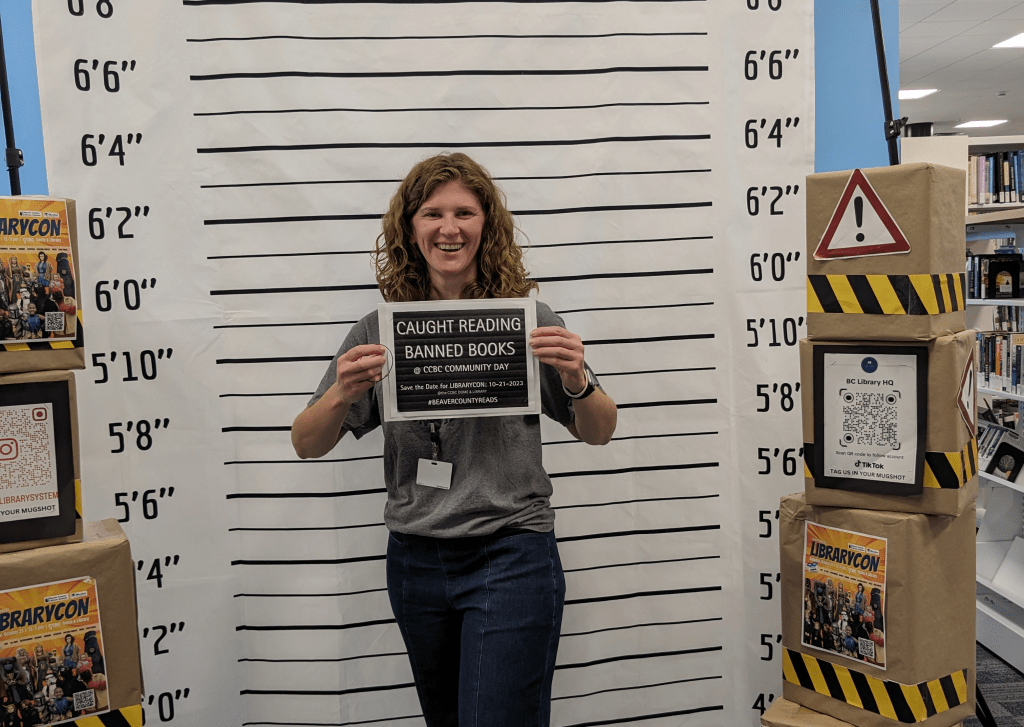
At my library, we marked (celebrate doesn’t feel quite right!) banned book week, which took place September 22-28 this year, with a curated banned books display and a “Got Caught Reading” mugshot photo opportunity. These setups consistently generate conversations among our users, with many expressing frustration and anger about censorship, which builds awareness around the issue.
However, I find myself wondering how far these efforts aid actual progress or if we’re just engaging the same voices in an echo chamber. Are we creating any sort of lasting impression or fostering change? This feeling grows when I hear from colleagues about complaints, sometimes from patrons and sometimes, even, from staff, about perceived over-representation of diverse voices. This pushback is disheartening, especially when it comes from educators and library workers.
Fear is a fuel but can be countered with information which is exactly what we are setup to provide. We encourage our users to read challenged books, attend meetings, write letters of support, and engage with their communities. ALA’s Office for Intellectual Freedom provides an abundance of resources for fighting book bans. Still, I sometimes question how much difference this makes. In many cases, no amount of outreach or information will sway those who are firmly opposed to certain books or ideas. People are entitled to their opinions, just as we are to ours. However, accepting that reality doesn’t make the resistance any less frustrating.
This Saturday’s 2024 Beaver County LibraryCon, our library’s partnership with the Beaver County Library System, coincides with the “Freedom to Read Day of Action”. It’s a time when we emphasize the value of intellectual freedom as the event invites a diverse group of participants. Last year’s theme of “Let Freedom Read” led to positivity and high engagement and this year’s theme, “Get Into Character”, promises to do the same. I’m hopeful the energy and enthusiasm at the event will leave me reinvigorated, reminding me that, despite challenge, our efforts do make a difference. If you’re in the area, we hope to see you here!
New Semester, New Title, New Job, Same Library
It’s the second full week of the semester and like most, I have hit the ground running. However, this year, I have no idea what I’m running towards, perhaps to the end of October when I see a stop in my instructional and orientation sessions. Changes made during restructuring have now been implemented and shared with the public and those changes mean I am now doing the majority of instruction for our health sciences campus. I knew I was taking on more instruction but it did not hit until I looked at numbers for January-June and July-December. In the next week, I will complete the same amount of instruction but the majority taking place over 3 weeks.
Over the summer we migrated from a liaison to a functional model. This has not been the easiest transition and it often feels like I am starting all over (after starting in March 2023). Under this functional model, I am on the Student Success & Instruction side and now a Student Success & Instruction Librarian. We have domain areas of focus and mine is in health sciences. It’s a weird place to be in considering a lot of health sciences is research focused but I’m willing to give it a go. There are also several classes I am taking a new approach to teaching this semester. When I go to upper-level undergraduate and graduate classes that focus more on research, I will be teaching those sessions and will meet with students one-on-one after class for basic follow-up post-class. If a student needs more of a full-on research consultation after the instruction session, they will meet with the research librarian, who is based out of the health sciences. We have not attempted this type of structure before but will be testing it out in the next few weeks. I believe it will be successful but perhaps it may be a little confusing.
I am tired of and on the verge of being overwhelmed. But I am saying, no to any more sessions before mid-October. I’m doing this for my sanity but also to set boundaries and expectations for the future. It’s also important for me to do this so that I can be engaged in other aspects of work beyond instruction. Instruction is 50% of my job now, but there are still other areas of librarianship that I want to take part in, as well as become more involved in committees both on campus and on a professional level.
All that being said, the one thing that remains the same is the collaborative and supportive work environment at the library. Perhaps it’s the fact everyone has had to adapt together, try new things, and experience growing pains helped to foster this closeness. Before all of these changes, everyone for the most part is supportive and willing to help when needing an ear or someone to review materials. While it looks like a completely different library from the outside, this has not changed. I can send a message or walk into the office and dissect classes and problems just like before. And all things considered, enjoying my co-workers has made a lot of these changes a lot easier.
PaLRaP Submission Deadline Extension
Pennsylvania Libraries: Research & Practice (PaLRaP.org) is accepting submissions for research, practice, feature, and commentary articles as well as news items for the Fall 2024 issue (vol. 12, no. 2).
Research, practice, feature, and commentary manuscripts are welcomed at any time; however, for full consideration for the fall issue, please submit your manuscripts by September 7, 2024.
News item submissions (staff changes, awards/recognitions, events, initiatives, etc. happening in PA libraries that may be of interest to other libraries) are also welcome at any time. However, for full consideration for the spring issue, please submit your news items here by October 1, 2024.
For more information about PaLRaP, including submission guidelines and section policies, visit http://www.palrap.org.
PaLRaP is a peer-reviewed, online, open access publication of the Pennsylvania Library Association’s College & Research Division. This journal provides an opportunity for librarians in Pennsylvania to share their knowledge and experience with practicing librarians across the Commonwealth and beyond. It includes articles from all areas of librarianship, with a special focus on activities at or of interest to Pennsylvania’s academic libraries.
Published biannually: May and November
Co-Editors: Kate Cummings & Roseanne Perkins
Peer reviewers: Members of the Pennsylvania library community
#palrap
PaLRaP Call for Submissions
Pennsylvania Libraries: Research & Practice (PaLRaP.org) is accepting submissions for research, practice, feature, and commentary articles as well as news items for the Fall 2024 issue (vol. 12, no. 2).
Research, practice, feature, and commentary manuscripts are welcomed at any time; however, for full consideration for the fall issue, please submit your manuscripts by August 31, 2024.
News item submissions (staff changes, awards/recognitions, events, initiatives, etc. happening in PA libraries that may be of interest to other libraries) are also welcome at any time. However, for full consideration for the spring issue, please submit your news items here by October 1, 2024.
For more information about PaLRaP, including submission guidelines and section policies, visit http://www.palrap.org.
PaLRaP is a peer-reviewed, online, open access publication of the Pennsylvania Library Association’s College & Research Division. This journal provides an opportunity for librarians in Pennsylvania to share their knowledge and experience with practicing librarians across the Commonwealth and beyond. It includes articles from all areas of librarianship, with a special focus on activities at or of interest to Pennsylvania’s academic libraries.
Published biannually: May and November
Co-Editors: Kate Cummings & Roseanne Perkins
Peer reviewers: Members of the Pennsylvania library community
#palrap


 Adam Balcziunas
 Alex K.
 Alexandrea Glenn
 Andrea Pritt
 aprilnkelley
 Ashley Purvis
 Bethann Rea
 blj13
blj13 Brendan Johnson
 Amanda Boyer
 Bret Stiffler
 Bonnie Powers
 Christopher Lemery
 clarewithers
 clblibrarian
 Kelly Clever
 Charlotte M. Johnson
 colemanluzerne
 CRD of PaLA
 crdvirtualjournalclub
 cre5314
 csgarth
 Erin B.
 danajkerrigancv
 denisewetzel1
 Darren G. Poley
 elm43
elm43 James D'Annibale
 Annie Jansen
 Jill Hallam-Miller
 jennifercribbs
 Jenn Monnin
 Jen Hasse
 Jessica Showalter
 johnmeier1
 Kelly Safin
 Kim Karim
 Kristen Seikaly
 Kayla Van Osten
 Cecelia Lasley
 librarianjsmith
 Linda Neyer
 mabogino1
 Matthew McNelis
 Meg Massey
 Maggie Savidakis-Dunn
 Rebecca
 miskatoniclibrarian
 Maureen Bentz
 Michele G. Anfuso
 Nicole Miyashiro
 paulmcmonigle
 Rob Sieczkiewicz
 ronlmccoll
 Sam Bardarik
 shannahollich
 smartin592
 Ula Lechtenberg
 It's Academic