CRD is doing something different this year. If you attended the PaLA Annual Conference, at the CRD Luncheon were copies of White Fragility by Robin DiAngelo.
Robin has many videos on YouTube about deconstructing white privilege and discussing the book.

As we announced the luncheon, there was some confusion about the time and date. This discussion will take place on December 9 at 12pm.
If you were unable to pick up a copy, there are plenty in PALCI that we can borrow from, or can borrow from each other before the discussion. We do NOT have any more copies to give out at this time.
If someone is familiar with the book and would like to lead the discussion, please let us know.
In the meantime, we have a link here for the Zoom registration, which will be sent out closer to the event. Click here to register for Zoom link.
C&CS Presents: Creating Safe Spaces for Seeking and Creating Help, November 8th at 1pm
C&CS Presents
Creating Safe Spaces for Seeking and Creating Help,
November 8th at 1pm
with
Sabrina Thomas, Kacy Lovelace, Michelle Alford and Leah Tolliver
Link to Zoom session registration
Our students and library users face many mental wellness challenges. Librarians are accustomed to pointing the way to the counseling center. What if we could do more to help students access resources and help? In this webinar we will discuss the creation of Marshall University Libraries Mental Health Initiative. With very little funding, our team creatively found unique ways to engage students and connect people to the resources that they need. By utilizing the tools and resources librarians already have at their disposal, we can enhance our university’s culture of kindness and become a welcoming space to all.
Sabrina Thomas is Research and Instruction Librarian for Marshall University.
Kacy Lovelace is a Research and Student Success Librarian for Marshall University.
Michelle Alford is a Library IT Consultant Sr. with 15 years of experience in academic libraries and patron facing services.
Leah Tolliver is the Director of Wellness Programs and the Women’s And Gender Center.


Congratulations, you got the job! Now what?
We all know searching for a job in an academic library can be tough. Competition is tight, interviews are exhausting and the differences between institutions can be dizzying. That’s why it feels so awesome when you finally get that offer! All that hard work preparing presentations and answering mock interview questions has paid off and you can finally relax…until your first day.
After answering all those grilling interview questions, you’re faced with the toughest one of them all: what am I supposed to do now that I got the job?
This reality can often be just as overwhelming as the job search. There’s a lot to try to keep track of but here are a few things to keep in mind as you get started.
Learn names
While you’re easing into your new position, take advantage of the time to begin meeting as many people as you can. Obviously, learning everyone’s names and roles within the library should be a priority but don’t be afraid to meet people outside of the library, especially if you see potential opportunities to collaborate. This may seem like a lot to ask for those who are introverted, but a simple “Hello” and handshake is all you need. If you’re new position comes with academic liaison responsibilities, make sure to go out and meet as many faculty in those departments as possible. And don’t forget to make friends with the administrative assistants!
Familiarize yourself with the library and campus
As you’re meeting as many people as you can, it’s important to learn about all that your library and campus has to offer. What are the different departments of the library and their roles? What are some departments outside the library that have collaborated with your role in the past, or where you could see a collaboration in the future? Chances are your new library has resources and databases you may not be familiar with so it is incredibly important to learn about those databases, as well as other things like the catalog and website, so you are prepared to answer any questions from students and faculty.
Ask questions
Don’t be afraid to ask questions. Lots of questions. Your new supervisor and your new colleagues all understand that you are new and do not know how everything works. Even things that may seem obvious to everyone else may not seem obvious to you. So just ask.
Learn to walk the tightrope
Probably the most difficult thing to do is to walk that tightrope between assimilating into your new library’s culture and implementing new ideas and strategies. The old saying of “It’s better to ask for forgiveness than permission” is often true. If you see an opportunity to improve a service, go for it. After all, you’re there to help students, staff and faculty, right? Many people are happy to have some outside perspective on ways to improve the library.
Just be cognizant of how these changes affect your new coworkers. If they have the potential to drastically change a process or responsibility of one or more of your colleagues, it might be worth your while to include them in the decision-making process. Also be aware of your new library’s financial and personnel resources. Just because your previous institution had the time or money to implement a quick change does not mean your new one can.
In the end, remember that you were hired because of what YOU can bring to the table! No matter how you proceed, you’re going to do great!
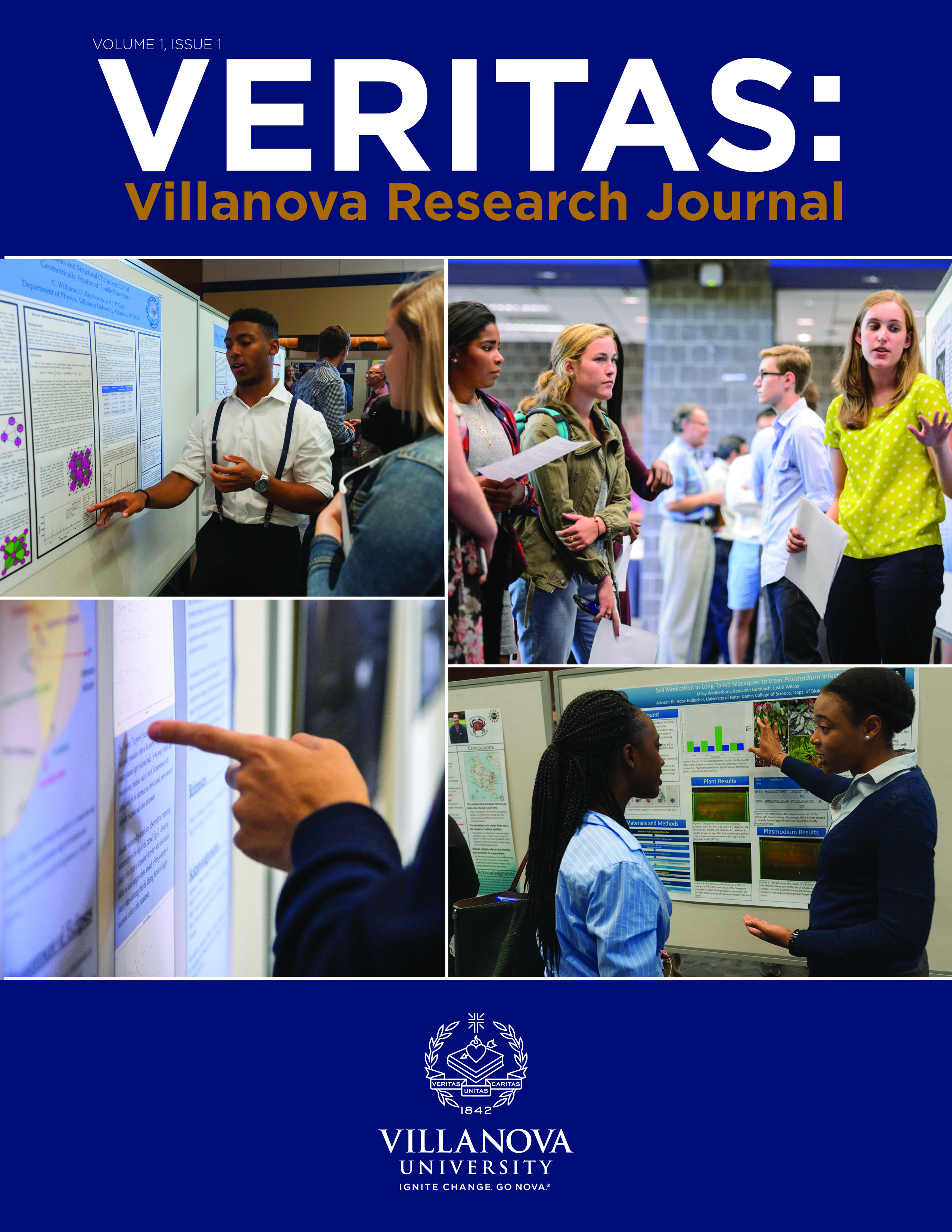 Falvey Memorial Library recently began publishing online a new Open Access journal that highlights the intellectual contributions of student researchers, Veritas: Villanova Research Journal (VVRJ). It is the first peer-reviewed undergraduate research journal at Villanova University. It promotes investigation and discovery, the referee process, and the work of Villanova students and their faculty mentors by publishing scholarly work across all fields of study. VVRJ publishes student research that meets its standards, is authored by Villanova undergraduates or recent graduates, and promotes the pursuit of truth.
Something else that’s very important about VVRJ, pronounced like verge, is that it is a collaborative effort between Villanova’s Center for Research and Fellowships, the Office of the Provost and the Library. Someone from each one of these entities gave brief remarks at the launch event in the Library. Below are the slightly revised substantive thoughts I shared as the library’s representative at the public launch of the journal Sept. 25, 2019.
Why the Library?
Social and cultural programming have been a large part of life in Falvey for many years, so I am not talking about this launch event.
Why is the library the appropriate platform for announcing and promoting the new student-focused Villanova research journal, Veritas?
Well, members of a scholarly community know the value of an academic library in the enterprise of knowledge creation. Learning, as we know, is not limited to the classroom. And we like to think the library is a place where scholars from any discipline feels at home exploring, discovering, collaborating and growing.
The library, however, is not just a space. Although to be sure it is a place to study, discuss ideas and even debate issues. It is perhaps more importantly people. The resources of the library are more than raw materials of latent data ready-to-hand but include the subject specialists and library support staff who assist, coach and encourage scholars and researchers. And scholars and researchers, regardless if they are faculty or students, are indigenous to the world of the academic library, and are not just visitors.
So, why the library? Because it is a clearing in the forest where language builds dwellings for thinkers. In less philosophical terms, it is a locale where every stage of the scholarly communication lifecycle can and should be supported. Especially for those who are learning to communicate as scholars.
What are the stages of scholarly communication? Data collection and analysis is the first stage. Librarians, if they are doing their jobs well, have always aided this initial step of research. Authoring, Peer Review and Publication are the middle stages of scholarly communication in which libraries have increasingly become partners with researchers. Discovery and Dissemination is the stage that closes the cycle of scholarly communication, and there too libraries have traditionally had a role.
Why the library? Because a 21st century academic library at a research institution deploys its spaces, physical and virtual, and resources including people in support of the individuals, such as the students whose work is featured in and represented by the publication of Veritas, who are learning the art of scholarly communication.
C&CS Session: Listening to Community Users in Our Academic Libraries, October 29 at 3pm EST
C&CS presents
Listening to Community Users in our Academic Libraries
with Monica Singh and Celia Emmelhainz
October 29, 2019: 3 pm Eastern (12 noon Pacific)
Register here for the free Zoom link
As academic librarians, we focus first on supporting faculty and student research at our own institutions. Yet many of us also help community patrons who hope to use our print and electronic resources in pursuit of their own academic or passion projects. Serving campus researchers while also supporting the wider community can be mutually rewarding and enriching, yet also requires a balance of time, resources, and library policy. In this webinar, Monica and Celia will discuss highlights from their article, “Listening to Unaffiliated Users of the Academic Library.”
In it, they report on interviews with community users who appreciated campus libraries but also experienced logistical inconveniences and anxieties when asking library staff for help. While librarians at times fear that outreach will result in greater use than they can support, we found that small adjustments to policy and welcoming signals such as posters and brochures could go a long way towards encouraging those who approach our libraries to make the most of them. In addition to sharing some of the challenges we encountered when trying to research a less-identifiable population such as community users, we will also open up the webinar to a broader discussion about integrating and responding to community needs in the academic library.
Learning outcomes for this webinar:
- Librarians can listen to community users as a means of library outreach.
- Librarians can approach research interviews as a listening and reference tool.
- Librarians can engage user narratives to improve academic library services.
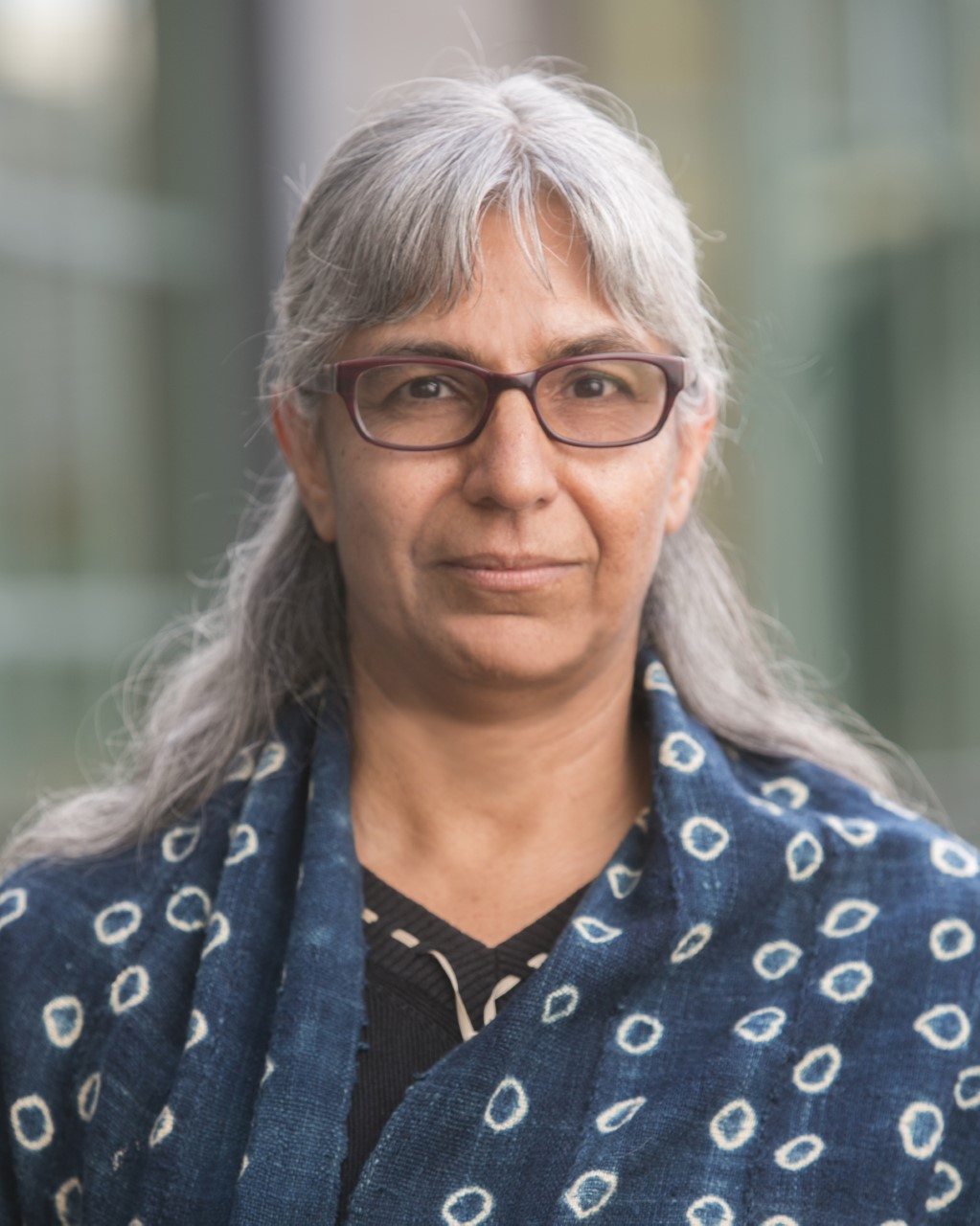
Monica Singh is a business librarian for the Haas School of Business at the University of California, Berkeley. She works with RUSA’s Business Reference and Services Section (BRASS) to publish topic-specific business guides and has written reviews of reference sources for business librarianship journals. Comments welcomed at msingh@berkeley.edu.
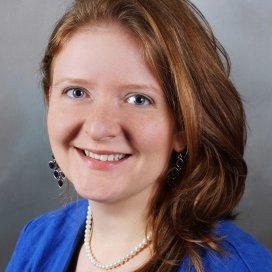
Celia Emmelhainz is the anthropology and qualitative research librarian at the University of California, Berkeley, and was previously the social sciences data librarian at Colby College in Maine. She has led workshops on qualitative data management and on ethnographic assessment in libraries, and enjoys helping other librarians learn to conduct qualitative research. Comments welcome @celiemme on Twitter.


 Adam Balcziunas
 Alex K.
 Alexandrea Glenn
 Andrea Pritt
 aprilnkelley
 Ashley Purvis
 Bethann Rea
 blj13
blj13 Brendan Johnson
 Amanda Boyer
 Bret Stiffler
 Bonnie Powers
 Christopher Lemery
 clarewithers
 clblibrarian
 Kelly Clever
 Charlotte M. Johnson
 colemanluzerne
 CRD of PaLA
 crdvirtualjournalclub
 cre5314
 csgarth
 Erin B.
 danajkerrigancv
 denisewetzel1
 Darren G. Poley
 elm43
elm43 James D'Annibale
 Annie Jansen
 Jill Hallam-Miller
 jennifercribbs
 Jenn Monnin
 Jen Hasse
 Jessica Showalter
 johnmeier1
 Kelly Safin
 Kim Karim
 Kristen Seikaly
 Kayla Van Osten
 Cecelia Lasley
 librarianjsmith
 Linda Neyer
 mabogino1
 Matthew McNelis
 Meg Massey
 Maggie Savidakis-Dunn
 Rebecca
 miskatoniclibrarian
 Maureen Bentz
 Michele G. Anfuso
 Nicole Miyashiro
 paulmcmonigle
 Rob Sieczkiewicz
 ronlmccoll
 Sam Bardarik
 shannahollich
 smartin592
 Ula Lechtenberg
 It's Academic