“In God We Trust, But All Others Must Bring Data”
PaLA CRD Annual Spring Conference Wrap Up
Yesterday (Tuesday May 17th) Dr. Megan Oakleaf led a dynamic workshop dedicated to helping attendees learn how to demonstrate the academic library’s value to the institution. Megan Oakleaf’s keynote presentation was based around her recent ACRL publication titled The Value of Academic Libraries (VAL). While many librarians have doubtlessly skimmed the executive summary to the VAL report, this presentation took attendees beyond the executive summary, helping them to see more clearly what is and is not known about the impact that academic libraries have on their institutions.
Attendees were encouraged to see the value of the library in a larger context, something that special, public, and school libraries have been doing for years. Instead of focusing on what we do, academic librarians should ask themselves what it is that we enable others (students, faculty, and administrators) to do better. For example: Oakleaf says that it is not enough for academic libraries to show that students know their Boolean operators. To continue to remain relevant, we must show our institutions how this knowledge contributes to student retention and success. “This is not business as usual” Oakleaf emphasizes. Instead, “This is a national re-framing of academic library value.” The central questions academic libraries should be asking in the future are: how do we increase our impact & how do we measure that impact?
Two hands on activity sessions were incorporated into Oakleaf’s presentation to help attendees think critically about how library services correlate with institutional goals (such as student enrollment, retention, engagement, faculty teaching, institutional prestige, and so on). Librarians were also encouraged to develop action steps to take back with them to their institution (using Appendix A, the “Academic Library Value Checklist,” from the VAL report as a guide). Megan concluded by encouraging library administrators to talk more about assessment and to model assessment based on institutional goals at their institutions.
Oakleaf also moderated a panel discussion to help librarians learn more about what academic institutions value. Present on this panel were higher education administrators from various institutions, several different academic offices, and also representative from the Middle States Commission on Higher Education. The panel responded to several questions presented by Oakleaf designed to show librarians what institutional drivers administrators were most concerned with, and what the perception of the administration was about how the library contributes to success in these areas. Panelists emphasized that the academic library and librarians were in a great position to look beyond our traditional roles and “infiltrate” into other areas of the institution where we can add value or fill in institutional gaps.
Panelists included:
- Dr. Mary Anne Fedrick, Dean of the College of Education and Human Development, Marywood University, Scranton, PA
- Dr. Ellie Fogarty, Vice President, Middle States Commission on Higher Education, Philadelphia, PA
- Dr. Betty Harper, Director of Student Affairs Research & Assessment, Penn State University, University Park, PA
- Dr. Maureen McCreadie, Dean of Learning Resources, Bucks County Community College, Newtown, PA
- Dr. Jerome Rackoff, Assistant Vice President, Planning & Institutional Research, Bucknell University, Lewisburg, PA
Couldn’t make it? Read Megan’s editorial in the May 2011 issue of College & Research Libraries.
You can also view the Workshop Twitter Feed to see what pieces of information librarians found most valuable during the session itself. The twitter feed also includes links to additional resources which were mentioned by Oakleaf or the panelists during the workshop session.
Follow the Leader
As librarians we collect, manage, teach, encourage, collaborate, motivate, guide, and the list goes on. But how many of us are leaders? Well, simply put, we all are. We lead people to current, accurate, vetted information. We lead committees and task forces. We lead discussions that shape the future of information. But, what does good leadership look like? After thinking and reading (Drucker, Maxwell, Rockefeller, Lincoln) about what makes a remarkable leader, I came across a Web site that distills the qualities of a good leader into a short list of concise attributes. This list comes from the Girl Scouts of America Web site (http://www.girlscouts.org/for_adults/leader_magazine/2004_fall/five_qualities.asp), and provides five key qualities a good leader must possess:
- Know yourself – know what you value. “One that desires to excel should endeavor in those things that are in themselves most excellent.” Epictetus
- Be committed – find a mentor, know the issues of your profession. “80% of success is just showing up.” Woody Allen
- Realize you don’t know it all – do your research and seek out other perspectives.
- Be open to change – “In essence, leaders are people who ‘walk ahead,’ people genuinely committed to deep changes, in themselves and in their organizations.” Peter Senge
- Go the extra mile – and people will follow.
And I would also suggest we be kind and laugh a little (even at ourselves).
Interesting Viewing and Reading:
TED Video, Kathryn Schultz: On Being Wrong
http://www.ted.com/talks/lang/eng/kathryn_schulz_on_being_wrong.html
Academic Librarian: Leading Change, By Wayne Bivens-Tatum https://blogs.princeton.edu/librarian/leadership/
Librarians and Leadership: you have not signed up to work in the back room somewhere… by Susan Fifer Canby http://findarticles.com/p/articles/mi_m0FWE/is_5_8/ai_n6077807/
Digital Learning Materials
On Tuesday, May 3 I attended John Shank’s presentation: Re-Engineering the Academic Library for Digital Natives, held at the Rohrbach Library, Kutztown University.
Libraries (and librarians) need to deal with the issue of how we are perceived. When students and faculty think of the library, they think of books. In a world of digital natives, this perception must be addressed. DLMs (Digital Learning Materials) will play a growing role in the academic environment. These DLMs can be 1) Tutorials/Modules, 2) Games, or 3) Simulations.
Librarians need to position themselves to assist faculty in identifying quality DLMs. In the session John shared useful tools and techniques for locating course appropriate DLMs in Open Educational Resource (OER) repositories and digital libraries. While some may be familiar (Merlot and PRIMO), I learned about several new repositories.
Reengineering the Academic Library for Digital Natives on Prezi
John will be presenting in a live ACRL webcast Re-engineering Academic Libraries for Digital Natives and Beyond: Digital Learning Materials and the ‘Teaching Machine’ of the Future on August 9.
iPads (Mobile Tablets)
I find iPads and other mobile tablets fascinating!

- iPad 2 ~ wi-fi + 3G
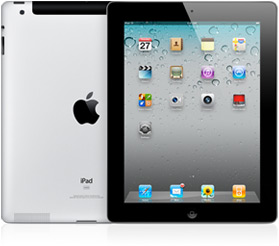
Thinking about the current and future uses of this new type of technology for work, for learning, and for fun really sparks my imagination. I would like to share two of the numerous resources I have came across which discuss ways the iPad (and by extension, other mobile tablets) can be used for academics and for entertainment.
In March, there was a thread on the ILI listserv about using iPads for library instruction. One of the posts shared a link to the report, “Faculty Learning Communities: Exploring Innovative Teaching and Learning with the Apple iPad” < http://uits.iu.edu/page/azxr >, produced by the Indiana University (IU) Library Technology Services. The report states that as a benefit “The iPad holds tremendous potential in changing how faculty and students think about teaching and learning.” Additionally, the iPad offers “utility as a reading device for electronic books (as well as a method of reviewing, creating, and responding to other instructional material and media)” (“Client Impact” section).
In the report, there are a variety of IU projects mentioned which demonstrate the potential that the iPad holds for academic use. One project describes the use of the iPad Twitter app by students in the School of Education for extended discussions of classroom material. Another project talks about an IU librarian’s use of the iPad for the Journalism Learning Communities to assist in teaching students intellectual honesty and also its use for the Informatics Learning Communities to encourage critical thinking using the applet, Popplet. The report offers a wealth of ideas about using the iPad for teaching and learning.
Use of other mobile tablets could also provide opportunities for engaging students. However, one of the challenges in using mobile tablets is compatibility because of the diversity of operating systems such as iOS (Apple), Android (Google), and Windows (Microsoft). For now, the iPad (iOS) appears to be the most popular of mobile tablets.
I cannot close without talking about the research and also the fun aspects of mobile tablets, again focusing on the iPad. A colleague of mine forwarded me a useful link to the post, “Using the iPad — Research, Meetings, and Fun,” written by a Penn State professor < http://engage.shc.psu.edu/?p=847 >. Included in the various apps mentioned are Dropbox (cloud storage), Office HD (Word and Excel editing), iBooks (books and PDF reading/annotating), and Newsrack (news/RSS reader).
Whether one is using the iPad or another mobile tablet for teaching, learning, research, or fun, it seems that “the sky’s the limit!”–well, not even the sky, since there is cloud storage. :-0
Call for Candidates
The College & Research Division is seeking candidates to run for the offices of Vice Chair/Chair Elect and Treasurer. If you would be willing to serve in either of these two positions or if you have any questions, please contact Cynthia Slater (cslater at SJU dot EDU) before May 20, 2011. Here are the current job descriptions for each of these positions:
Position: Vice Chair/Chair Elect
Term: The term of the Vice Chair/Chair Elect is 1 year term beginning January 1, 2012; however, this is a 3 year commitment to serve on the CRD Board. The person elected will become the Chair beginning January 1, 2013 and then become the Past Chair beginning January 1, 2014.
Duties:
- Provide leadership for the Division’s educational programs.
- Plan CRD Annual Spring Conference. (1. Determine conference program and speakers, date, time and menu in conjunction with the Board. 2. Location of spring conference is usually on or near the campus of the Vice Chair. 3. Submit LSTA Funding Request Form, Brief Report, and Expense Report to Board. 4.Compile and report back to the Board on evaluations. This may be delegated to another Board member.)
- Attend PaLA Leadership Orientation following the Annual Conference.
- Assist Chair with the business of the Division, including chairing meetings in the Chair’s absence.
Position: Treasurer
Term: Elected position, 2 year term beginning January 1, 2012.
Duties:
- Liaise with PaLA Education & Finance Manager (currently Kim Snyder). Obtain and reconcile monthly budget reports from PaLA Headquarters.
- Maintain LSTA spreadsheet.
- Maintain Division account spreadsheet for payments and income.
- Prepare budgets as requested.
- Serve as the designated recipient of payments for CRD programs. Deposit funds in the CRD account and provide receipts to program attendees upon request.
- Assist Chair with compiling year-end report for the State.
- Contribute to the planning and implementation of the Division’s educational programs.
- Forward all documentation and records to new treasurer.


 Adam Balcziunas
 Alex K.
 Alexandrea Glenn
 Andrea Pritt
 aprilnkelley
 Ashley Purvis
 Bethann Rea
 blj13
blj13 Brendan Johnson
 Amanda Boyer
 Bret Stiffler
 Bonnie Powers
 Christopher Lemery
 clarewithers
 clblibrarian
 Kelly Clever
 Charlotte M. Johnson
 colemanluzerne
 CRD of PaLA
 crdvirtualjournalclub
 cre5314
 csgarth
 Erin B.
 danajkerrigancv
 denisewetzel1
 Darren G. Poley
 elm43
elm43 Heather Burychka
 James D'Annibale
 Annie Jansen
 Jill Hallam-Miller
 jennifercribbs
 Jenn Monnin
 Jen Hasse
 Jessica Showalter
 johnmeier1
 Julie Durci
 Kelly Safin
 Kim Karim
 Kristen Seikaly
 Kayla Van Osten
 Cecelia Lasley
 librarianjsmith
 Linda Neyer
 mabogino1
 Matthew McNelis
 Meg Massey
 Maggie Savidakis-Dunn
 Rebecca
 miskatoniclibrarian
 Maureen Bentz
 Michele G. Anfuso
 Nicole Miyashiro
 paulmcmonigle
 Rob Sieczkiewicz
 ronlmccoll
 Sam Bardarik
 shannahollich
 smartin592
 Ula Lechtenberg