CRD Board Candidates for 2012
Following are the PaLA-CRD members running for the CRD Board for 2012.
VICE-CHAIR/CHAIR ELECT:
Paul Process, New Media Librarian, Bucks County Community College
As a member of the CRD Board for the past several years I have been very involved with the Board’s activities; making the vast majority of meetings/conferences/workshops, doing tech stuff, and speaking up and contributing where I have something to add. It is under a “contributing where I can” philosophy that I am running for Vice-Chair/Chair Elect. My “grand vision” for CRD is to make sensible improvements in process and other areas of interest as a curious and thoughtful person. It is not so much that I have faith in my own estimation of my ability to be a successful VC/CE as faith in the wonderful and successful folks that asked me to consider running. In different terms, I am driven by a sense of duty and challenge rather than wont of resume fodder (I already have my dream job). I’m the New Media Librarian at Bucks County Community College. I also serve on the Southeast Chapter Board and various other endeavors of PaLA. Feel free to contact me for more information if you are so inclined: procesp [at] bucks [dot] edu.
TREASURER:
Jennifer V. Luksa, Head of Collection Resource Management, Bevevino Library, Misericordia University
I am the Head of Collection Resources Management at Misericordia University, where I have been employed for more than 17 years. I received my bachelor’s degree in American studies from Penn State University and my master’s degree in library and information science from Drexel University. I am also a 2009 graduate of the Pennsylvania Academy for Leadership Studies (PALS). I have served on the PaLA Scholarship Committee, and most recently, I served on the Nominating Committee for the Northeast Chapter of PaLA. Currently, I am co-chairing the PALS Committee for the Northeast Chapter, and I am serving as the Membership Liaison for the CRD Board. As an academic librarian, I see the importance of being involved with PaLA, and I appreciate the opportunity that I have to serve on the CRD Board. CRD provides academic librarians from across the state the opportunity to collaborate on issues and challenges that face our libraries today. If elected, it would be an honor to continue serving PaLA and CRD.
Rebecca L. (Mugridge) MacIntosh, Head, Cataloging and Metadata Services, Penn State University Libraries
As a member of PaLA since I moved back to Pennsylvania, I have been involved with the College and Research Division in several capacities since 2003 when I first served on the Board. Most recently I completed a two-year term as Secretary. I am very interested in budgeting and have experience with finance through my membership on the ALA Association for Library Collections and Technical Services Budget and Finance Committee (2003-2007). I’ve also been very involved with the Juniata-Conemaugh Chapter, most recently serving as Chair in 2010, and the Technical Services Roundtable. I have been Head of Cataloging and Metadata Services at the Pennsylvania State University Libraries since 2000. Prior to coming to Penn State, I held positions at Yale University, Robert Morris University, and the University of Pittsburgh. I have a BA in history from Penn State, an MLS from the University of Pittsburgh, and an MBA from Robert Morris University. I am very enthusiastic about the College and Research Division activities, programs, and workshops, and would love an opportunity to further support that work through service as Treasurer.
The Technology Horizon
As librarians we are continually scanning the horizon to discover new concepts and technology for our spaces. Our focus in this area should not only be identifying the latest technology and programs but also creating sustainable partnerships with individuals and academic areas that can help us utilize new technology for the benefit of our students, faculty, staff, and the community. These collaborative efforts drive our provision of resources and affect our research and educational environment.
So, how do we identify new trends and assess their usefulness? Well, we read technology blogs, columns, reports, and subscribe to listservs. Here are just a few Web sites you might find helpful in your search for new technology trends.
2011 Horizon Report http://www.educause.edu/Resources/2011HorizonReport/223122
New York Times Technology Section http://www.nytimes.com/pages/technology/index.html
Gartner http://www.gartner.com/technology/home.jsp
What sites or resources do you use?
Marshall Breeding will be CRD Luncheon Speaker
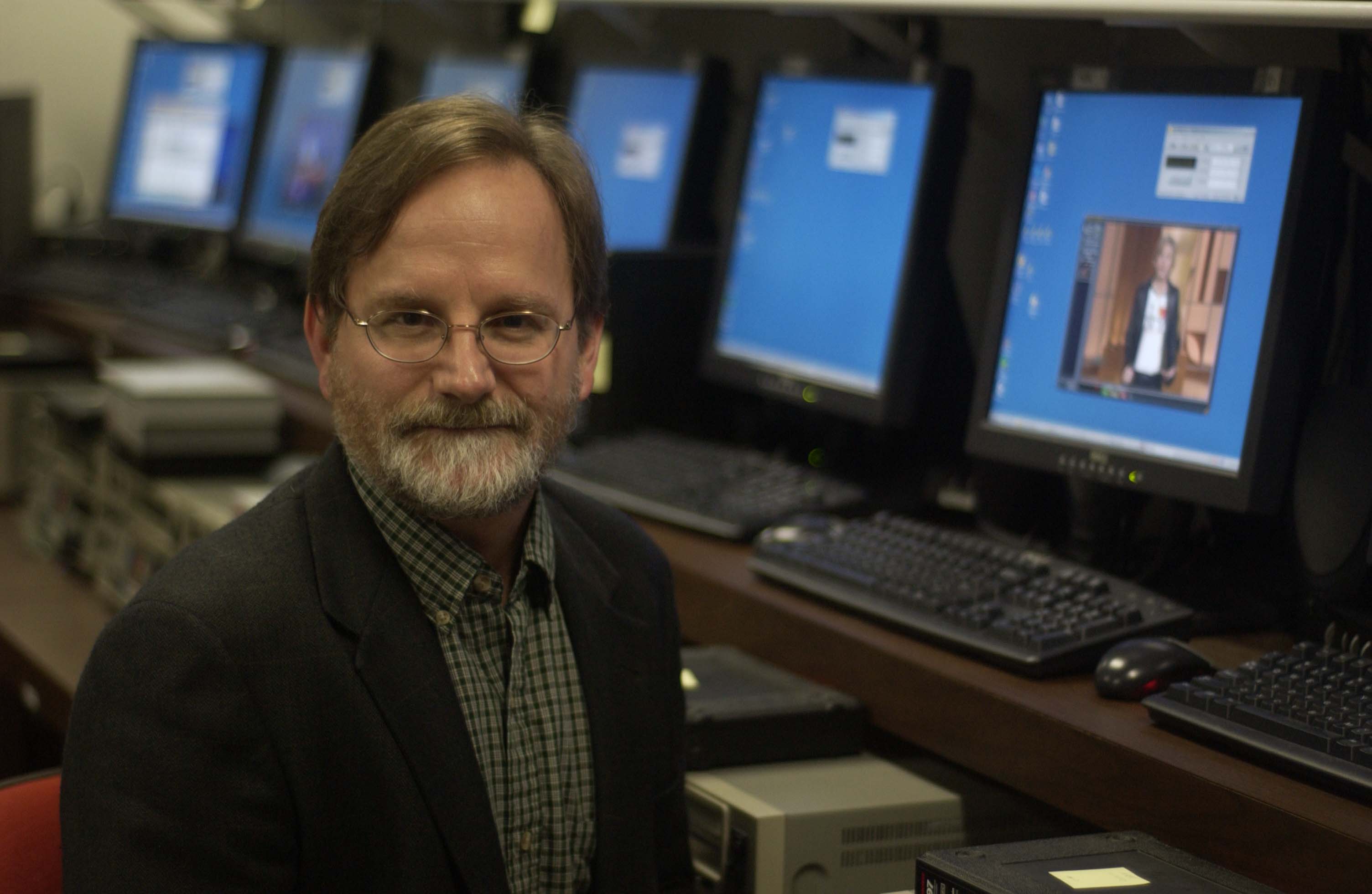 The College & Research Division invites you to attend the CRD Luncheon at the 2011 PaLA Conference on Tuesday, October 4 to hear Marshall Breeding speak about the future of library automation. In addition to being the Director for Innovative Technologies and Research for the Vanderbilt University Libraries in Nashville, TN, Marshall is the Executive Director the Vanderbilt Television News Archive, a large-scale archive of digital video content.
Fundamental shifts in academic libraries have transpired over the last decades that demand new models of support from their automation systems. Increased emphasis on delivering access to electronic resources and digital collections, with lingering, though diminishing, involvement with print collections require automation platforms capable of providing a more equitable balance in management of all types of resources. Breeding will describe the emerging products and services for library automation that aim to address these new realities.
Marshall is the creator and editor of Library Technology Guides (www.librarytechnology.org) and the lib-web-cats online directory of libraries on the Web. He writes a monthly column for Computers in Libraries; is a Contributing Editor for Smart Libraries Newsletter published by the American Library Association; is the author of nine issues of ALA’s Library Technology Reports; and has written the annual “Automation Marketplace” feature published by Library Journal since 2002.
Breeding is the editor or author of six books, most recently Next-Gen Library Catalogs, which is volume 1 of The Tech Set, a series of ten books published by Neal-Schuman to “help librarians implement essential technologies and tools to deliver outstanding new services and remain relevant in the digital age.”
The College and Research Division of PaLA would like to acknowledge that Federal Library Services and Technology Act (LSTA) funds administered by the Office of Commonwealth Libraries, Bureau of Library Development, to support professional development for Pennsylvania academic librarians, will enable Marshall Breeding’s attendance at the 2011 PaLA Conference.
Many academic librarians provide course-integrated library instruction to improve upon the information literacy skills of our students, helping them succeed in college and become lifelong learners. Many of us also have an interest in assessing the information literacy skills of our schools’ students in order to improve our instruction programs, to demonstrate the value of our libraries, and to contribute to the scholarly literature of our field. Some are also discussing shared concerns or collaborating with with local school and public librarians to ensure students come to college with the skills they need to succeed in higher education. Pennsylvania’s 232 academic libraries are part of the state’s “People’s University,” many providing public access to print and electronic research collections and historical archives, supplementing the collections available at their local public libraries. These academic libraries also helped many Pennsylvanians earn degrees in higher education. I recently interviewed Kathy Silks, PaLA’s “Libraries and 21st Century Literacies” project manager, to help academic librarians learn more about this literacy initiative and better understand how it involves academic librarians.
But before we get to the interview, I have a special comment from Glenn Miller, Executive Director of PaLA:
“I was struck by the common-sense clarity of Megan Oakleaf’s presentation at the CRD Spring Workshop at Bloomsburg University. She reminded me—and she reminds us all—not only that the squeaky wheel gets the grease, but also why we need wheels (libraries) more than ever! She underscores the reality that libraries face a never-ending calling—to educate and persuade decision-makers at universities, in school districts, and within state government and municipalities that fund public libraries—and to enlist the alumni, students, parents, and the public-at-large in this vital mission.
“Megan’s thought-provoking talk laid out a number of creative ways that our efforts to educate and persuade might take shape. But better still, her insights dovetail perfectly with PaLA’s new initiative—PA Forward (Libraries and 21st Century Literacies)—which, when launched officially in early 2012, will provide all library advocates with new topics, tools, and techniques to position libraries as essential players in powering Pennsylvania’s future. PA Forward is the result of nearly three years of hard work, from brainstorming to branding. We are excited about the vision and hope that PA Forward represents, and thrilled that Kathy Silks, a passionate library advocate and persuasive communicator, is on board as PA Forward’s Project Manager.”
(Glenn R. Miller, PaLA’s executive director, is reading All Governments Lie: The Life and Times of Rebel Journalist I. F. Stone by Myra MacPherson.)
Amy Deuink: Kathy, as project manager for the PA Forward: Libraries and 21st Century Literacies initiative, you are a new face at PaLA. Would you like to introduce yourself to our readers?
Kathy Silks: Amy, thanks for the opportunity to do so. On the professional side, I previously worked for 26 years at WITF, central Pennsylvania’s public broadcasting organization, where I held vice presidential positions in corporate communications, community relations, and development. I’ve devoted much of my work and volunteer life to literacy-related initiatives; I’ve been a trustee of Dauphin County Library System since the mid-’90s and served as board president for two years. I’m also a non-recovering biblioholic. And now you know why coming to work at PaLA feels like landing my dream job.
Project Information Literacy’s New Report
Library Journal’s website recently featured a review of a report from Project Information Literacy about the everyday research habits of college students. This study explored the information needs that college students have when they are not doing homework, and it investigated the ways in which students go about meeting those information needs.
According to the reviewer, many of their results were not surprising, however, a few of the findings she reported were news to me, such as the finding that the category of everyday information most sought out by students was News! I was also supprised at the number of students, 40 %, who had consulted a library database for help with an everyday information need (28% of students consulted print library resources).
In addition to researching how students find information, the study also looked at the problems that students encounter with their everyday research. One of their findings was that students have trouble sorting through all of the information they retrieve and picking out the most relevant results. This means website and source evaluation skills are still a needed component of information literacy instruction on college campuses.
You can read Barbara Fister’s full review of the study online at Library Journal’s Website, or view the full study itself.
More About Project Information Literacy
The University of Washington’s Information School is the guiding force behind Project Information Literacy, an ongoing research study started in 2008, which collects data from many different types of campus from all over the country. The publications tab on their website contains a collection of progress and research reports which look like very interesting reading!


 Adam Balcziunas
 Alex K.
 Alexandrea Glenn
 Andrea Pritt
 aprilnkelley
 Ashley Purvis
 Bethann Rea
 blj13
blj13 Brendan Johnson
 Amanda Boyer
 Bret Stiffler
 Bonnie Powers
 Christopher Lemery
 clarewithers
 clblibrarian
 Kelly Clever
 Charlotte M. Johnson
 colemanluzerne
 CRD of PaLA
 crdvirtualjournalclub
 cre5314
 csgarth
 Erin B.
 danajkerrigancv
 denisewetzel1
 Darren G. Poley
 elm43
elm43 Heather Burychka
 James D'Annibale
 Annie Jansen
 Jill Hallam-Miller
 jennifercribbs
 Jenn Monnin
 Jen Hasse
 Jessica Showalter
 johnmeier1
 Julie Durci
 Kelly Safin
 Kim Karim
 Kristen Seikaly
 Kayla Van Osten
 Cecelia Lasley
 librarianjsmith
 Linda Neyer
 mabogino1
 Matthew McNelis
 Meg Massey
 Maggie Savidakis-Dunn
 Rebecca
 miskatoniclibrarian
 Maureen Bentz
 Michele G. Anfuso
 Nicole Miyashiro
 paulmcmonigle
 Rob Sieczkiewicz
 ronlmccoll
 Sam Bardarik
 shannahollich
 smartin592
 Ula Lechtenberg