Digital Learning Materials
On Tuesday, May 3 I attended John Shank’s presentation: Re-Engineering the Academic Library for Digital Natives, held at the Rohrbach Library, Kutztown University.
Libraries (and librarians) need to deal with the issue of how we are perceived. When students and faculty think of the library, they think of books. In a world of digital natives, this perception must be addressed. DLMs (Digital Learning Materials) will play a growing role in the academic environment. These DLMs can be 1) Tutorials/Modules, 2) Games, or 3) Simulations.
Librarians need to position themselves to assist faculty in identifying quality DLMs. In the session John shared useful tools and techniques for locating course appropriate DLMs in Open Educational Resource (OER) repositories and digital libraries. While some may be familiar (Merlot and PRIMO), I learned about several new repositories.
Reengineering the Academic Library for Digital Natives on Prezi
John will be presenting in a live ACRL webcast Re-engineering Academic Libraries for Digital Natives and Beyond: Digital Learning Materials and the ‘Teaching Machine’ of the Future on August 9.
iPads (Mobile Tablets)
I find iPads and other mobile tablets fascinating!

- iPad 2 ~ wi-fi + 3G
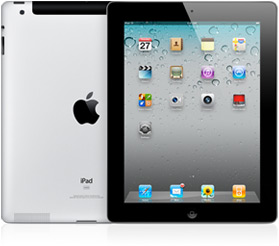
Thinking about the current and future uses of this new type of technology for work, for learning, and for fun really sparks my imagination. I would like to share two of the numerous resources I have came across which discuss ways the iPad (and by extension, other mobile tablets) can be used for academics and for entertainment.
In March, there was a thread on the ILI listserv about using iPads for library instruction. One of the posts shared a link to the report, “Faculty Learning Communities: Exploring Innovative Teaching and Learning with the Apple iPad” < http://uits.iu.edu/page/azxr >, produced by the Indiana University (IU) Library Technology Services. The report states that as a benefit “The iPad holds tremendous potential in changing how faculty and students think about teaching and learning.” Additionally, the iPad offers “utility as a reading device for electronic books (as well as a method of reviewing, creating, and responding to other instructional material and media)” (“Client Impact” section).
In the report, there are a variety of IU projects mentioned which demonstrate the potential that the iPad holds for academic use. One project describes the use of the iPad Twitter app by students in the School of Education for extended discussions of classroom material. Another project talks about an IU librarian’s use of the iPad for the Journalism Learning Communities to assist in teaching students intellectual honesty and also its use for the Informatics Learning Communities to encourage critical thinking using the applet, Popplet. The report offers a wealth of ideas about using the iPad for teaching and learning.
Use of other mobile tablets could also provide opportunities for engaging students. However, one of the challenges in using mobile tablets is compatibility because of the diversity of operating systems such as iOS (Apple), Android (Google), and Windows (Microsoft). For now, the iPad (iOS) appears to be the most popular of mobile tablets.
I cannot close without talking about the research and also the fun aspects of mobile tablets, again focusing on the iPad. A colleague of mine forwarded me a useful link to the post, “Using the iPad — Research, Meetings, and Fun,” written by a Penn State professor < http://engage.shc.psu.edu/?p=847 >. Included in the various apps mentioned are Dropbox (cloud storage), Office HD (Word and Excel editing), iBooks (books and PDF reading/annotating), and Newsrack (news/RSS reader).
Whether one is using the iPad or another mobile tablet for teaching, learning, research, or fun, it seems that “the sky’s the limit!”–well, not even the sky, since there is cloud storage. :-0
Call for Candidates
The College & Research Division is seeking candidates to run for the offices of Vice Chair/Chair Elect and Treasurer. If you would be willing to serve in either of these two positions or if you have any questions, please contact Cynthia Slater (cslater at SJU dot EDU) before May 20, 2011. Here are the current job descriptions for each of these positions:
Position: Vice Chair/Chair Elect
Term: The term of the Vice Chair/Chair Elect is 1 year term beginning January 1, 2012; however, this is a 3 year commitment to serve on the CRD Board. The person elected will become the Chair beginning January 1, 2013 and then become the Past Chair beginning January 1, 2014.
Duties:
- Provide leadership for the Division’s educational programs.
- Plan CRD Annual Spring Conference. (1. Determine conference program and speakers, date, time and menu in conjunction with the Board. 2. Location of spring conference is usually on or near the campus of the Vice Chair. 3. Submit LSTA Funding Request Form, Brief Report, and Expense Report to Board. 4.Compile and report back to the Board on evaluations. This may be delegated to another Board member.)
- Attend PaLA Leadership Orientation following the Annual Conference.
- Assist Chair with the business of the Division, including chairing meetings in the Chair’s absence.
Position: Treasurer
Term: Elected position, 2 year term beginning January 1, 2012.
Duties:
- Liaise with PaLA Education & Finance Manager (currently Kim Snyder). Obtain and reconcile monthly budget reports from PaLA Headquarters.
- Maintain LSTA spreadsheet.
- Maintain Division account spreadsheet for payments and income.
- Prepare budgets as requested.
- Serve as the designated recipient of payments for CRD programs. Deposit funds in the CRD account and provide receipts to program attendees upon request.
- Assist Chair with compiling year-end report for the State.
- Contribute to the planning and implementation of the Division’s educational programs.
- Forward all documentation and records to new treasurer.
If a tree falls in a forest…

and no one hears it, does it make a sound? Well, your answer will depend on how you view reality, but speaking for myself I’d say yes. However, perhaps a better question is, “If no one hears the tree falling, does it matter?” This (naturally) leads me to the upcoming CRD workshop, “Assessment in Higher Ed: How do libraries measure up?” If we as librarians are doing a great job, but no one perceives that we are doing a great job, then we have a problem. The CRD Board has invited Megan Oakleaf, author of the Value of Academic Libraries, to lead a day-long workshop to better equip academic librarians to collect evidence of their libraries’ value in terms that will matter to their institutions.
Megan co-presented a related session at ACRL 2011 Conference with Michelle Millet and Rachel Fleming-May, Evolution or Revolution: Strategies for Demonstrating the Library’s Impact in a New World of Assessment. The three of them noted that librarians need to stop talking about what we did (providing X number of information literacy sessions this year, purchasing X number of books, videos, etc.) and talk instead about what happens as a result of what we do. For example, we can determine whether librarians are helping students to do better work by evaluating samples of work done after library instruction. We can ask how library materials are being used in the curriculum and if our materials are helping to keep textbook costs down by working with the faculty and the bookstore.
The underlying question that should be driving all decisions concerning what we do, what data we collect, and how we should report it is this: What is the impact on student learning and development? Recasting what we do and how we report it in terms of impact on students rather than in terms of the traditional ‘institutional outputs’ involves a huge shift in our culture. And it’s not just a shift for librarians, it’s a shift for everyone in higher ed.
We’ve also asked Megan to address two rather scary questions in the workshop:
- what happens if we as librarians find we do NOT add value to our institutions’ missions? (not very likely, in my opinion, but possible)
- what happens if we do demonstrate we add value to our institution, but our institutions don’t care or don’t use the evidence? (more likely, in my opinion, more possible and VERY scary)
We certainly live in interesting times — I try to remind myself daily that every threat is also an opportunity. I hope you can join us at the workshop. For more information on it and how to register, view Upcoming Events on this blog.
Choose your own adventure with Megan Oakleaf
As I attended the “Value of Academic Libraries” panel session at ACRL 2011 with Mary Ellen Davis, Lisa Hinchliffe, and Megan Oakleaf, I was filled with dreams of delightfully rigorous research.
Megan Oakleaf sounded a note of caution early on. She mentioned finding other researchers who had conducted similar projects in the past to little avail. Value of Academic Libraries (VAL) might eventually face a somewhat akin fate, but my optimism was barely tempered. VAL is generating a great deal of interest if the packed, colossal Liberty Ballroom is any indication. VAL inspired other sessions at ACRL, as well as at other regional and state library-related conferences. I found Meagan’s attitude about the report quite refreshing.
She called it a, “choose your own adventure.”
In other words, read the parts that are interesting and relevant to you. Then read some other parts, then a few more. It does not need to be read straight through in one sitting. Some considerations:
- The executive summary is written for non-library folks. If you are a librarian, please delve into the body of the report.
- “Next steps” (pg. 93-100) is Meagan’s favorite part.
- The “Research Agenda” (pg. 101) is crucial for follow-up. We (as in librarians that did not work on VAL) need to step up and actually do the research called for if we intend to make a difference. Collaborating across institutions would be the best case scenario.
- Satisfaction surveys are not a recommendation.
- Use is simply not enough.
- “It’s not the dirt, but the plants that grow.”
- ILL folks, acquisitions and catalogers may already have useful ideas of value: seek them out.
- In general: a good deal of data might already exist, use a rolodex to find (it’s like a contact list, but papery). Call Institutional Research, get the old Director out of bed and find the loci of data at your institution.
- Privacy concerns are warranted, but don’t let these considerations block success. We need to track individuals across their academic career to answer these questions: does using the library help a student get a job, better grades, or become more likely to graduate? It can be done without comprising privacy and other departments know how.
- Don’t just collect, use! Data that is.
After the presentation, with my reveries of rigor fulfilled, I started dreaming another dream: getting started on the “Next Steps” and contributing something of my own.
Paul
Intrigued to find out more? Megan Oakleaf and a panel of knowledgable assessment folks (including MSCHE) are coming to Bloomsburg University on May 17th. For more information, we have a post in Upcoming Events. Register early to reserve a seat!
Note: This is my take on my experience, these aren’t direct quotes unless marked. A grain of NaCl or 2 is a suggested accouterment for this post.


 Adam Balcziunas
 Alex K.
 Alexandrea Glenn
 Andrea Pritt
 aprilnkelley
 Ashley Purvis
 Bethann Rea
 blj13
blj13 Brendan Johnson
 Amanda Boyer
 Bret Stiffler
 Bonnie Powers
 Christopher Lemery
 clarewithers
 clblibrarian
 Kelly Clever
 Charlotte M. Johnson
 colemanluzerne
 CRD of PaLA
 crdvirtualjournalclub
 cre5314
 csgarth
 Erin B.
 danajkerrigancv
 denisewetzel1
 Darren G. Poley
 elm43
elm43 James D'Annibale
 Annie Jansen
 Jill Hallam-Miller
 jennifercribbs
 Jenn Monnin
 Jen Hasse
 Jessica Showalter
 johnmeier1
 Kelly Safin
 Kim Karim
 Kristen Seikaly
 Kayla Van Osten
 Cecelia Lasley
 librarianjsmith
 Linda Neyer
 mabogino1
 Matthew McNelis
 Meg Massey
 Maggie Savidakis-Dunn
 Rebecca
 miskatoniclibrarian
 Maureen Bentz
 Michele G. Anfuso
 Nicole Miyashiro
 paulmcmonigle
 Rob Sieczkiewicz
 ronlmccoll
 Sam Bardarik
 shannahollich
 smartin592
 Ula Lechtenberg
 It's Academic