Marshall Breeding will be CRD Luncheon Speaker
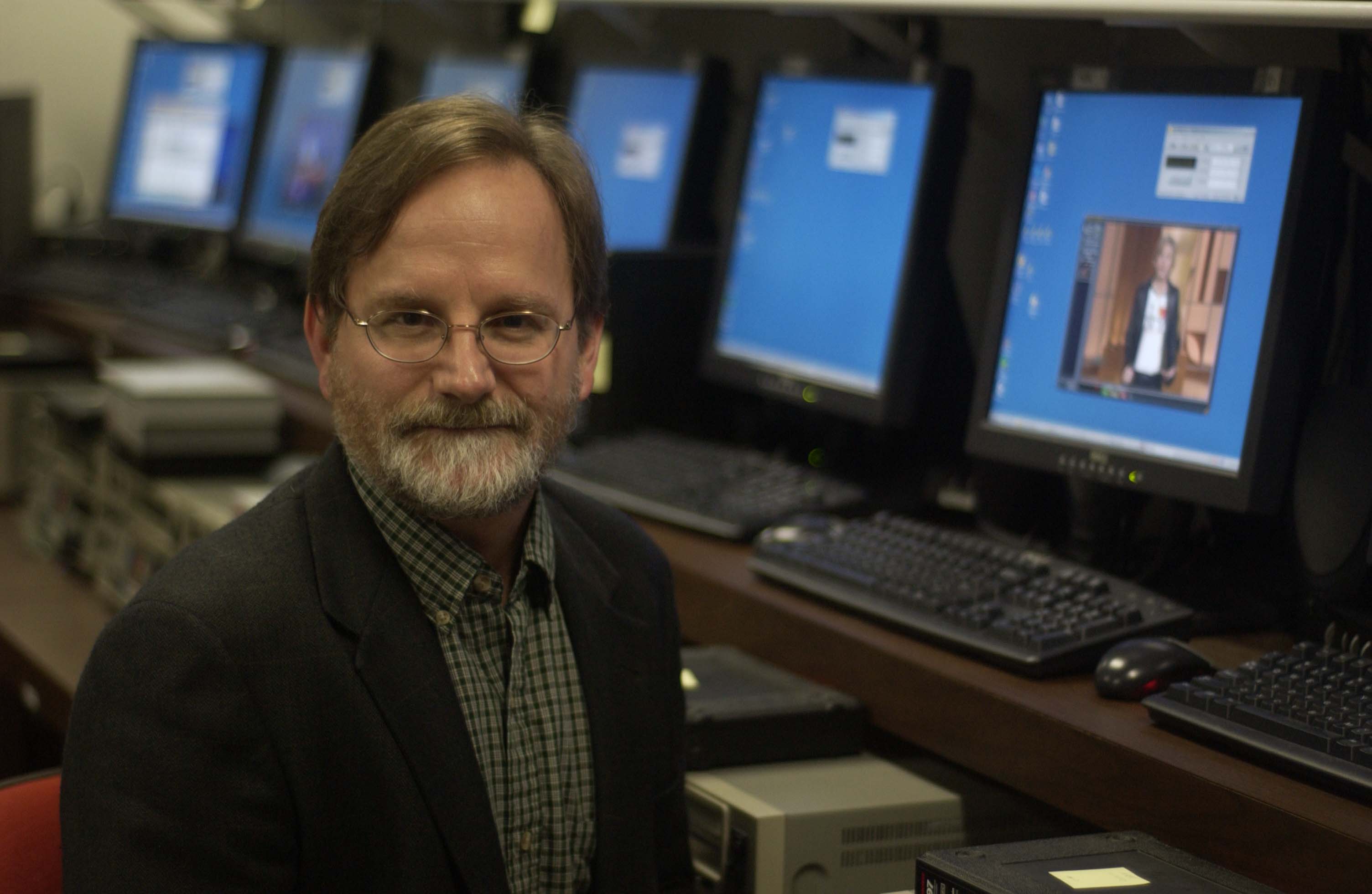 The College & Research Division invites you to attend the CRD Luncheon at the 2011 PaLA Conference on Tuesday, October 4 to hear Marshall Breeding speak about the future of library automation. In addition to being the Director for Innovative Technologies and Research for the Vanderbilt University Libraries in Nashville, TN, Marshall is the Executive Director the Vanderbilt Television News Archive, a large-scale archive of digital video content.
Fundamental shifts in academic libraries have transpired over the last decades that demand new models of support from their automation systems. Increased emphasis on delivering access to electronic resources and digital collections, with lingering, though diminishing, involvement with print collections require automation platforms capable of providing a more equitable balance in management of all types of resources. Breeding will describe the emerging products and services for library automation that aim to address these new realities.
Marshall is the creator and editor of Library Technology Guides (www.librarytechnology.org) and the lib-web-cats online directory of libraries on the Web. He writes a monthly column for Computers in Libraries; is a Contributing Editor for Smart Libraries Newsletter published by the American Library Association; is the author of nine issues of ALA’s Library Technology Reports; and has written the annual “Automation Marketplace” feature published by Library Journal since 2002.
Breeding is the editor or author of six books, most recently Next-Gen Library Catalogs, which is volume 1 of The Tech Set, a series of ten books published by Neal-Schuman to “help librarians implement essential technologies and tools to deliver outstanding new services and remain relevant in the digital age.”
The College and Research Division of PaLA would like to acknowledge that Federal Library Services and Technology Act (LSTA) funds administered by the Office of Commonwealth Libraries, Bureau of Library Development, to support professional development for Pennsylvania academic librarians, will enable Marshall Breeding’s attendance at the 2011 PaLA Conference.
Many academic librarians provide course-integrated library instruction to improve upon the information literacy skills of our students, helping them succeed in college and become lifelong learners. Many of us also have an interest in assessing the information literacy skills of our schools’ students in order to improve our instruction programs, to demonstrate the value of our libraries, and to contribute to the scholarly literature of our field. Some are also discussing shared concerns or collaborating with with local school and public librarians to ensure students come to college with the skills they need to succeed in higher education. Pennsylvania’s 232 academic libraries are part of the state’s “People’s University,” many providing public access to print and electronic research collections and historical archives, supplementing the collections available at their local public libraries. These academic libraries also helped many Pennsylvanians earn degrees in higher education. I recently interviewed Kathy Silks, PaLA’s “Libraries and 21st Century Literacies” project manager, to help academic librarians learn more about this literacy initiative and better understand how it involves academic librarians.
But before we get to the interview, I have a special comment from Glenn Miller, Executive Director of PaLA:
“I was struck by the common-sense clarity of Megan Oakleaf’s presentation at the CRD Spring Workshop at Bloomsburg University. She reminded me—and she reminds us all—not only that the squeaky wheel gets the grease, but also why we need wheels (libraries) more than ever! She underscores the reality that libraries face a never-ending calling—to educate and persuade decision-makers at universities, in school districts, and within state government and municipalities that fund public libraries—and to enlist the alumni, students, parents, and the public-at-large in this vital mission.
“Megan’s thought-provoking talk laid out a number of creative ways that our efforts to educate and persuade might take shape. But better still, her insights dovetail perfectly with PaLA’s new initiative—PA Forward (Libraries and 21st Century Literacies)—which, when launched officially in early 2012, will provide all library advocates with new topics, tools, and techniques to position libraries as essential players in powering Pennsylvania’s future. PA Forward is the result of nearly three years of hard work, from brainstorming to branding. We are excited about the vision and hope that PA Forward represents, and thrilled that Kathy Silks, a passionate library advocate and persuasive communicator, is on board as PA Forward’s Project Manager.”
(Glenn R. Miller, PaLA’s executive director, is reading All Governments Lie: The Life and Times of Rebel Journalist I. F. Stone by Myra MacPherson.)
Amy Deuink: Kathy, as project manager for the PA Forward: Libraries and 21st Century Literacies initiative, you are a new face at PaLA. Would you like to introduce yourself to our readers?
Kathy Silks: Amy, thanks for the opportunity to do so. On the professional side, I previously worked for 26 years at WITF, central Pennsylvania’s public broadcasting organization, where I held vice presidential positions in corporate communications, community relations, and development. I’ve devoted much of my work and volunteer life to literacy-related initiatives; I’ve been a trustee of Dauphin County Library System since the mid-’90s and served as board president for two years. I’m also a non-recovering biblioholic. And now you know why coming to work at PaLA feels like landing my dream job.
Project Information Literacy’s New Report
Library Journal’s website recently featured a review of a report from Project Information Literacy about the everyday research habits of college students. This study explored the information needs that college students have when they are not doing homework, and it investigated the ways in which students go about meeting those information needs.
According to the reviewer, many of their results were not surprising, however, a few of the findings she reported were news to me, such as the finding that the category of everyday information most sought out by students was News! I was also supprised at the number of students, 40 %, who had consulted a library database for help with an everyday information need (28% of students consulted print library resources).
In addition to researching how students find information, the study also looked at the problems that students encounter with their everyday research. One of their findings was that students have trouble sorting through all of the information they retrieve and picking out the most relevant results. This means website and source evaluation skills are still a needed component of information literacy instruction on college campuses.
You can read Barbara Fister’s full review of the study online at Library Journal’s Website, or view the full study itself.
More About Project Information Literacy
The University of Washington’s Information School is the guiding force behind Project Information Literacy, an ongoing research study started in 2008, which collects data from many different types of campus from all over the country. The publications tab on their website contains a collection of progress and research reports which look like very interesting reading!
“In God We Trust, But All Others Must Bring Data”
PaLA CRD Annual Spring Conference Wrap Up
Yesterday (Tuesday May 17th) Dr. Megan Oakleaf led a dynamic workshop dedicated to helping attendees learn how to demonstrate the academic library’s value to the institution. Megan Oakleaf’s keynote presentation was based around her recent ACRL publication titled The Value of Academic Libraries (VAL). While many librarians have doubtlessly skimmed the executive summary to the VAL report, this presentation took attendees beyond the executive summary, helping them to see more clearly what is and is not known about the impact that academic libraries have on their institutions.
Attendees were encouraged to see the value of the library in a larger context, something that special, public, and school libraries have been doing for years. Instead of focusing on what we do, academic librarians should ask themselves what it is that we enable others (students, faculty, and administrators) to do better. For example: Oakleaf says that it is not enough for academic libraries to show that students know their Boolean operators. To continue to remain relevant, we must show our institutions how this knowledge contributes to student retention and success. “This is not business as usual” Oakleaf emphasizes. Instead, “This is a national re-framing of academic library value.” The central questions academic libraries should be asking in the future are: how do we increase our impact & how do we measure that impact?
Two hands on activity sessions were incorporated into Oakleaf’s presentation to help attendees think critically about how library services correlate with institutional goals (such as student enrollment, retention, engagement, faculty teaching, institutional prestige, and so on). Librarians were also encouraged to develop action steps to take back with them to their institution (using Appendix A, the “Academic Library Value Checklist,” from the VAL report as a guide). Megan concluded by encouraging library administrators to talk more about assessment and to model assessment based on institutional goals at their institutions.
Oakleaf also moderated a panel discussion to help librarians learn more about what academic institutions value. Present on this panel were higher education administrators from various institutions, several different academic offices, and also representative from the Middle States Commission on Higher Education. The panel responded to several questions presented by Oakleaf designed to show librarians what institutional drivers administrators were most concerned with, and what the perception of the administration was about how the library contributes to success in these areas. Panelists emphasized that the academic library and librarians were in a great position to look beyond our traditional roles and “infiltrate” into other areas of the institution where we can add value or fill in institutional gaps.
Panelists included:
- Dr. Mary Anne Fedrick, Dean of the College of Education and Human Development, Marywood University, Scranton, PA
- Dr. Ellie Fogarty, Vice President, Middle States Commission on Higher Education, Philadelphia, PA
- Dr. Betty Harper, Director of Student Affairs Research & Assessment, Penn State University, University Park, PA
- Dr. Maureen McCreadie, Dean of Learning Resources, Bucks County Community College, Newtown, PA
- Dr. Jerome Rackoff, Assistant Vice President, Planning & Institutional Research, Bucknell University, Lewisburg, PA
Couldn’t make it? Read Megan’s editorial in the May 2011 issue of College & Research Libraries.
You can also view the Workshop Twitter Feed to see what pieces of information librarians found most valuable during the session itself. The twitter feed also includes links to additional resources which were mentioned by Oakleaf or the panelists during the workshop session.
Follow the Leader
As librarians we collect, manage, teach, encourage, collaborate, motivate, guide, and the list goes on. But how many of us are leaders? Well, simply put, we all are. We lead people to current, accurate, vetted information. We lead committees and task forces. We lead discussions that shape the future of information. But, what does good leadership look like? After thinking and reading (Drucker, Maxwell, Rockefeller, Lincoln) about what makes a remarkable leader, I came across a Web site that distills the qualities of a good leader into a short list of concise attributes. This list comes from the Girl Scouts of America Web site (http://www.girlscouts.org/for_adults/leader_magazine/2004_fall/five_qualities.asp), and provides five key qualities a good leader must possess:
- Know yourself – know what you value. “One that desires to excel should endeavor in those things that are in themselves most excellent.” Epictetus
- Be committed – find a mentor, know the issues of your profession. “80% of success is just showing up.” Woody Allen
- Realize you don’t know it all – do your research and seek out other perspectives.
- Be open to change – “In essence, leaders are people who ‘walk ahead,’ people genuinely committed to deep changes, in themselves and in their organizations.” Peter Senge
- Go the extra mile – and people will follow.
And I would also suggest we be kind and laugh a little (even at ourselves).
Interesting Viewing and Reading:
TED Video, Kathryn Schultz: On Being Wrong
http://www.ted.com/talks/lang/eng/kathryn_schulz_on_being_wrong.html
Academic Librarian: Leading Change, By Wayne Bivens-Tatum https://blogs.princeton.edu/librarian/leadership/
Librarians and Leadership: you have not signed up to work in the back room somewhere… by Susan Fifer Canby http://findarticles.com/p/articles/mi_m0FWE/is_5_8/ai_n6077807/


 Adam Balcziunas
 Alex K.
 Alexandrea Glenn
 Andrea Pritt
 aprilnkelley
 Ashley Purvis
 Bethann Rea
 blj13
blj13 Brendan Johnson
 Amanda Boyer
 Bret Stiffler
 Bonnie Powers
 Christopher Lemery
 clarewithers
 clblibrarian
 Kelly Clever
 Charlotte M. Johnson
 colemanluzerne
 CRD of PaLA
 crdvirtualjournalclub
 cre5314
 csgarth
 Erin B.
 danajkerrigancv
 denisewetzel1
 Darren G. Poley
 elm43
elm43 James D'Annibale
 Annie Jansen
 Jill Hallam-Miller
 jennifercribbs
 Jenn Monnin
 Jen Hasse
 Jessica Showalter
 johnmeier1
 Kelly Safin
 Kim Karim
 Kristen Seikaly
 Kayla Van Osten
 Cecelia Lasley
 librarianjsmith
 Linda Neyer
 mabogino1
 Matthew McNelis
 Meg Massey
 Maggie Savidakis-Dunn
 Rebecca
 miskatoniclibrarian
 Maureen Bentz
 Michele G. Anfuso
 Nicole Miyashiro
 paulmcmonigle
 Rob Sieczkiewicz
 ronlmccoll
 Sam Bardarik
 shannahollich
 smartin592
 Ula Lechtenberg
 It's Academic