Open Access: A Review
Throughout the library profession over the past decade there has been an increasing buzz around the idea of “open access” to scholarly literature. This has come about for a number of reasons including the growing number of academic periodicals and increasing subscriptions costs. Further, many are troubled by the fact that academics frequently conduct research and develop new ideas, then sign away ownership of this work to publishers who make this new knowledge available to only those individuals and libraries that are able to pay the fee.
As described by Peter Suber, one of the foremost authorities on the subject, “open-access (OA) literature is digital, online, free of charge, and free of most copyright and licensing restrictions” and is also “compatible with copyright, peer review, revenue (even profit), print, preservation, prestige, quality, career-advancement, indexing, and other features and supportive services associated with conventional scholarly literature.” (Suber, 2010)
It is generally agreed that there are two paths to achieving open access to scholarly literature.
- Gold OA refers to Open Access journals that publish articles online with no access restrictions.
- Green OA is possible when authors make their work available online using personal webpages or databases, known as repositories, that are maintained by an institution or other organization.
A number of universities and other agencies that fund research now require authors to make their findings available through open access.
The term “open access” should not be confused with “open source”, which refers to the open development and distribution of software.
————————————————————————————————-
Why is open access important to authors?
Open access allows authors to distribute their work more widely, resulting in a greater impact.
————————————————————————————————-
As librarians, what can we do to increase access to research?
- Submit our own work to open access journals whenever possible. Encourage others to do the same.
- If publishing in a journal that is not open access, read the publisher contract carefully to understanding what rights (if any) are retained
- Negotiate to maintain some ownership so the work may be re-used and re-distributed
- Make a version of the work available on a personal website, in an institutional repository like ScholarlyCommons at Penn or a subject based repository like arXiv or SSRN.
- Many non-open access journals currently allow this practice of “self-archiving”. See the Sherpa Romeo database to view individual publisher policies. Individual cases may vary. Be sure to read your publisher contract closely
- Encourage library projects and practices that support open access publishing
- Help authors at our institutions understand the benefits of open access and the many opportunities that exist
For more information about how you can help authors see SPARC’s Resources for Authors.
————————————————————————————————-
Recent Legislation Related to Open Access
Open access to publicly funded research (known as public access) continues to be a topic debated in Congress.
In 2008, Congress enacted the National Institutes of Health (NIH) Public Access policy which requires authors of all published articles resulting from research funded by the National Institutes of Health to submit a copy to the PubMed Central database within 12 months.
Congress also considered the Federal Research Public Access Act, in 2006, 2009, and 2010, which would have enacted similar requirements for research funded by other government agencies but this legislation never became law.
Although supported by many, not everyone supports such measures. Legislators in the United States have introduced measures such as the Fair Copyright in Research Works Act of 2008 and the Research Works Act of 2011 introduced in December 2011 that would restrict government sponsored open access requirements such as the NIH Public Access Policy. This most recent action was met with strong opposition.
Just earlier this month on February 9, The Federal Research Public Access Act was reintroduced in another attempt to expand open access to government funded research. The Alliance for Taxpayer Access supports this legislation and offers some additional information.
————————————————————————————————-
What is the College & Research Division of PaLA doing?
The CRD is currently exploring the possibility of initiating an open access online publication. This would provide academic librarians in Pennsylvania an additional opportunity to share their ideas with others across the state and around the world — free to read for anyone who is interested.
What are your thoughts on open access? What else can CRD and PaLA do to promote open access?
A Menu of Reference Models for the Academic Library
This post from the Chronicle of Higher Education Blog discusses the newest in a continually increasing menu of reference models that librarians can choose to employ, either as supplement to, or replacement of, the traditional information desk or “counter service” model (to use the dining service metaphors that author Brian Mathews seems fond of in his blog entry). This newest reference model would allow patrons in the library to send a signal to the librarian on duty that they need assistance, much as diners in a Brazilian restaurant signal their waiters to bring them more food! This model could perhaps be implement with a small chat or call button loaded onto all library computers. The librarian would receive the signal and then go to the patron, rather than having the patron come to them! Mathews hypothesizes some challenges that this model could pose to librarians and library service in his blog entry. However, he is also optimistic about the impact that this model could have on students: “In fact it might actually be more intuitive and comfortable to them [students] than approaching a desk. It gives them control, instead of us.”
Let us know what you think!!
Save the Date, May 24 2012, CRD Spring Workshop

Marshall Breeding Talk at Lehigh University
Marshall Breeding Talk at Lehigh University
Marshall Breeding is coming to Lehigh to lead an engaging conversation about technology in libraries on Thursday, February 9, 2012 at 4:10 p.m. in the Scheler Family Humanities Forum (Linderman Library 200). Sponsored by Friends of the Lehigh Libraries. For more information, please visit Lehigh University Libraries’ Website about the event.
This event is free and open to the public.
Map to Linderman Library at Lehigh University: http://g.co/maps/uvpqd
Universal Design for Instruction in the Library
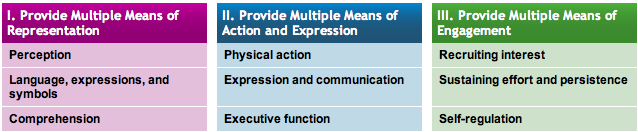
Librarians have a great deal of information to “Keep up” with and the wide world outside the discipline sometimes receives less attention despite interesting ideas with great confluence in the wonderful work librarians already do. Universal Design is one of those great ideas.
First, some notes on terminology. “Universal Design” was a movement started by Ron Mace, an architect, to recognize the real users of buildings instead of making them for that most mythical and mysterious of all races: regular people. Some folks use wheelchairs or are clumsy or have trouble reading fancy lettering. Further, designing with these real world users in mind creates a better experience for everyone. Interest in applying this idea to education grew with the success of this movement, not least the Americans with Disabilities Act.
What this idea is called in the education field, depends on who one asks. Variously, “Universal Design for Learning” (UDL, geared toward K-12), Universal Design for Instruction (UDI, geared toward higher education), Universal Design for Higher Education (UDHE) inter alia are used to describe the specific bodies of research and enumerated guiding principles stemmig from the same fundamental idea (designing for the real range of humanity makes a better education for all).
The image at the top lists the 3 Principles of Universal Design for Learning, which I personally advocate. I think these three statements capture perfectly the essence of the idea and are easy to remember. The 9 Principles of UDI are more specific and narrowly defined.
Librarians already know that different people learning differently. The UDL Principles (those pictured at the top) conflate with librarianship in the classroom, at the reference desk and in working with faculty. One of the key tenets of UDL is multiple means of engagement and one of the top ways of accomplishing this is student choice which gives a sense of ownership. In research, this can mean mentioning outlines and mind mapping as a way of taking notes. In teaching, it can mean giving students a choice between a paper, a mashup video or an online presentation, which more and more libraries are supporting. Another way to use the UDL Principles could be a kinesthetic activity for teaching website evaluation.
This is the very short list of uses. If anyone has used UDL/I Principles in their library, give the example in the comments.
For more information:


 Adam Balcziunas
 Alex K.
 Alexandrea Glenn
 Andrea Pritt
 aprilnkelley
 Ashley Purvis
 Bethann Rea
 blj13
blj13 Brendan Johnson
 Amanda Boyer
 Bret Stiffler
 Bonnie Powers
 Christopher Lemery
 clarewithers
 clblibrarian
 Kelly Clever
 Charlotte M. Johnson
 colemanluzerne
 CRD of PaLA
 crdvirtualjournalclub
 cre5314
 csgarth
 Erin B.
 danajkerrigancv
 denisewetzel1
 Darren G. Poley
 elm43
elm43 James D'Annibale
 Annie Jansen
 Jill Hallam-Miller
 jennifercribbs
 Jenn Monnin
 Jen Hasse
 Jessica Showalter
 johnmeier1
 Kelly Safin
 Kim Karim
 Kristen Seikaly
 Kayla Van Osten
 Cecelia Lasley
 librarianjsmith
 Linda Neyer
 mabogino1
 Matthew McNelis
 Meg Massey
 Maggie Savidakis-Dunn
 Rebecca
 miskatoniclibrarian
 Maureen Bentz
 Michele G. Anfuso
 Nicole Miyashiro
 paulmcmonigle
 Rob Sieczkiewicz
 ronlmccoll
 Sam Bardarik
 shannahollich
 smartin592
 Ula Lechtenberg
 It's Academic