“SPROWT” Regional OER Group
Earlier this month, I had the privilege of visiting Penn State Berks (Reading) for the first time to attend a newly developed collaboration known informally as “SPROWT” – the Southeastern Pennsylvania Regional Open Working Team. Representing the Rothrock Library at Lehigh Carbon Community College (Schnecksville), I met with many other fine librarians in the region who are interested in pushing the topic of Open Educational Resources, or OER. There is no disagreement that the rising costs of textbooks and other course materials have urged institutes of higher learning to explore other options and to increasingly put pressure on publishers to allow open access to their resources. This immediately hit a nerve with me because I was the textbook specialist and buyer at Northampton Community College (Bethlehem) for nearly seven years, and I witnessed first-hand the financial struggles of students who literally had to make the choice not to take a particular course because they could not afford the required materials.
Orchestrated in part by Corey Wetherington, the Open and Affordable Course Content Coordinator at the Penn State Berks library, “SPROWT” aims to unite colleges in the surrounding neighborhoods: Kutztown University, Muhlenburg College, Lafayette College, Franklin & Marshall College, Lehigh University, Millersville University, Reading Area Community College, Cedar Crest College, Bucks County Community College, Penn State Lehigh Valley, and Lehigh Carbon Community College. We had our initial meeting on October 16th, where we got to introduce ourselves and brainstorm ideas on how we would like to share resources and approach the topic of OER. We would like to meet two or three times a year; once in the fall semester, once in the spring semester, and possibly over the summer if our schedules allow for it.
After being fed a delicious lunch (eggplant parmesan!), we discussed the obstacles we face in the library profession when it comes to overcoming the hurdle of closed textbooks for our students, who are often struggling to afford just the tuition, let alone plunking down another $200 on one textbook for one course. We agreed on how we would communicate with one another and decided on Google Drive. As we look forward to planning our next meeting in April at Kutztown University, we are ready to delve into OER by reaching out to faculty and department heads to get a feel of the course materials already in use, and if any of those textbooks are open access. Using Google Drive, we can then share those titles which are open access with the other members of “SPROWT,” thereby providing a valuable service to the students in this region.
Personally, I do feel a little over my head with this project. As the interlibrary loan librarian, I am more interested in open access to academic journals which sometimes prevent me from fulfilling a student’s request for an article. While we do get a few students in our library each semester asking us if we carry a textbook for a course which they are currently taking, we really do not have the pressure to offer open access as much as, say, a four-year university. Another setback for me is that our college relies heavily on adjunct instructors, so it might prove difficult to get in touch with faculty and to get them to all agree on an open access resource. However, I am committed to finding affordable solutions to the textbook dilemma for our students.
Place your holds and save the date: C+C Series Book Discussion of White Fragility by Robin DiAngelo
On Monday, December 9 at 12 pm, the College and Research Division Connect + Communicate Series will host an online book discussion of Robin DiAngelo’s White Fragility. If you were able to join us at the Annual CRD Lunch at the PaLA Conference, we hope you grabbed a free copy. If you weren’t able to be with us, please visit your local library to check out the book or place a hold.
Save your spot for the online discussion by registering here: https://tinyurl.com/CRDWhiteFragility.
The access link will be sent to registered attendees prior to December 9.
Science Information Literacy and You!
In my last post I discussed increasing our first year students’ science information literacy skills by offering a joint presentation with my campus’s Quantitative Skills Coordinator. I am pleased to report that the session went well but we had fewer students in attendance than we anticipated (only ten). That wasn’t a total loss however, because it allowed us to have more meaningful conversations with those who did attend. We were able to gain valuable feedback from those students on how we could improve if we held a similar session in the future. The attendees’ main feedback was that they wanted more information on how to locate study resources to supplement their required class materials.
Since that original presentation in January 2019, I have offered two more science information literacy sessions on campus. The second session was similar to the first in which I collaborated with the quantitative skills coordinator and we discussed STEM study resources available both in the campus library as well as the campus learning center. We set the maximum capacity to 25 first year students and the session filled up quickly. Due to the feedback from our original presentation, I created a new handout with tips and tricks on how to navigate our library catalog to locate additional study materials for various science disciplines. Students were able to locate workbooks, practice problems, and exam preparation materials and several students borrowed those materials from the library immediately after the session. My colleague was able to provide students with instructions on how to create a profile and schedule peer tutors for their science courses. At the end of our brief presentation, we surveyed the students using the same brief questionnaire that we had previously used. All 25 students provided feedback and overwhelmingly said they learned something new during the session. I would recommend this type of presentation to any colleague who is interested. It is a low stakes presentation and with just a little added effort by creating the new handout, we were able to demonstrate high impact according to student responses.
After attending a few departmental meetings with our biology and engineering faculty on campus I gained insight to what the students in my college are struggling with and began thinking of ways to better address these concerns. A few weeks later I offered a third workshop entitled, “Science Information Literacy and You!” This event was intended for science majors on campus and two of the biology faculty offered extra credit for their students to attend. Admittedly, I threw this session together rather quickly between my instruction commitments and planning for the 2019 PaLA conference but I was encouraged by the faculty’s support. I was blown away by the attendance: 53 students; 51 of whom were currently enrolled in the school that I liaise with and serve. I began the session by proposing lofty questions to the students, “What is science?” “Who creates science? And how?” These questions prompted a brief, but lively, discussion about the philosophy of science (I did not see that one coming) and a general discussion about navigating the differences between junk science and legitimate science. We discussed the science-related headlines that they often see in newspapers and on social media platforms. I then asked the students to locate one science-related resource that was of interest. Once they found an interesting resource, I walked them through an activity that I created in order to evaluate the contents of that resource and the associated article headline. The session was only 50-minutes long but, as a group, we were able to learn from each other and get a sense for what we mean when we discuss science information literacy. I did not pass out an assessment survey since our discussion left us with limited time, which was fine by me. On the students’ way out a handful of them informally shared their thanks for the session and had thoughtful comments to share with me.
Overall, I am encouraged by my efforts to lead these science information literacy workshops on campus. Feedback from both the students and the faculty members have been positive and I am inspired to continue my efforts on this front. If any readers have suggestions on how to improve these sessions with new and engaging topics please feel free to contact me. I am always happy to share my experiences and collaborate with colleagues.
CRD Luncheon Keynote — Powerpoint and Bibliography available
Check out the next PaLA Bulletin for a full recap of our CRD Annual Luncheon keynote by Dr. Michele Villagran, CEO of CulturalCo, LLC and Assistant Professor at San Jose State University School of Information.
Dr. Villagran has also shared her keynote PowerPoint, and a bibliography on Cultural Intelligence with us:
PaLA CQ Bibliography
Villagran – Academic Libraries How Cultural Intelligence Makes a Difference
Be on the lookout for an article about Cultural Intelligence in Pennsylvania libraries by Dr. Villagran in a future issue of PaLRAP.
If you are interested in having more discussion about the topics from Dr. Villagran’s keynote, please join the CRD in December for a C+C Series discussion of Robin DiAngelo’s White Fragility. Registration for the discussion is available here: https://tinyurl.com/CRDWhiteFragility
CRD is doing something different this year. If you attended the PaLA Annual Conference, at the CRD Luncheon were copies of White Fragility by Robin DiAngelo.
Robin has many videos on YouTube about deconstructing white privilege and discussing the book.
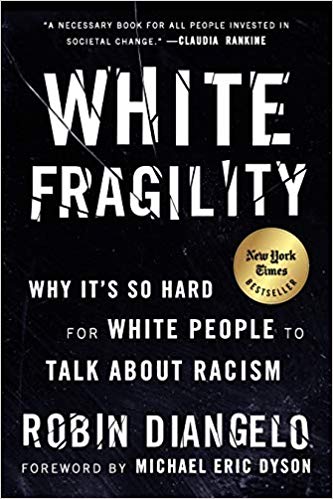
As we announced the luncheon, there was some confusion about the time and date. This discussion will take place on December 9 at 12pm.
If you were unable to pick up a copy, there are plenty in PALCI that we can borrow from, or can borrow from each other before the discussion. We do NOT have any more copies to give out at this time.
If someone is familiar with the book and would like to lead the discussion, please let us know.
In the meantime, we have a link here for the Zoom registration, which will be sent out closer to the event. Click here to register for Zoom link.


 It's Academic