The Mindful Library, continued
In my previous post, I shared some observations about three sections of the book Recipes for Mindfulness in Your Library: Supporting Resilience and Community Engagement. Here are some quick thoughts on the last section, Teaching/Research.
Chapters in this section generally focus on being “in the moment” when teaching or learning. This was timely. I’ve been in a few meetings recently where reading comprehension was discussed. Multitasking or rushing through a task just to finish it because you are looking ahead was mentioned as a deterrent to really absorbing information. We see this in ourselves and in students we work with – and being mindful of that is a good step in trying to focus.
The importance of checking in with students about what they are thinking and feeling “in the moment” is a key takeaway from the last chapter, “Overcoming Research Anxiety.” While many of us already check in during instruction or consultations – “do you have any questions about this?” – we may not get meaningful results. Instead, following the advice of this chapter, we might frame our questions to be more specific, acknowledging emotions. We can ask if the research process seems overwhelming, what part of the process students dread the most, and if any strategies helped in the past. In other words, we can try to start a conversation that might help students become more comfortable with research.
Based on the title alone, I probably don’t need to mention that Recipes for Mindfulness In Your Library is not a deep dive into theories and practices; concepts are explained just enough to highlight main ideas. This book is a good overview that provides topics to discuss with colleagues, programming ideas and ways to incorporate mindfulness into work.
CRD Virtual Journal Club Fall Wrap-Up
This past fall, the College & Research Division hosted a virtual journal club, which met online three times over the semester. The CRD Journal Club was originally established in Summer 2018, and runs in the summer, spring, and fall of each year. During the Fall 2019 series, the group discussed three scholarly articles, all examining students’ transitions from high school to college environments and how it relates to what we do in the library.
The first article discussed was “Secondary teacher perceptions and openness to change regarding instruction in information literacy skills,” by Sarah Crary and published in School Library Research. Participants discussed problems shared across both school and college/university libraries: a lack of relationships with teachers and faculty and the need to collaborate meaningfully with them to meet the students where they are in terms of information literacy skills.
The second article discussed was “Fortifying the pipeline: A quantitative exploration of high school factors impacting the information literacy of first-year college students,” by Jennifer L. Fabbi published in College & Research Libraries. This article primarily generated discussion about how to authentically assess and report on our impact on students.
The last article discussed was “Without foundations, we can’t build: Information literacy and the need for strong school library programs,” by Cara Berg, Darby Malvey, and Maureen Donohue and published by In the Library with the Lead Pipe. Participants shared their thoughts on barriers school librarians and incoming college students face, as well as ideas for building relationships between college/university and school libraries in order to make connections to better bridge gaps in information literacy skills.
Overall, this was a very illuminating series for the journal club, involving both academic and school librarians who were able to share and compare experiences. Many ideas were discussed and formulated amongst the group members, such as working closely with first-year faculty to determine and set expectations for information literacy within courses and sharing this kind of information literacy data with high school administrators, which will hopefully turn into successful projects and adaptations at individual institutions.
We look forward to our spring session, which will discuss critical librarianship. We will meet at 1:00 pm on February 19th, March 25th, and April 22nd. Participants can register for the series and attend any number of sessions that work for their schedules. Look for our upcoming emails!
Get ready for APA 7th Edition!
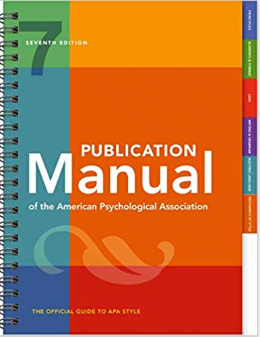
The American Psychological Association announced in October that they have finalized a new edition of APA Style. This update has some changes that will benefit students. Especially some simplifications to cover pages and citations . Here are some changes to be aware of:
- The cover page has changed drastically. The running head is gone! There is an example of a student cover page here.
- Book citations no longer require the location a book was published.
- There are several grammar changes listed on the APA Grammar and Usage page.
The APA doesn’t have a comprehensive list of all the changes but those are a few I was able to identify. Has anyone else noticed others? The APA Style Blog has a some excellent resources to help librarians transition to teaching the new edition in their Instructional Aids area. Any information literacy librarian will want to keep those on hand. The APA 7th Edition Style Manual has been out of stock at many book sellers so these online guides might be the only resources available for the next few months.
The Mindful Library
At the start of a new year, the subject of mindfulness often appears in media and conversation. Practices like meditation, yoga or journaling are suggested as New Year’s resolutions or intentions. This extends to our profession in our individual work and in a broad sense, as we plan programming and “de-stress” activities.
Being mindful (ha! sorry) of these types of conversations, it seemed like a good time to learn more about mindfulness and libraries. So, I borrowed (E-ZBorrow-ed, thanks PALCI!) Recipes for Mindfulness in Your Library. This book is edited by Madeleine Charney, Jenny Colvin, and Richard Moniz. (Charney was part of a 2017 Connect and Communicate webinar).
The first two sections of the book highlight efforts at public and academic libraries, including collaborations with other departments or organizations.
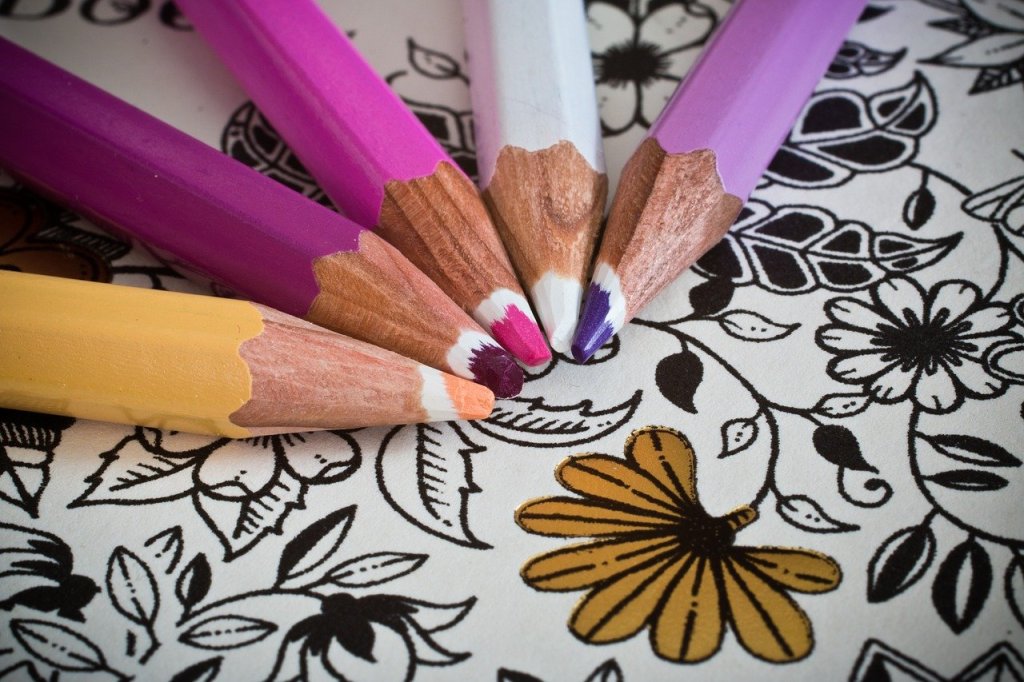
The more familiar topics of coloring books, yoga and therapy animals are included, along with approaches that incorporate virtual reality, light therapy, and dedicated spaces. One standout example was the Brain Booth at Humboldt featured in Chapter 6. If you, like me, find value in learning from other libraries’ planning and programs, these will be interesting chapters.
Sharing ideas about mindfulness programs for patrons is something I’m comfortable with, but my own practices are spotty at best. Usually, the day’s events take priority over a few minutes of reflection on an instruction session or project. So, I was not sure what to expect as I started reading the third section, Personal Practice. I learned that mindfulness can entail dedicating a few minutes to quick note-taking after a class, rather than a chunk of time set aside for Journaling with a capital J. Reflecting on the mood of the class, anything unexpected that happened, apprehensions and ideas, etc. is valuable in the moment as a way to help refocus, and move on to what’s next on the day’s schedule. This reflection can also help improve our instruction, and how we engage with students in the future.
I considered skipping Chapter 11, “Mindfully Managing Library Teams” because that is not my role. I’m glad I didn’t! Especially if you are part of a small team, this chapter is a good introduction to mindfulness among groups, awareness of colleagues’ strengths and weaknesses, and reasons to celebrate failures as well as successes.
In my next blog post later this month, I’ll share more about this book, including observations about the fourth section, Teaching/Research.
Plan S was a shot across the bow of commercial publishers when it was announced in 2018, “cOAlition S: Making Open Access a Reality by 2020.”
Many responses and adjustments have transpired, but one of the more interesting countervailing suggestions was made by the Chief Publishing Officer at Springer Nature in “A faster path to an open future.” It brought to the fore the idea of “transformative publishers” producing “transformative journals.”
“Transformative Publishing: Requirements for a new publishing standard: A proposal from Springer Nature” outlines the proposed criteria for becoming a transformative publisher, but it also raises questions. Would transformative publishing realistically result in transformative journals and will transformative publishers produce transformative journals in line with the goals of Plan S?
To get a handle on how you would answer these questions read “Addendum to the cOAlition S Guidance on the Implementation of Plan S.” Then help cOAlition S in its efforts to stimulate the migration to transformative arrangements by commenting on the proposed framework for transformative journals before 3 a.m. Eastern Standard Time (9am CET) January 6, 2020.
Springer Nature Group already made its response public in mid-December 2019, “Alternative conditions needed in order for cOAlition S’s proposal for Transformative Journals to succeed.”


 It's Academic