Consider attending the inaugural event in the Western Pennsylvania/West Virginia ACRL Chapter’s Professional Development Video Series. Registration is free and open to all colleagues regardless of geographical location or professional status.
WPWVC-ACRL Professional Development Video Series
Friday, June 19, 2020, 12:00 pm – 12:30 pm (EST)
Working From Home With Your Partner or Children – Tips and Tricks
Description: Not home alone? Join two colleagues who share their tips and suggestions to make the work from home experience better. Whether you share space with a partner or children, this session covers things that should be settled sooner rather than later and other recommendations.
Register via Zoom Link (Registration is required and free):
https://sru.zoom.us/meeting/register/tJMud-ypqjovHtDEqX4rFi_NHnoRSXRakIEg
Presenters:
Martin Dunlap–Engineering Librarian,West Virginia University
Rocco Cremonese—Business, User Experience and Outreach Librarian, Slippery Rock University of Pennsylvania
Do you have ideas for a presentation? Membership in WPWVC-ACRL is not required and we would love to consider you as a presenter. Please review our FAQ and fill out our Presentation Submission Form:(https://forms.gle/kPELzDBBJeejQuM66)
(https://docs.google.com/document/d/1dhZGNloF50SuJYgW-NV_LCOM9qkueqbqdOe0s8QC1Nk/edit?usp=sharing)
Do you want to know more about the series? Please contact Rocco Cremonese (rocco.cremonese@sru.edu) or the committee (profdev.wpwv.chapter@gmail.com).
How I learned to stop planning
There have been many uncertainties during this COVID19 crisis. As a matter of fact, it often feels like the only certainty we have any more is uncertainty!
Many of us have spent our professional careers, and possibly even moved up the professional ladder, by developing solid planning and organizational skills. In short, we have always been rewarded for having plans. A plan for this, a plan for that. Often we are asked “okay but what is your plan?” So we had this instilled in us that the pathway to success is having a solid, actionable plan. I know that has been my experience.
COVID19 has really challenged this tendency in me, as a librarian, as a campus administrator, and as a director. As soon as it became clear that we were going to have to change our daily lives, my first thought was, “I need to put a plan together.” But I think we all discovered very quickly that this was a pointless endeavor. We would spend Monday putting a comprehensive plan together that, by Tuesday, was irrelevant. As things changed on a daily, and oftentimes even hourly basis, planning became a moot point. All of those skills I developed and honed as a leader, organizer, and planner were suddenly not serving me or my team.
I quickly discovered, as I’m sure many of you have discovered as well, that in times of crisis trying to pretend that we as leaders have all of the answers was a waste. I don’t know about you, but at my University our students, staff, and faculty were looking to us for answers, and I simply didn’t have any answers to give them. At that point, communicating a “plan” was probably the worst thing we could have done when plans were changing so regularly. Trying to pretend we had a plan was misleading to our stakeholders.
This is a time to develop and hone new skills: vulnerability, honesty, and ethical transparency. The ability to stand in front of a group of people (figuratively, and virtually of course) and say “look, things are changing so fast, we simply can’t plan for the future right now” required skills I hadn’t yet developed, and I found myself deeply uncomfortable doing so. However, being ethically transparent was the best solution for everyone. Sometimes our students and stakeholders may think they need certainty and a plan, but really what they need is empathy from the administration. They were looking for leadership, and sometimes leadership means showing vulnerability. And that’s okay.
I had to develop a new way to communicate and lead during this crisis, and that has been “listen, I hear you, I am looking out for your best interests, and we will make decisions based on certain criteria while keeping everyone as safe as we can. Here is the criteria that will affect our decision making.” This has proven to be a much more effective way to lead during this crisis than “here’s my plan.” And at the end of the day, being vulnerable, ethically transparent, and empathetic with one another is what people need in uncertain times.
The latest issue of Pennsylvania Libraries: Research & Practice is now available at palrap.org
Articles include:
- Changes to PaLRaP Editorial Team: Welcoming Two New Co-Editors
- In the PaLRaP Spotlight: Tim Mulholland
- Phenomena of Cultural Intelligence in Pennsylvania Libraries: A Research Study
- Redefining the Pedagogy: Service-Learning in Libraries and Archives
- Connecting with Faculty and Students through Course-Related LibGuides
- Academic Integrity: Developing an Approach Students Can Own!
- Librarian Fascination and Student Confusion with “RE” words: Research, Reference, Resources, and Reserves
- Playing as Argument Architects: Bridging a Learning Gap in the Research Process
- Noteworthy: News Briefs from PA Libraries
Tom Reinsfelder & Larissa Gordon, Co-Editors
=======================================================================
Pennsylvania Libraries: Research & Practice (PaLRaP) is a peer-reviewed, open access journal, sponsored by the College and Research Division of the Pennsylvania Library Association. PaLRaP provides an opportunity for librarians in Pennsylvania to share their knowledge and experience with practicing librarians across Pennsylvania and beyond. The journal includes articles from all areas of librarianship, and from all types of libraries within Pennsylvania.
Beyond Stir-Crazy, Beware Traumatic Stress
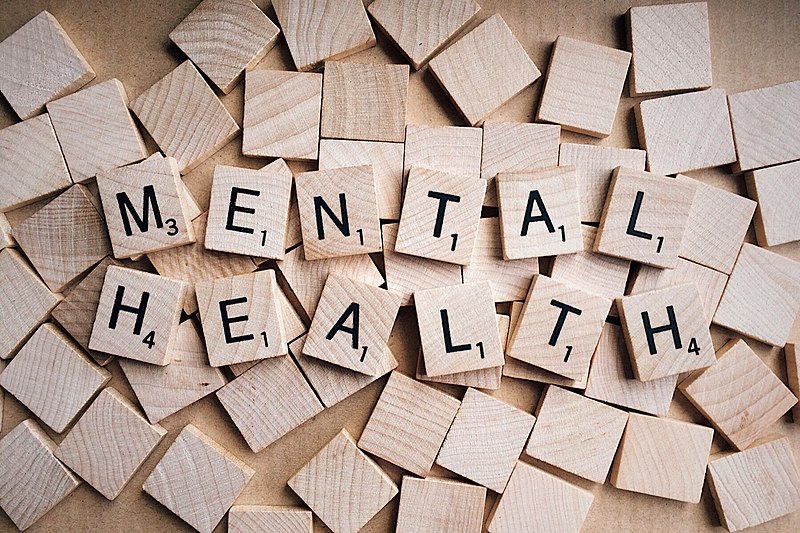
Many news sources have been offering advice over the last few months on how to cope with the stress of working from home, social distancing, and generally sheltering in place. With large parts of Pennsylvania moving into green or yellow status–for up to date information, see the Process to Reopen Pennsylvania website–we should be prepared for a new wave of anxiety, because the move is not without controversy and people remain fearful despite measures to mitigate the spread of COVID-19. Agnostic of political persuasion and where you stand on the issues, such as masks, there is one very real challenge that we should all acknowledge: quarantine fatigue.
There is of course crisis fatigue, pandemic fatigue, philanthropy fatigue, moral fatigue, compassion fatigue and even Zoom fatigue, but what is meant here by quarantine fatigue is the general erosion of mental health as a result of being in the midst of the pandemic even if you are not a health care worker or someone dealing with the disease directly. A blog post by the Cleveland Clinic states:
If you’ve felt any of these, you’re most likely feeling the effects of quarantine fatigue:
- Irritable.
- Stressed.
- Anxious.
- Eating more.
- Eating less.
- Unable to sleep.
- Unmotivated or less productive.
- Having racing thoughts.
- Or just on edge in general.
A recent feature from a local newspaper in Delaware, ‘Battle Fatigue’: Counselor offers advice on dealing with virus-related stress, mentions “sources for mental health assistance.” In Pennsylvania, there is also 2-1-1, a free 24/7 phone helpline which provides information and makes referrals to a wide range of health and human services (www.pa211.org), and the Pennsylvania Department of Human Services has an extensive resource website Mental Health in PA.
Suggested reading:
“Are You Experiencing Coronavirus Quarantine Fatigue?” Health Essentials from Cleveland Clinic, 14 May 2020, https://health.clevelandclinic.org/are-you-experiencing-coronavirus-quarantine-fatigue/.
Koehn, Nancy F. “Leadership Lessons From the Shackleton Expedition.” The New York Times, 24 Dec. 2011, https://www.nytimes.com/2011/12/25/business/leadership-lessons-from-the-shackleton-expedition.html.
Lufkin, Bryan. “How to Avoid Burnout amid a Pandemic.” Worklife, 30 March 2020 https://www.bbc.com/worklife/article/20200330-covid-19-how-to-learn-a-new-skill-in-coronavirus-quarantine.
“Quarantine Fatigue: How Will You Decide to Rejoin the World?” Psychology Today, 5 May 2020, https://www.psychologytoday.com/blog/mental-mishaps/202005/quarantine-fatigue-how-will-you-decide-rejoin-the-world.
Yuko, Elizabeth. “The Reason You’re Exhausted Is ‘Moral Fatigue.’” Rolling Stone, 27 Mar. 2020, https://www.rollingstone.com/culture/culture-features/corona-exhausted-moral-fatigue-974311/.
“‘Zoom Fatigue’ Is Taxing the Brain. Here’s Why That Happens.” Science, 24 Apr. 2020, https://www.nationalgeographic.com/science/2020/04/coronavirus-zoom-fatigue-is-taxing-the-brain-here-is-why-that-happens/.
Beginning June 5th, the county of Lehigh will be moving into the yellow phase as dictated by Governor Wolf. Things will certainly feel much different for us at Lehigh Carbon Community College as we make the slow transition of opening the doors of our physical library and offering our services hands-on to our patrons. As necessitated, we will need to proceed with caution. Our library will remain closed to students, staff, faculty, administration, and the public for the time being, with only librarians and library staff reporting to the physical building. Curbside service will be provided to our patrons three days a week; Tuesdays, Wednesdays, and Thursdays between the hours of 10:00 am and 5:00 pm. Patrons will need to give us twenty-four hours notice of requesting curbside service, or else our circulation staff need not report to the library that day.
While I am not circulation staff, I am proceeding forward by going in one day a week starting Tuesday, June 9th, to check on interlibrary loans. Already several libraries through OCLC and Access PA have shipped back items borrowed from us, so I am anxious to see if they have successfully made the transit. One of our librarians who lives close to the campus has been going into the library a few times a week even while we are in the red phase to check the mail and our book drop. (As can be expected, we are getting a lot of returned rentals meant for the campus store. Has anyone else had that issue?) He has confirmed for me that several interlibrary loans have been shipped to us.
Our president has been holding virtual “town hall” meetings to discuss protocol and procedures as we move into the yellow phase. Working remotely will still be encouraged where feasible. While there has been speculation that our county would be moving into the green within three weeks, I believe this is jumping the gun. From what I understand, this speculation has been based on the counties which moved into the yellow back on May 8th, and who are now moving into the green come June 5th. However, it is important to note that these are more rural counties, such as Bradford, where there were cases of COVID-19 not even in the triple digits reported. I believe it has been easier for these counties to proceed with moving forward into the green phase. Lehigh County needs to take it slower, in my opinion. As of Saturday, May 30, Lehigh County has 3,628 confirmed cases of COVID-19, making it the sixth-highest number of infection by county within Pennsylvania. Our neighboring county, Northampton, ranks seventh with 2,866 confirmed cases. The other county which our community college supports, Carbon, moved into the yellow phase last week and has only 227 confirmed cases of COVID-19.
Guidelines have been sent out to us regarding what to expect once we return onto campus. We cannot make impromptu stops; we need to report a schedule to our supervisors and stick to it so there is a thorough record of who is on campus in case an incident of COVID-19 is confirmed among one of us. We will most likely be responsible for providing our own masks, although there will be places on campus where we can get one should we need it. Other disinfecting materials, such as sprays, wipes, and hand sanitizer, will be provided by the college. I will need to develop some kind of protocol for handling interlibrary loans, such as sanitizing and quarantining materials before returning them.
I am curious to hear what other colleges moving into the yellow phase next week will be doing, especially those counties with a high number of confirmed cases of COVID-19, such as Philadelphia, Montgomery, and Delaware counties. Are you providing curbside services? When will you be opening your doors to your students? What about the public? How are you handling your interlibrary loans? Are you nervous about being back on campus?


 Adam Balcziunas
 Alex K.
 Alexandrea Glenn
 Andrea Pritt
 aprilnkelley
 Ashley Purvis
 Bethann Rea
 blj13
 Brendan Johnson
 Amanda Boyer
 Bret Stiffler
 Bonnie Powers
 Christopher Lemery
 clarewithers
 clblibrarian
 Kelly Clever
 Charlotte M. Johnson
 colemanluzerne
 CRD of PaLA
 crdvirtualjournalclub
 cre5314
 csgarth
 Erin B.
 danajkerrigancv
 denisewetzel1
 Darren G. Poley
 elm43
 Heather Burychka
 James D'Annibale
 Annie Jansen
 Jill Hallam-Miller
 jennifercribbs
 Jenn Monnin
 Jen Hasse
 Jessica Showalter
 johnmeier1
 Julie Durci
 Kelly Safin
 Kim Karim
 Kristen Seikaly
 Kayla Van Osten
 Cecelia Lasley
 librarianjsmith
 Linda Neyer
 mabogino1
 Matthew McNelis
 Meg Massey
 Maggie Savidakis-Dunn
 Rebecca
 miskatoniclibrarian
 Maureen Bentz
 Michele G. Anfuso
 Nicole Miyashiro
 paulmcmonigle
 Rob Sieczkiewicz
 ronlmccoll
 Sam Bardarik
 shannahollich
 smartin592
 Ula Lechtenberg