C&CS Presents
Revising the Revision: Moving New Information Literacy Instruction for FY Students Online in the Wake of COVID-19 with Beth Transue
Wednesday, March 17 at 1:00 pm EST
Register Here: https://zoom.us/meeting/register/tJUrdeqhrzojGNdiboCo8vWU7XEZOF4Ts6yy
Throughout 2018-19, librarians at Messiah University worked with the Director of First Year Core Courses to develop a scaffolded four-session information literacy program throughout the two core writing courses in the First Year student’s curriculum. Academic year 2019-2020 was the first year for full implementation. The first three sessions were delivered in person and included flipped and active learning strategies. COVID-related closure of campus required immediate conversion of the final session to an online format. The presenter will share information about these curricular revisions, and then the revision of the final information literacy session to online.
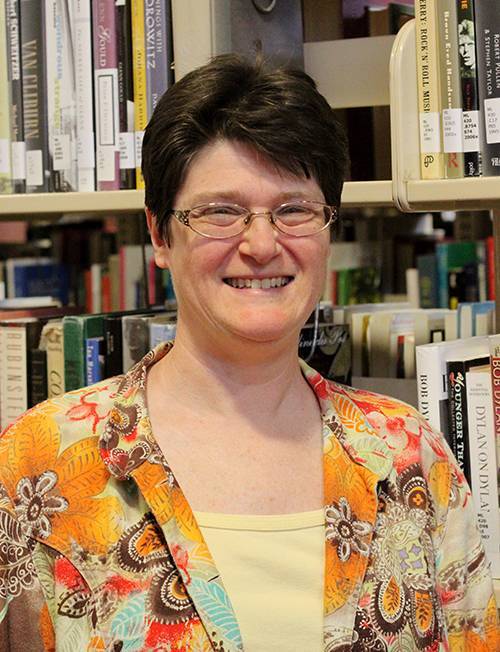
Beth M. Transue, MLS MET is the Information Literacy librarian at Messiah University. She coordinates information literacy instruction across the curriculum, from first year students to graduate level. Beth also serves as the liaison librarian for health and natural science departments, based on her academic background and experience working with national resource centers on behalf of NIH and CDC. As Beth stays at home this year due to COVID, she has worked on improving her genealogy research skills, making some unique family finds.
All C&CS Sessions are recorded and made available via the CRD website following the presentation.
This project is made possible by a grant from the Institute of Museum and Library Services as administered by the Pennsylvania Department of Education through the Office of Commonwealth Libraries, and the Commonwealth of Pennsylvania, Tom Wolf, Governor.
Support is also provided by the College and Research Division of the Pennsylvania Library Association: https://crdpala.org/.
C&CS Presents “Go with the Flow: Automations and More in Office 365” Recording Available
If you were not able to join us for Adam Haigh’s presentation on March 3, the recording is now available. Thanks to Adam for presenting and Katie Manwiller for moderating.
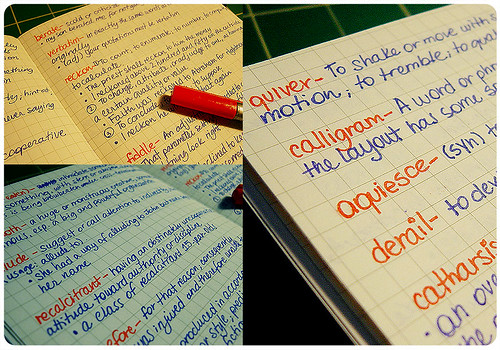
Librarians love their acronyms. During my first semester of Library School, I took a “Library 101” type course, part of which was learning a glossary of library terminology including acronyms: MARC, ILL, OPAC, OER, ALA, ACRL, LC, that sort of thing. I had been a heavy library user during my undergrad – the heck with closing down the bar, I closed down the library on many a night. But this was my first introduction to the language of libraries. I hadn’t heard of many of these terms, so was at a bit of a loss when I was given the list of terms and acronyms to memorize. I feel like we even had a “vocabulary” quiz on the terms at some point during the semester.
That experience can give a little perspective of how students and other patrons must feel when we start speaking in the library-ese. What do they experience when we stand in front of a classroom, or behind the reference desk, and tell them that if they can’t find the book in the OPAC then they will need to request an ILL using OCLC’s WorldCat? If we needed flashcards and a quiz grade to help us learn the terms, shouldn’t we be more aware of how unusual these terms can be for our patrons? Libraries like UC San Diego or Rutgers University Libraries have created glossaries on their websites to help patrons de-code our library language. Though I wonder how many take the initiative to study and learn the terms. Do many just leave our interactions feeling frustrated and unwelcome?
I was reminded of my Library School vocab quiz when I moved to a new state and joined a new library. I won’t admit how many times I had to Google an acronym to figure out the organization sponsoring a particular workshop, or to identify which service was being updated. It was a humbling experience for someone who has been in the profession for many years. I was a bit embarrassed and hesitant to clarify the meaning of the terms or acronyms, so I either spent time searching for the meaning myself, or sat there in ignorance hoping that I’d eventually catch on enough to figure it out… eventually…
If this is how I reacted unknown acronyms and terms, how many of our new colleagues, student workers, interns, or others new to the profession encounter the same experience. Associations and organizations, like the Librarians Association of the University of California (LAUC) have made glossaries geared to library professionals, similar to the ones created for our patrons. But is there another way, rather then putting the responsibility on the patron or newcomer to figure out what we mean?
Remember to KISS
Maybe we should look for ways to Keep It Simple… and not ASSUME – we all know what “assume” stands for, right? We all can fall into the trap of being stuck in our own heads. We make sense to ourselves, so we forget about the step of making sure others understand us. It’s easier sometimes to use the acronyms or terminology; it takes extra time and keystrokes to translate what we mean into non-librarian speak. We would need to re-train the way we, as librarians, think, but the return on investment (ROI) on taking these steps can be valuable to the relationships we build.
A way to re-train yourself related to acronyms may be adopting an acronym policy like the one the Pennsylvania Library Association uses in some of its meetings. Write out an acronym completely before using the abbreviation later in the conversation or the email. This strategy ensures that anyone new to the conversation, or just needing a reminder, is on the same footing as everyone else. You may even want to self-impose an Acronym Fine Jar (hat tip to my former home in the Virginia Library Association and its executive director Lisa Varga).
Even if you are speaking to a faculty member, seasoned researcher, or another library professional take a beat to check in with them to make sure that they understand the terminology that you are using. Allow space for them to ask for clarification without drawing attention to themselves. You may even want to consider whether you should use the library term at all. If the term or acronym isn’t used on the library’s website or in its promotional materials, then it might be better to use the public label of a tool or resource. Instead of referring to the OPAC or Discovery Tool, do you have unique title or label for the search box on the library’s home page?
What we “name” things on the public side of our tools and services is a whole other blog post, so I am going to end things here. If you are interested in that part of the conversation, there’s a blog post by Emily Hampton Haynes from ACRLog and a 2012 document “Library Terms that Users Understand” by John Kupersmith to get the ball rolling. They are just some examples of the work that is out there on the topic.
“Libraries of Babel: An Expansive Future for the Humanities,” a Digiseeds Webinar Open to All
You are invited to attend a virtual talk featuring Ted Underwood, PhD, on Thursday, March 11 from 4:00-5:00 p.m. Dr. Underwood, Professor, University of Illinois at Urbana-Champaign, will present “Libraries of Babel: An Expansive Future for the Humanities” as part of the Digital Seeds Speakers Series.

The last twelve months have not been kind to optimists. It may sound especially implausible to predict a bright future for the humanities right now, since enrollment and hiring are down in many disciplines. But, as paradoxical as it sounds, we are living in an age of unprecedented opportunity for the study of culture and history. Some of the opportunities are well publicized: for instance, digital libraries have opened up fundamental new research questions for literary scholars. I’ll give examples of that work, but the broader point of this talk is to propose that we’re living through a digital transformation that will matter for everyone, not just for academic researchers. In making it possible to explore culture as a latent space—a space of possibility—machine learning facilitates a kind of creative play that is akin to rigorous self-understanding. This is good news for the humanities, although our disciplinary institutions are admittedly struggling to seize the opportunity.
Ted Underwood is a professor in the School of Information Sciences and also holds an appointment with the Department of English in the College of Liberal Arts and Sciences. After writing two books that describe eighteenth- and nineteenth-century literature using familiar critical methods, he turned to new research opportunities created by large digital libraries. Since that time, his research has explored literary patterns that become visible across long timelines, when we consider hundreds or thousands of books at once. He recently used machine learning, for instance, to trace the consolidation of detective fiction and science fiction as distinct genres, and to describe the shifting assumptions about gender revealed in literary characterization from 1780 to the present. He has authored three books about literary history, Distant Horizons (The University of Chicago Press Books, 2019), Why Literary Periods Mattered: Historical Contrast and the Prestige of English Studies(Stanford University Press, 2013), and The Work of the Sun: Literature, Science and Political Economy 1760-1860 (New York: Palgrave, 2005). Website: https://tedunderwood.com/
Please REGISTER at the following link: https://villanova.zoom.us/meeting/register/tJwlceCvqDMuH93MCsOeWRv9UzJgh3g_uKz5
Once registered, you will be sent a Zoom link to the event.
This event is sponsored by Villanova University’s Falvey Memorial Library.
Call for Presenters at the Pennsylvania Library Association Conference!
Call for Presenters – Share Your Ideas, Knowledge & Experience at the Pennsylvania Library Association 2021 Conference!
The 2021 Pennsylvania Library Association Conference, Welcome, Neighbor! is scheduled to take place October 17 – 20, 2021 at the Pittsburgh-Monroeville Convention Center.*
The 2021 Program Committee is currently accepting proposals for sessions to take place during the conference, to include more than sixty educational sessions on topics of interest for the library community.
If you are an expert on a topic that you feel will be of interest to this group, we invite you to submit a session proposal!
The deadline for submissions is Monday, March 22, 2021.
Why Present?
The PaLA Annual Conference provides the library community a variety of continuing education, supplier resources and networking opportunities. The typical attendance of nearly 600 library practitioners includes approximately 75% from public libraries, 20% from academic libraries and the remaining 5% from corporate, medical, or government libraries or other affiliations in the library community.
PaLA Conference presenters are afforded the following benefits:
- Establishment as an expert in the field.
- The potential for future speaking engagements with a pending invitation to join PaLA’s speakers bureau. (Invitation based on favorable session evaluations)
- Possible publication opportunities for your abstract or presentation.
- Recognition of your presentation to be included in the conference registration brochure and in the final conference program book. Both publications will also be available on the PaLA website.
- The satisfaction of sharing your expertise with the PA library community and improving library service in the Commonwealth.
Presenter Registration & Compensation
- Session presenters must attend their session during the live, virtual event, whether or not the session is live or pre-recorded.
- Please note that we value speakers who are members of the Pennsylvania library community, however unless funded by an outside source, we are not able to offer speaking fees or reimbursement of expenses for this group.*
- With required registration for PA library professionals* on the day of their presentation,presenters can take part in networking opportunities and receive inspiration from other library leaders during conference sessions.
- Discounted registration fee. (Nonmember presenters may register at the member rate.)
*Rule does not apply for out of state presenters or those working outside the library field.
Submission & Decision Timeline
- Program proposals will be accepted through Monday, March 22, 2021.
- Review and selection of submissions will take place March 23 – April 10.
- Notification regarding acceptance will begin the week of April 19.
- Presenter confirmation of program acceptance due by April 30.
Session Evaluation Criteria
The charge of the Conference Program Committee is to analyze, design and develop the educational content for PaLA’s Annual Conference. Such content must address the educational needs and interests of the Pennsylvania library community.
- Session objectives are measurable, achievable and provides an opportunity for our members to grow as professionals.
- Presenter appears qualified to lead the session.
- Presenter is able to make a firm commitment to be available.
- Speaker Fee (if requested) is within conference budget parameters.
- For session proposals on similar topics, peer-to-peer presenters, who are PaLA members, are preferred over nonmembers.
We receive many more proposals than the program schedule can accommodate. Please do not be discouraged if your proposal is not selected. We do multiple events, and may be able to include your presentation as a poster session or at a regional chapter workshop.
https://www.surveymonkey.com/r/2021ProgSub
*The PaLA Board is monitoring CDC guidelines, as well as input from the Pennsylvania library community regarding an in-person event. Potential presenters are provided with the option to share their preference regarding an in-person or virtual presentation.


 Adam Balcziunas
 Alex K.
 Alexandrea Glenn
 Andrea Pritt
 aprilnkelley
 Ashley Purvis
 Bethann Rea
 blj13
blj13 Brendan Johnson
 Amanda Boyer
 Bret Stiffler
 Bonnie Powers
 Christopher Lemery
 clarewithers
 clblibrarian
 Kelly Clever
 Charlotte M. Johnson
 colemanluzerne
 CRD of PaLA
 crdvirtualjournalclub
 cre5314
 csgarth
 Erin B.
 danajkerrigancv
 denisewetzel1
 Darren G. Poley
 elm43
elm43 James D'Annibale
 Annie Jansen
 Jill Hallam-Miller
 jennifercribbs
 Jenn Monnin
 Jen Hasse
 Jessica Showalter
 johnmeier1
 Kelly Safin
 Kim Karim
 Kristen Seikaly
 Kayla Van Osten
 Cecelia Lasley
 librarianjsmith
 Linda Neyer
 mabogino1
 Matthew McNelis
 Meg Massey
 Maggie Savidakis-Dunn
 Rebecca
 miskatoniclibrarian
 Maureen Bentz
 Michele G. Anfuso
 Nicole Miyashiro
 paulmcmonigle
 Rob Sieczkiewicz
 ronlmccoll
 Sam Bardarik
 shannahollich
 smartin592
 Ula Lechtenberg
 It's Academic