Student-Centered Change
This past fall, I attended the International Federation of Library Associations and Institutions’ (IFLA) virtual conference: Managing and Marketing Inclusion in Libraries. Many of the presentations focused on creating welcoming spaces for individuals who are neurodiverse. Neuro-diversity includes people with autism spectrum disorders (ASD) as well as people with ADHD and learning disabilities. As I watched the presentations, I remembered that my institution, Susquehanna University, has a Neuro-Diversity and ASD support group for our students through our Counseling and Psychological Services (CAPS). This got me thinking, “How many students on my campus are neuro-diverse?”
I decided to dig deeper. I looped in my colleague, Amir El-Chidiac, our Diversity Resident, as they and I share a passion for accessibility in libraries. We reached out CAPS and asked if we might attend one of the meetings to ask the students how they felt about the library space. We learned that about 20% of the student body have accommodations via the Disability Services Office, and a majority of these students are neuro-diverse. Keeping this in mind, we knew whatever we learned at the group meeting had to become a top priority.
During the meeting, we asked a few questions, but mostly, we listened. The students kept expressing how they were just so glad someone on campus was finally asking them how they felt in certain spaces on campus. No one had ever asked them before. They had lots of ideas, but they were also mindful that change takes time and money. They were so glad to have their voices heard, and they said whatever changes we could make would be greatly appreciated. Students expressed concerns with the harsh lighting of the study rooms, the unpredictable amount of people in the building, the cleanliness of the café, the method of booking study rooms, etc.
We offered some ideas, but we made sure any changes we implemented would be approved by the students first. For example, we offered to have a box of items at the circulation desk, such as fidget toys, ear plugs, etc., that the students could check out and take to a study room. The students explained how they would feel embarrassed by such a large item that may make their neuro-diversity very obvious to other students. They instead suggested keeping the box at the desk and allowing students to check out just a few small items at a time. They also told us how important it was that there be cleaning supplies offered with the items, so the student using the item could make sure it was sanitized.
So far, with input from this student group, we have implemented a fidget box at our circulation desk full of a variety of fidget toys for all students to check out. We also purchased disposable ear plugs and noise cancelling headphones. With help from our Systems Librarian, Brianne Dort, we also implemented an occupancy counter where the students can check online how busy the library is. We will be attending the group’s next meeting to get feedback on how the changes are working so far as well as to get feedback on our next steps. This summer we hope to price out dimmer switches for the lights in the study rooms as well as convert one of our study rooms into a neuro-diverse friendly study room. Not only are these students more excited about using the library, but they are also currently using us as an example to advocate for change across the university. They recently asked the gym and the cafeteria to consider implementing occupancy counters like the library has.
What student groups exist on your campus that you can partner with to implement change in your library? How can your library be a leader for change on your campus?
Capturing the Web: Introduction to Web Archiving
Preservation & Digital Archivist Beaudry Rae Allen, from Villanova University’s Falvey Library will present a virtual workshop entitled “Capturing the Web: Introduction to Web Archiving,” Wednesday, Apr. 20, Noon–1 p.m. EDT.
“Web archiving is the process of gathering up data that has been recorded on the World Wide Web, storing it, ensuring the data is preserved in an archive, and making the collected data available for future research. Get a foundational overview of web archiving in this workshop and learn ways to leverage the Wayback Machine and other web preservation tools in your scholarship and teaching.”
A part of the Falvey Forum 2022 series, this event is co-sponsored by Falvey Memorial Library and The Albert Lepage Center for History in the Public Interest, Villanova University. It is free and open to the public, however pre-registration is required.
C&C Presents: “Promoting Inclusion in the Academic Library with a CILLS Program Internship” on 4/20/2022 at 11:30am
Allyson Wind, Electronic Resources Librarian at East Stroudsburg University, will discuss how Kemp Library is promoting inclusion by having a CILLS student participate in a library internship. The Career and Independent Living and Learning Studies (CILLS) program helps young adults with intellectual and other developmental disabilities prepare to lead productive lives in their communities. In 2019 and again in 2021, the library has accepted a CILLS student to intern at the library in order to learn soft skills like communication and problem solving that can be transferred to any job placement in the future. In addition to learning soft skills, the CILLS intern learns valuable library related skills like alphabetizing and shelving books according to the Dewey Decimal System.
Allyson Wind is the Electronic Resources Librarian at Kemp Library, East Stroudsburg University.
As a reminder, the Zoom link will be sent approximately 48 hours before the session. We will mute participants on entry into the Zoom room. Session will be recorded and available on YouTube after the session. We will enable Zoom’s Live Transcription feature during the session.
If you would like to present with C&CS, please contact the C&CS team.
This project is made possible by a grant from the Institute of Museum and Library Services as administered by the Pennsylvania Department of Education through the Office of Commonwealth Libraries, and the Commonwealth of Pennsylvania, Tom Wolf, Governor.
Support is also provided by the College and Research Division of the Pennsylvania Library Association.
Virtual Event Features Award-Winning Author
Author Sharon G. Flake will be the featured speaker at the Pitt-Greensburg Children’s Literature Conference free virtual event at 6 PM on Wednesday, April 13, 2022. Following the author’s talk, there will be a question-and-answer session.
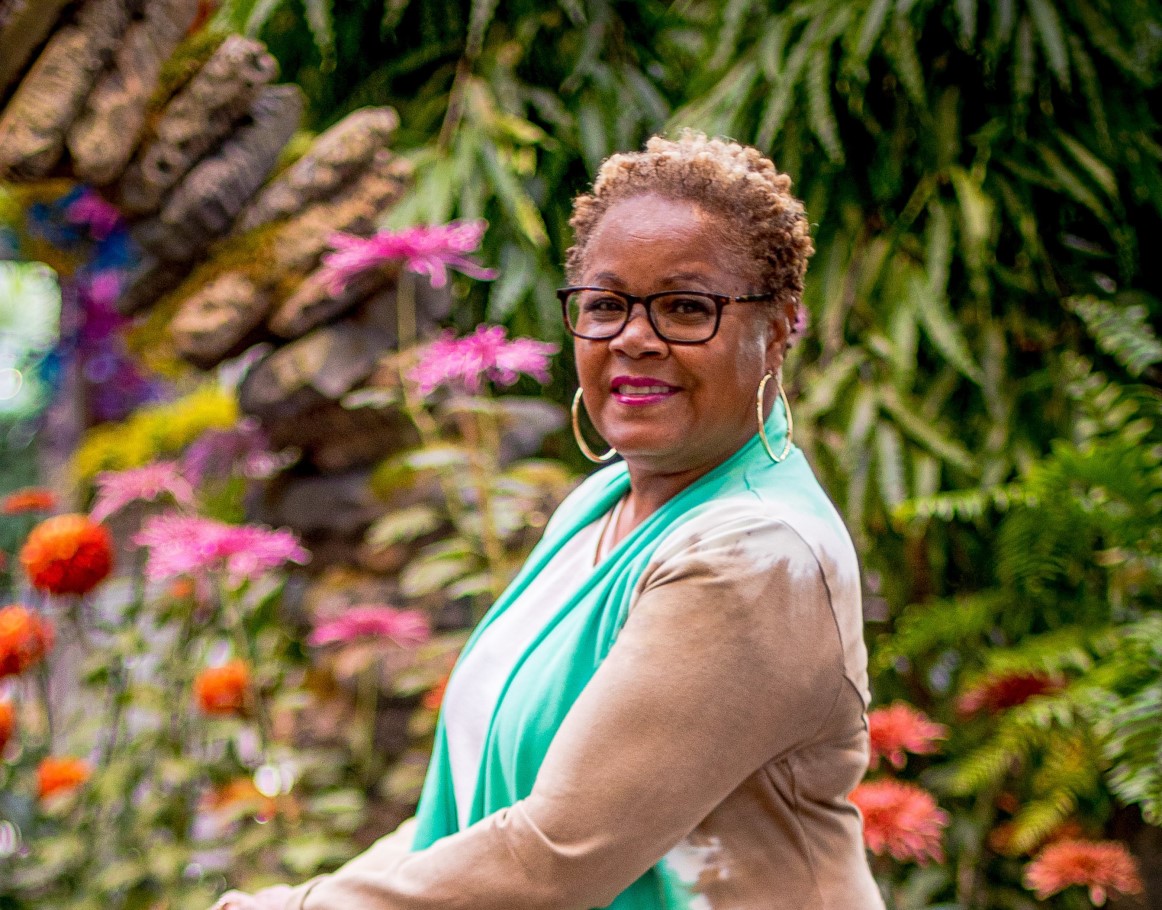
Flake’s latest novel, The Life I’m In, is a 2021 Kirkus Prize finalist. It has also been named a top ten book of the year by ALA and Kirkus, and is considered one of the most anticipated sequels of the decade.
The Life I’m In is the sister novel to Flake’s groundbreaking book, The Skin I’m In. Now considered a modern classic, The Skin I’m In has sold almost two million copies worldwide and has been translated into numerous languages. The novel is required reading in classrooms and communities around the globe.
Since its publication, Flake has authored over a dozen books, winning multiple Coretta Scott King Honor Awards, ALA Notable and Top Ten Recommended Books citations, and an NAACP Image Award Nomination, among many accolades. For more information on Sharon G. Flake, please visit her website.
For more information and Zoom registration for this event, visit the conference website. This is a great (free!) opportunity for educators, parents, librarians, and readers in general to hear insights from an award-winning author.
Digital Inequity Still Dividing
When I was in library school (so begins most stories of a librarian)…. when I was in library school one of the big topics we discussed in most every class was the digital divide. Those who had access to technology and those who did not. Back then, it was computers and dial up or maybe DSL. A lot has changed since then: smartphones and broadband arrived on the scene, and access to online resources has become even more essential for daily tasks. But, even with all the advances, the digital divide still a major issue that libraries are fighting in their communities. Like Cassandra we had been warning our local, state, and federal leaders that digital inequity is a serious problem, but it took a pandemic for many to sit up and take notice. It remains to be seen whether this awareness will lead to any lasting changes.
You might think that digital inequity is an issue more for public libraries than academic ones, but we still see the consequences of the digital divide with each group of incoming students. Especially schools who serve more rural or urban communities, or those who have a large commuter population. Libraries are often at the front lines trying to triage students’ struggles with technology: students may not be able to afford a computer so they still need our labs or to borrow one of our laptops. We may need to be open in the evenings/weekends just to provide a space for students to complete an assignment with a reliable internet connection. Beyond the divide in access to technology equipment, often we serve as “gurus” who unlock the secrets of the academic software students must use to complete their coursework. Students may not have used a learning management system before (Blackboard, Canvas, Moodle, etc) and don’t know how to submit an assignment. Or, they don’t know how to access their school email account to send their essay as an attachment to their professor. Unfortunately, these technology basics are rarely included in student orientations or first-year coursework. (The fallacy of a digital native is another topic for another blog post).
The latest issue of American Libraries is devoted to “Digital Equity” and highlights the work libraries did during the pandemic to support our communities and how libraries are leveraging this new attention to the digital divide to make lasting changes in their communities. With a nice bit of unplanned synergy, the Teaching and Learning Roundtable of the Pennsylvania Library Association has planned a Spring Workshop with the theme of “Equity and Technology.” Librarians and library staff from all types of libraries are invited to attend, and there will be spaces for them to listen and share and learn from each other. The workshop will be on May 23rd and will be in-person at the Pattee/Paterno Library at Penn State, University Park. It will be my first in-person workshop in a long time (2019?) so I am excited to engage face to face with my colleagues from throughout the state. Zoom and other video conferencing tech was a lifeline during the pandemic, but it brought with it its own “digital divide” and cannot replace the serendipity of in-person interactions. Hope to see you there!


 Adam Balcziunas
 Alex K.
 Alexandrea Glenn
 Andrea Pritt
 aprilnkelley
 Ashley Purvis
 Bethann Rea
 blj13
blj13 Brendan Johnson
 Amanda Boyer
 Bret Stiffler
 Bonnie Powers
 Christopher Lemery
 clarewithers
 clblibrarian
 Kelly Clever
 Charlotte M. Johnson
 colemanluzerne
 CRD of PaLA
 crdvirtualjournalclub
 cre5314
 csgarth
 Erin B.
 danajkerrigancv
 denisewetzel1
 Darren G. Poley
 elm43
elm43 Heather Burychka
 James D'Annibale
 Annie Jansen
 Jill Hallam-Miller
 jennifercribbs
 Jenn Monnin
 Jen Hasse
 Jessica Showalter
 johnmeier1
 Julie Durci
 Kelly Safin
 Kim Karim
 Kristen Seikaly
 Kayla Van Osten
 Cecelia Lasley
 librarianjsmith
 Linda Neyer
 mabogino1
 Matthew McNelis
 Meg Massey
 Maggie Savidakis-Dunn
 Rebecca
 miskatoniclibrarian
 Maureen Bentz
 Michele G. Anfuso
 Nicole Miyashiro
 paulmcmonigle
 Rob Sieczkiewicz
 ronlmccoll
 Sam Bardarik
 shannahollich
 smartin592
 Ula Lechtenberg