LOEX Recap and things for my summer list
I recently attended LOEX in Harrisburg, PA where someone told a story of a colleague who wrote down every time they said they’d do something in the summer. Summer came and they had a very long list of things to do (much like in Kelly Safin’s post 😉). Here are some reflections from LOEX and peep into my own summer list.
LOEX is my favorite conference because of its unique focus on instruction. At ACRL earlier this year, a technical services friend said he had to convince his admin to allow his attendance at ACRL because they saw it as an instruction conference. While there may be sessions about teaching, I see it as a research-heavy conference. LOEX is THE instruction conference.
This year, I found myself targeting sessions that focused on issues around mis- and disinformation. Amber Willenborg and Robert Detmering from the University of Louisville shared results from their research project about if and how librarians are dealing with misinformation in their teaching. In their presentation, “I Don’t Think Librarians Can Save Us:” Anxiety and Resilience in the Misinformation Crisis, Willenborg and Detmering described while librarians are limited by time and know that they alone cannot fix the problem of misinformation, many do engage with their students on the topic in ways that they can. In his session, Teaching Information Literacy in Untrusting Times: Prioritize Research for Understanding (not just Knowledge) Mark Lenker shared just how he engages with students when their trust in experts is in decline, focusing on making meaning in a complex information landscape.
One session that I went to on a whim was Creating a Values-Based Future: Reflection & Planning to Support the Creation of Sustainable Library Practices. In this session, the presenters shared activities from a team workshop that helped them create a vision and mission statement for their department. It was a challenge to do these activities just as an individual and I don’t think it was exactly the right time for me professionally, because we are anticipating organizational changes in our library. However, I am excited to dive into these activities with my own team when the time is right.
On my to do list
- Lead a Reading Circle about teaching and learning
- Plan out a new tiered-approach to research skills instruction
- Create digital learning objects for sustainable and scalable use across the disciplines
- Hang out with my family!
2023 Information Literacy Summit Registration Open
Registration for the 2023 PA Forward® Information Literacy Summit is now open!
The Summit will be completely virtual this year.
The Summit takes place on July 26, 2021 from 8:30AM to 3PM.
Attendees will receive CE and ACT 48 Credits (total to be determined)
Registration and further details are available via the PaLA website:
https://www.palibraries.org/event/2023PAFVirtualInfoLitSummit
Registration will be open through Friday July 21, 2023
Collaborating with ROTC Cadets on Your Campus
The Reserve Officers’ Training Corps (ROTC) is a program run by the United States military that trains college students to become military officers upon graduation. Each military branch has a corresponding corps:
- Army ROTC – https://www.army.mil/ROTC
- Naval ROTC (NROTC — includes the Marine Corps): https://www.netc.navy.mil/NSTC/NROTC/
- Air Force ROTC (AFROTC – includes Space Force): https://www.afrotc.com/
Cadets (Army and Air Force) and Midshipmen (Navy) are college students who can major in whatever they wish – ROTC is considered either a minor or an elective course depending on the school. These courses include everything from basic military history to leadership labs, with most field training occurring in the summer. They are not on active duty and ineligible for deployment. However, they are paid a monthly stipend and most participating students receive full tuition scholarships. When they graduate, they receive commissions in the branch they chose with the rank of Ensign for NROTC graduates and Second Lieutenant for all others.
All three branches have programs at various locations across the state. Most units have a central location at a larger campus, while smaller schools near that campus have agreements in place to send any interested cadets to that location. The major locations are:
- Army ROTC
- Bucknell University
- Clarion University of Pennsylvania
- Dickinson College
- Drexel University
- Edinboro University of Pennsylvania
- Gannon University
- Indiana University of Pennsylvania
- Lehigh University
- Lock Haven University of Pennsylvania
- Moravian College
- Penn State University Park
- Shippensburg University
- Slippery Rock University of Pennsylvania
- Temple University
- University of Pittsburgh
- University of Scranton
- Valley Forge Military College
- Widener University
- NROTC
- Carnegie Mellon University
- Penn State University Park
- University of Pennsylvania
- Villanova University
- AFROTC
- Penn State University Park
- St. Joseph’s University
- University of Pittsburgh
- Wilkes University
As a librarian at Penn State University Park, I happen to be at the only location in the state that hosts all three branches. This has given me the unique opportunity to collaborate with cadets to create guides and programs that meet their specific needs.
For example, every fall, AFROTC conducts its Professional Officer Course Leadership Laboratory (POC LLAB) for cadets in their third year of study. Senior students who took the course the previous year act as teaching assistants and guides, which gives them some mentoring experience before they graduate and earn their commissions. In 2021, a few of the seniors who happened to be engineering majors and knew I was a librarian asked if I could create an online course guide to help cadets find the information they would need to complete the required research assignments. I worked with them as I would have done if they were faculty instructors, determining the intended outcomes of the course and assignments so that we could decide which information sources would be the best to include. The guide was completed in time for the cadets to begin their final project, which they presented at the end of the semester to the rest of the AFROTC unit. The guide remains in use and can be found at https://guides.libraries.psu.edu/UP/AF_ROTC_POC_LLAB. I have even been invited to the presentations for the Fall 2021 and 2022 semesters.
This project led me to ask the cadets if a general ROTC LibGuide would be of use to them. Their overwhelming positive responses became the major factor in creating such a guide during the Spring 2022 semester. I worked directly with both upper-class cadets and midshipmen to determine what information to include. The officers in charge of the units were kept in the loop as much as possible and had ideas to add as well. The result is a guide that is useful for all Penn State cadets, including those who are students at Commonwealth Campus locations — https://guides.libraries.psu.edu/ROTC. The guide is broken down into five main sections:
- General information on Penn State ROTC
- Information relevant to all services
- AFROTC-specific information
- Army ROTC-specific information
- NROTC-specific information
We included everything from uniform standards and physical fitness guides to data on major bases and official writing guides. Like the other LibGuides I control, I edit it every summer to ensure that all the information and links are current.
Although you may not know it, it is probable that you have a few cadets on your campus. Like members of any other organization on campus, they are students first with the same informational needs that all your other patrons have. However, as cadets, they also require access to special information that you may not normally deal with. You don’t need a military background to help them out. All you need is to know where to find what they need, and hopefully the guides I created can help you with that – and even inspire you to work with your cadets and midshipmen to create your own.
Not-Really-Lazy Days of Summer
At campuses where summer semesters are quieter than the rest of the year, you’ve probably heard comments like this:
- “Wow, I bet you’re looking forward to a calm few months. What do you do all summer, anyway?”
- “Now that summer is almost here, let’s change All the Things!”
- “I have so much to catch up on this summer.”
- “Summer is a great time to have workshops and professional development!”
- “Maybe over the summer we can come up with new outreach ideas.”
- and more…
In my experience, the time between spring and fall semesters has been short, busy, and lacking any magic to complete All the Things.
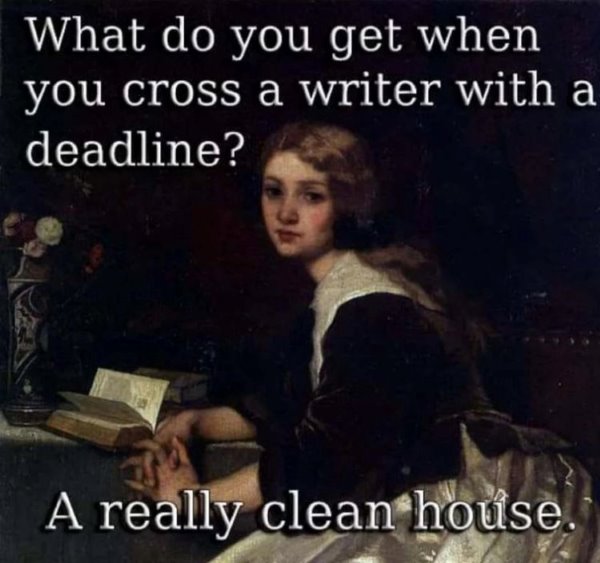
That being said, some of my colleagues and I hope to tackle writing or research projects this summer. Given the season’s tendency to go by quickly (reminder: take your vacation!), inspiration to start sooner rather than later is important. Here are a few resources that I’ve found helpful.
LRRT webinars
ALA’s Library Research Round Table (LRRT) periodically hosts some great webinars related to library research topics. I haven’t made my way through all of them yet, but I learned a lot from the earlier sessions about framing research questions, literature reviews, and publishing.
Pomodoro
If you need a little extra help to avoid distractions and just get started, consider the pomodoro technique. Work sessions are timed, with breaks in between. It may seem counterintuitive, but for some, breaks can prevent fatigue and help boost concentration.
Reading about writing
Books, articles and websites can help in your approach to academic writing. I like the practical ideas and goals shared in Publish and Flourish by Tara Grey, and your library may have other books with advice and strategies. If you haven’t already come across A Library Writer’s Blog, it’s a great place to learn about calls for proposals and get writing ideas. And yes, there are LibGuides with tips and resources as well, such as Research and Writing for Librarians.
PaLA resources
Pennsylvania Library Association’s College & Research Division offers several publishing and learning opportunities, such as contributing to this blog!
Finally: Progress, not perfection
How often have we heard instructors tell their classes (or said ourselves to students) that they should start writing or working on the assignment they are dreading, and make revisions later? I catch myself sometimes thinking I can’t start something because I need more time, or creativity, or whatever. Conditions are never going to be perfect, and just getting started can help you build momentum and plan next steps.
There are lots of other ways to reach your writing goals, like having an accountability partner or forming a writing group. If you’ve found a strategy that works for you, please post a comment and share!
First-Year courses are the bread and butter of many academic libraries’ information literacy programs, and the same is certainly true for us at W&J. First-Year information literacy instruction sessions are an opportunity to welcome students to the library and to campus and get them up to speed early in their college careers (Goodsett and Schmillen, 2022, pp. 91, 95). Goodsett and Schmillen (2022) discuss in their article, “Fostering Critical Thinking in First-Year Students through Information Literacy Instruction,” that these sessions are also opportunities to foster greater critical thinking skills (both of which are critical to their success as college students) (pp. 93, 98-100). At W&J, we’re working to find a better path forward to make our information literacy and critical thinking instruction more effective for our first-year students through a multi-pronged approach.
Our current experience at W&J mirrors the experiences reported by Goodsett and Schmillen (2022) – many libraries are frequently trying to do too much in one-shot instruction sessions in first-year classes (pp. 100, 102, 104). As argued by Christina Heady, Jennifer Horton, and Joshua Vossler (2023, March) at ACRL 2023, the one-shot structure is not ideal for incorporating all of the information literacy and critical thinking skills librarians would like to impart to first-year students. However, at W&J, we have been doing our best to squish in as much as possible our 70- or 115-minute class sessions, especially since many of the solutions proposed by Heady, Horton, and Vossler (2023, March) were best suited for larger institutions with dozens if not hundreds of employees. With that said, squeezing in material is challenging for librarians to teach and students to retain. This is exacerbated by the fact that many first-year seminars are moving away from traditional research assignments, and so students struggle to apply the information literacy skills we teach them when they visit the library during their first few weeks of classes.
In the Fall 2022 semester, we began an academic year-long pilot program to incorporate information literacy instruction into English Composition (W&J’s equivalent of first-year writing) courses. The instruction sessions encompassed a wide range of basic information literacy concepts from topic and keyword development, search strategies for popular library databases, and critical and contextual source evaluation. The assignments in English Composition are more traditional research projects, and so we hoped that those assignments would make it easier for the students to apply the information literacy skills discussed in our sessions. This program took off beyond our hopes, thanks to the enthusiasm of the department chair and the adjunct instructors who teach the majority of the English Composition classes. We were able to visit all but one or two sections in the Fall semester and visited all sections in the Spring semester.
The success of the pilot program and the ill-fitting nature of the assignments commonly assigned in first year seminars have presented an opportunity for us to strive more towards by Heady, Horton, and Vossler’s (2023, March) more integrated approach through the creation of a multipronged approach to first-year library instruction. This approach, which we will try for the Fall 2023 semester, will involve the first-year seminar library instruction transforming into more of an orientation to the library (a direction we explored during the Fall 2022 semester with success) with the option for professors to request a more in-depth information literacy session and the expansion of the English Composition pilot program to include more than one librarian teaching the 7-10 sections each semester. We are also looking for more ways to incorporate primary source literacy into our English Composition lesson plans. We plan to continue our personal librarian model in the first-year seminars because we have found that it helps students feel more comfortable navigating the library to have a familiar face around. This new program is an experiment, but hopefully one that will give us more opportunities to engage with students and encourage them to develop/hone their critical thinking and information literacy skills over the course of their first year in college.
How do you structure your work with first-year students? I’d love to hear about other models as well as any feedback on our plans!
References
Goodsett, M., & Schmillen, H. (2022, January). “Fostering critical thinking in first-year students through information literacy instruction.” College & Research Libraries, 83(1), pp. 91-110. https://doi.org/10.5860/crl.83.1.91.
Heady, C., Horton, J., & Vossler, J. (2023, March). The questionable efficacy of one-shot instruction for first-year students: a scoping review [Contributed Paper]. ACRL 2023, Pittsburgh, PA.


 Adam Balcziunas
 Alex K.
 Alexandrea Glenn
 Andrea Pritt
 aprilnkelley
 Ashley Purvis
 Bethann Rea
 blj13
blj13 Brendan Johnson
 Amanda Boyer
 Bret Stiffler
 Bonnie Powers
 Christopher Lemery
 clarewithers
 clblibrarian
 Kelly Clever
 Charlotte M. Johnson
 colemanluzerne
 CRD of PaLA
 crdvirtualjournalclub
 cre5314
 csgarth
 Erin B.
 danajkerrigancv
 denisewetzel1
 Darren G. Poley
 elm43
elm43 James D'Annibale
 Annie Jansen
 Jill Hallam-Miller
 jennifercribbs
 Jenn Monnin
 Jen Hasse
 Jessica Showalter
 johnmeier1
 Kelly Safin
 Kim Karim
 Kristen Seikaly
 Kayla Van Osten
 Cecelia Lasley
 librarianjsmith
 Linda Neyer
 mabogino1
 Matthew McNelis
 Meg Massey
 Maggie Savidakis-Dunn
 Rebecca
 miskatoniclibrarian
 Maureen Bentz
 Michele G. Anfuso
 Nicole Miyashiro
 paulmcmonigle
 Rob Sieczkiewicz
 ronlmccoll
 Sam Bardarik
 shannahollich
 smartin592
 Ula Lechtenberg
 It's Academic