PaLA for Academic Librarians
If you’re attending PaLA next week, there will be a special poster session dedicated to academic librarians. This session will be on Tuesday from 1-2 PM, and it will feature the following posters:
**blinking lights** “WE’RE OVER HERE!” **blinking lights** Outreach to Post-Pandemic College Students
Sheli Pratt-McHugh, Research & Instruction Librarian for Technology & Outreach, University of Scranton
Since fully reopening and welcoming students back to campus post-covid, our outreach efforts had to be reexamined. We have added two new campus wide digital platform, embraced video content like reels, and increased social media content overall. Come hear what has and hasn’t worked to capture the attention of Gen-Z.
Collaborating with a Campus Writing Committee to Create an Information Literacy Wheel
Beth M. Transue, Information Literacy Librarian, Messiah University
The Writing Across the Curriculum Committee created an Essay Wheel to help students visualize the writing process. Librarians then collaborated with the Committee to map information literacy concepts onto the Essay Wheel and create a Research Strategies Wheel to illustrate the intersection of information literacy and the writing process.
Does Reading Actually Make a Difference? Reading Impacts on “Searching as Strategic Exploration”
Brendan Johnson, Outreach and Engagement Librarian, Penn State Abington
Emily Reed, Reference and Instruction Librarian, Penn State Harrisburg
This poster will share the results of a study that examined incoming first-year college students’ reading preferences and their information literacy, highlighting the finding that students’ practice of wide reading and possession of books in the home has a positive correlation with the “Searching as Strategic Exploration” information literacy frame.
From Citations to Connections: Using Citation Management Software for Collaboration
Sara Kern, Engineering Librarian, Penn State
This poster will share how Zotero groups can be used to foster research collaboration. This includes exploring opportunities to teach Zotero or other reference management software and considering ways participants might use Zotero for research in their own library, from student group projects to community genealogy resources, and beyond!
From Stacks to Spaces: How the PSU Engineering Library is Going Bookless
Katelin Woods, Information Resources and Services Support Specialist, Pennsylvania State University Libraries
Paul McMonigle, Engineering Instruction Librarian, Pennsylvania State University Libraries
Denise Wetzel, Science & Engineering Librarian, Pennsylvania State University Libraries
Penn State is rising to meet changing user needs by transitioning its University Park Engineering Library from a traditional location with over 30,000 holdings into a space focused on collaboration and digital resources. Join Penn State Engineering Library staff to discuss the workflows that go into creating a bookless library.
I Did That: Student Scholarship in Academic Libraries
Kayla Van Osten, Research & Instruction Librarian, Widener University
Kristina Dorsett, Research & Instruction Librarian, Widener University
Jill Borin, Head of Archives & Distinctive Collections, Widener University
Reflecting on the work from the previous academic year, we aim to highlight and celebrate student scholarship in the physical space and digital collections. This will include QR codes to student work from the Archives Digital Collections that feature topics of interest.
Reflections on Moving Student Employee Training to a Virtual and Asynchronous Model
Monica Gingerich, Student Engagement Coordinator, Pennsylvania State University Libraries
A positive outcome of the pandemic has been the introduction of more flexible modes of delivery for information, including training materials for newly hired student employees. This poster will explore the outcomes of moving the majority of a student employee training model to a virtual and asynchronous setting.
Rising to the Challenge of Equitable Student Success
Rebecca Miller Waltz, Associate Dean for Learning and Engagement, Penn State University Libraries
National higher education data shows that student groups from different backgrounds do not experience proportionate success and graduation rates. What can academic libraries do to change this? This poster explores how Penn State University Libraries uses high-impact practices to help close equity gaps and enhance equitable student success.
Student and Faculty Attitudes Toward eBook Piracy
Rob Sieczkiewicz, Director, Blough-Weis Library, Susquehanna University
Haley Dittbrenner, OER Intern, Blough-Weis Library, Susquehanna University
The high cost of textbooks encourages many students to seek alternative means of access, including pirate sites (AKA, shadow libraries). To better understand students’ behavior as well as campus attitudes toward ebook piracy, we surveyed Susquehanna University faculty and students. Our findings will shape our library’s Open Educational Resources (OER) efforts.
Too Difficult to Catalog: Identifying Solutions to Reduce Backlogs and Expose Hidden Collections
Marleen Cloutier, Cataloging and Metadata Librarian, Weinberg Memorial Library, University of Scranton
Backlogs happen. Catalogers are often confronted with original materials that are complicated to catalog. This poster session will offer some insight as to why and how cataloging gets set aside and considers some possible solutions to help expose our hidden collections and reduce backlogs.
We hope to see you there!
Call for Co-Editors, Pennsylvania Libraries: Research and Practice (PaLRaP) due 10/31/23
Pennsylvania Libraries: Research & Practice (PaLRaP) Seeks two Co-Editors
This is a two-year renewable-term volunteer opportunity, beginning in January 2024.
Responsibilities
- Work in close collaboration with a co-editor to manage all aspects of Pennsylvania Libraries: Research & Practice, producing 2 issues each year.
- Oversee all submissions moving through the publication process from initial submission to peer review, revision, layout, and final proofreading.
- Work closely with a volunteer editorial team including news editors, copy editors, and layout editors.
- Recruit and communicate with peer-reviewers as needed.
- Communicate and work with authors to provide feedback on submissions as well as strong editorial guidance as needed.
- Prepare updates and editorials as appropriate.
- Oversee use of Online Journal System (OJS) software platform by authors, reviewers, and editorial staff, answering questions about its functionality and recommending best practices
- Conduct or assist with training of new editorial staff
- Remain in close communication with the journal publisher, the University Library System, University of Pittsburgh and the journal sponsor, the College & Research Division (CRD) of the Pennsylvania Library Association (PaLA).
- Solicit submissions for all types of articles.
Required Qualifications
- Experience writing for professional publications.
- Significant experience working in Pennsylvania libraries.
- Current member of the Pennsylvania Library Association and the College & Research Division.
- Excellent communication skills required. Co-Editor must be willing and able to respond to numerous email messages in a timely manner.
Preferred Qualifications
- Editorial experience.
- Knowledge of issues related to open access scholarly publishing.
Submit a letter of interest and a resume to Andrea Pritt, PaLA College & Research Division Chair, at ALP5088@psu.edu by October 31.
C&C Presents: Multiverse of One-Shots: Expanding First Year Information Literacy Instruction Across the Curriculum
Presented by
Cecelia Lasley
Tuesday, October 17, 2023 at 11:00 am
Do you feel stuck in a universe of one-shots for first year information literacy instruction? Come to this session to hear about Washington & Jefferson College’s “multiverse” approach to the first year experience, combining sessions in First Year Seminars and English Composition with the Orientation experience. We’ll discuss the successes and challenges of this program, including faculty buy-in and librarian workload distribution. Share your own experiences with your first year instruction and collaborate with fellow librarians to better improve first year student success!
Cecelia Lasley is currently the Instruction and Student Success Librarian at Washington & Jefferson College. She earned her MSLIS with a concentration in Cultural Heritage Informatics from Simmons University in 2022. Her work centers around advocating for Primary Source and Information Literacies and fostering student engagement in academic libraries.
We will mute participants on entry into the Zoom room. Session will be recorded and available on YouTube after the session. We will enable Zoom’s Live Transcription feature during the session.
If you would like to present with C&CS, please contact the C&CS team.
This project is made possible by a grant from the Institute of Museum and Library Services as administered by the Pennsylvania Department of Education through the Office of Commonwealth Libraries, and the Commonwealth of Pennsylvania, Josh Shapiro, Governor.
Support is also provided by the College and Research Division of the Pennsylvania Library Association.
The Campus Community – the CCBC Way!
At the Community College of Beaver County (CCBC), we take the “Community” in our name seriously! Within our campus community, we offer many events and student organizations to connect students, faculty, and staff. Within the larger community of our county, CCBC’s presence is at the heart. Events such as our “Touch a Plane” Day (coming up October 23!) and Community Days offer exciting opportunities for families to engage with the campus. Our pet-friendly walking trails have been featured in numerous county publications and invite the public to experience the beauty of our campus. Our evening and weekend Community Education programs attract community members seeking knowledge and personal growth.
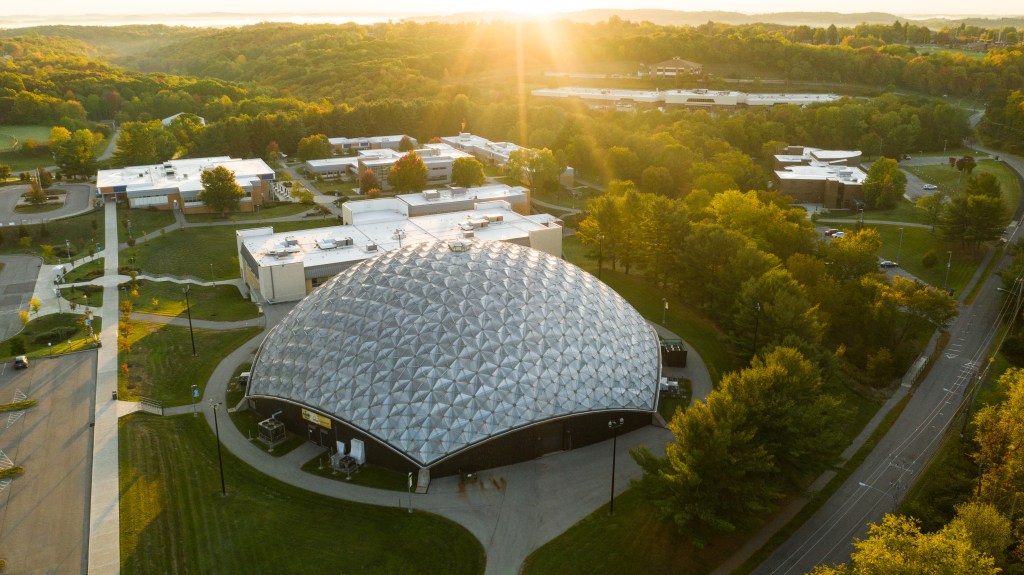
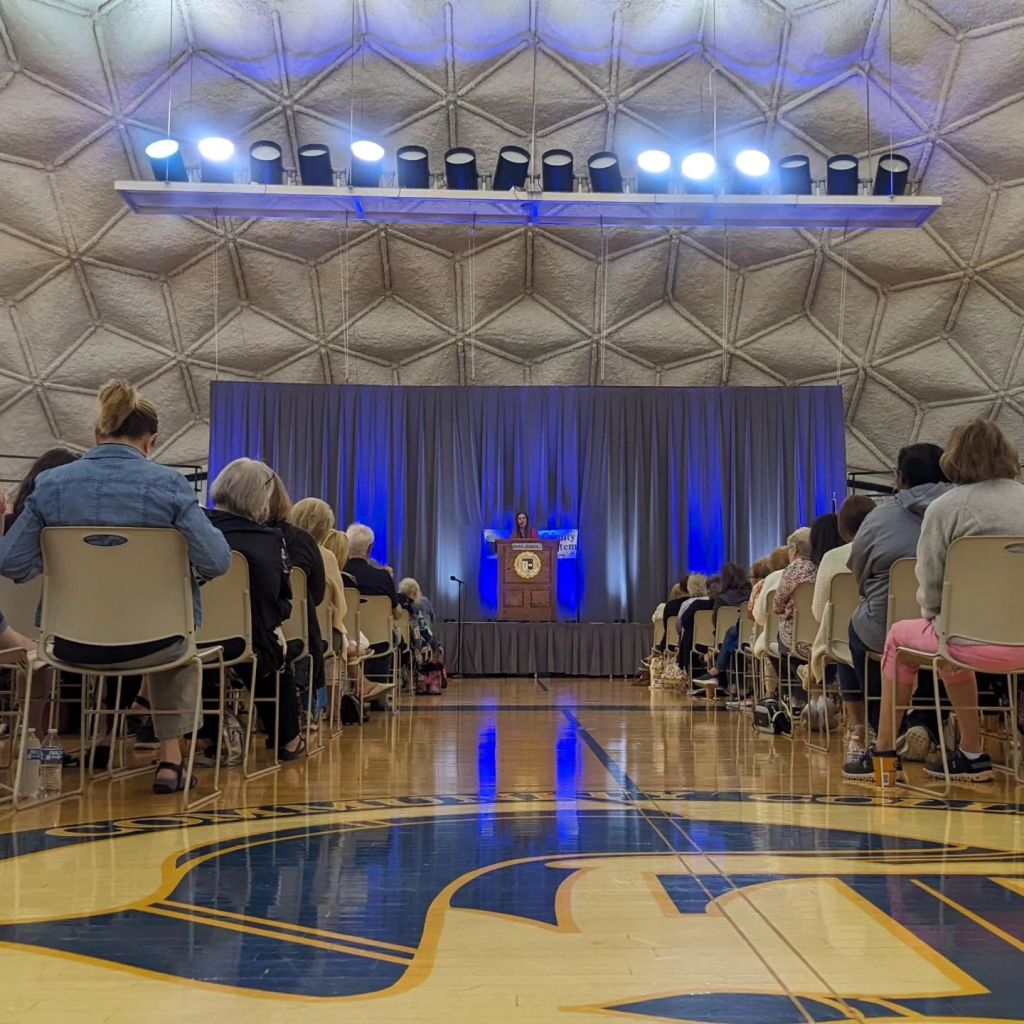
The Library at the CCBC is well positioned to support these efforts, particularly in our partnership with the Beaver County Library System. This partnership offers unique advantages for both our campus and the wider community. Just last week, this partnership brought about a literary event: “An Evening with Marie Benedict”. This evening brought together students, employees with over 200 avid readers from our county community for a celebration of history and literature. Leading up to the visit, ‘Book Pairing Events’ such as crafting nights and history seminars were held around the county and advertised on our campus. The evening event was initially scheduled for one of our lecture rooms but, within weeks, registration exceeded capacity. Our partnership allowed us to transition to the use of our “Golden Dome” which can accommodate up to 2,500 attendees.
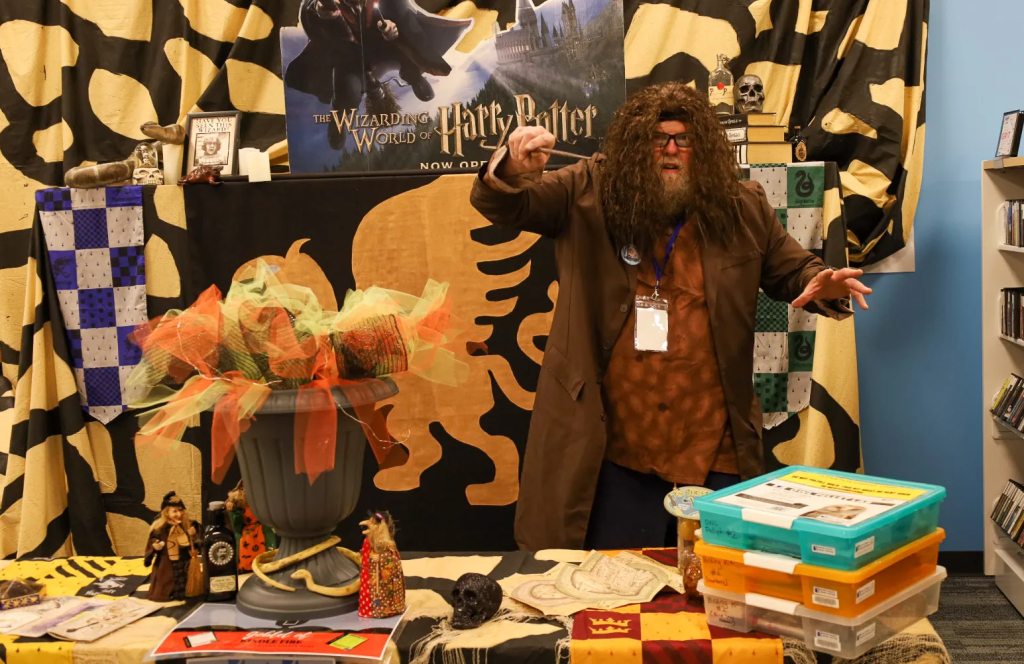
In October, we will join the Beaver County Library System in the space again for the third annual “LibraryCon” on Saturday, October 21! This family friendly event is in the style of a Comic Con and partners with dozens of local parks, museums, vendors, and other organizations to provide an afternoon of free activities and resources for all. Our library space will feature a Tiny Art Gallery, tours of our space, and a quiet room with therapy bunnies!
This partnership has fostered incredible opportunities for growth, education, and enhancing the sense of community county-wide. I’d love to learn of other academic library partnerships and the unique benefits they’ve brought to other campuses. Please share your stories!
The “Golden Dome” at CCBC
“An Evening with Marie Benedict”
Previous LibraryCon setup at the CCBC library!
Digging into student employees’ expectations of their supervisors
By: Kim Karim
In a supervisor and employee relationship, understanding the expectations that each party has is crucial to a healthy working environment. Working in the realm of academia, it can be tough to connect with student employees, especially since their job as a library assistant is only one small aspect of their overall journey on the path to graduation.
To make my student circulation assistants’ experiences meaningful and fulfilling, I felt it was important to lay out expectations they had for myself and our Head of Access Services during the student training sessions we hold at the beginning of our fall semester. While I am directly responsible for the supervision of the circulation assistants, our Head of Access Services supervises our evening proctors, which was transitioned from an outside-hire position to a student-led position within the last few years.
We asked students during the first day of our training to list up to three expectations they had for their peers and three they had for their supervisors. Their answers are listed below and give an insight into the kind of leadership they are looking for when it comes to doing their job successfully:
- Communicate about library events and any important information students need to know. Continue with the weekly updates (a weekly email sent out to circulation students and proctors.)
- Give us opportunities to build trust, listen to student ideas, and treat all students equally.
- Be respectful and understanding about our needs and issues.
- Continue being nice.
- Give frequent feedback – good or bad – on job performance. Be consistent with rules.
- Help manage conflict if needed or help if someone hasn’t showed up to take over the next shift.
This year marked the second time we have held our fall training sessions, and the feedback listed above is fairly like what we heard in 2022. Students appreciate being kept in the loop of library events, and rightfully so as they are the first point of contact for our patrons.
I firmly believe that being a supervisor of college student employees goes well beyond being able to teach them library policies and procedures. It is often being a mentor or lending a listening ear on their bad days. Giving students space to be themselves, while also making sure library tasks are completed efficiently and properly. This balance can be tough to navigate, but at our library, students often say this is their favorite place to work and in general be on campus.
Have you held a similar activity with your student employees? If so, share your feedback! I’d love to read what students are saying in your library.


 Adam Balcziunas
 Alex K.
 Alexandrea Glenn
 Andrea Pritt
 aprilnkelley
 Ashley Purvis
 Bethann Rea
 blj13
blj13 Brendan Johnson
 Amanda Boyer
 Bret Stiffler
 Bonnie Powers
 Christopher Lemery
 clarewithers
 clblibrarian
 Kelly Clever
 Charlotte M. Johnson
 colemanluzerne
 CRD of PaLA
 crdvirtualjournalclub
 cre5314
 csgarth
 Erin B.
 danajkerrigancv
 denisewetzel1
 Darren G. Poley
 elm43
elm43 Heather Burychka
 James D'Annibale
 Annie Jansen
 Jill Hallam-Miller
 jennifercribbs
 Jenn Monnin
 Jen Hasse
 Jessica Showalter
 johnmeier1
 Julie Durci
 Kelly Safin
 Kim Karim
 Kristen Seikaly
 Kayla Van Osten
 Cecelia Lasley
 librarianjsmith
 Linda Neyer
 mabogino1
 Matthew McNelis
 Meg Massey
 Maggie Savidakis-Dunn
 Rebecca
 miskatoniclibrarian
 Maureen Bentz
 Michele G. Anfuso
 Nicole Miyashiro
 paulmcmonigle
 Rob Sieczkiewicz
 ronlmccoll
 Sam Bardarik
 shannahollich
 smartin592
 Ula Lechtenberg