PaLA CRD Webinar
User Assessment and User Studies
Dates & Time: December 15 from 2-4pm AND December 16 from 2-4pm (Webinar format is two 2-hour sessions)
Instructor: Erin Mayhood, Head, Music Library at University of Virginia
Description: In this workshop participants will learn how to transition their libraries into institutions that embrace assessment and user centered design. Specifically, we will learn how to:
- incorporate users’ expectations and needs into the program design process
- understand and employ the basic methods of gathering user requirements data, including surveys, card sorts, focus groups, and usability testing
- employ user requirements data in decision making and planning processes
- keep up to date with ever-changing user demographics 5. incorporate user requirements data into library assessment programs
Cost: No cost to attend! The College & Research Division is able to provide this webinar through LSTA funds. Transportation cost to the webinar location is not included.
To Register: https://spreadsheets.google.com/viewform?formkey=dGNlZy1OVDVSb0M4bjNTWi1RbHd0THc6MQ
Questions? Contact: Bonnie Oldham at bonnie.oldham@scranton.edu
This workshop has been fully funded with Federal Library Services and Technology Act (LSTA) funds administered by the Office of Commonwealth Libraries and would not have been possible without the help of the College and Research Division of PaLA. Show your appreciation by becoming a member of PaLA! And if you are a member – thank you!
Blogging & Your Digital Identity
Blogging to Develop Your Digital Identity: Crafting Your Personal Brand
This was a session from the 2010 Annual PaLA Conference held Sunday, October 24, 2010 – Wednesday, October 27, 2010 in Lancaster PA.
A panel of four librarians, Erin Dorney, Peter Coyl, Amy Pajewski, and Tara Murrary shared their insights for using blogging as a way to extend one’s personal brand and provide a strong digital presence. Each had different experiences and advice.
Peter Coyl started the panel discussion off. Peter is currently a librarian at the Hsinchu International School in Taiwan. He is a 2010 MLIS Drexel graduate, where he was awarded the Doris Keller Hossler endowed Fellowship. His blog is called Adventures of a Guybrarian. Peter started blogging back in 2004 and his current blog he started in 2009. He started his blog primarily to be his digital portfolio. He feels blogging is a great way to stay connected, especially since he is a librarian in another country. Some other blogs he follows include Will Unwound, The Unquiet Librarian, Library Grits, and Dear Librarian.
Next up was Erin Dorney, a Syracuse graduate and Millersville University Outreach librarian, whose blog is called Library Scenester, which she began in 2007. She addresses the ‘would anyone really read it’ thought with “If you are passionate about what you write, people will follow you.” She see blogging as an doorway for many opportunities, such as involvement in professional organizations, requests for more writings and publications, networking, friendship, and support. She also offered some great advice:
- tie the physical to the virtual (don’t silo yourself)
- be genuine and be professional
- monitor the conversation
- leverage social networking
Amy Pajewski followed Erin. Amy is currently finishing her MLS at Clarion University. She is a single mom and a full-time debt collector, but is actively seeking employment in the library field. Her blog is called Adventures of a LIS Student, which she started in March of 2010. She blogs primarily on things such as being a student, job searching, and her thoughts on things she read or learned about in the library literature. She sees a blog as an opportunity to go beyond your traditional CV (Curriculum Vitae). She sees two very positive benefits to blogging as always having a ready writing sample to offer and as a great way to establish relationships.
Last, but certainly not least for the panel presentation, was Tara Murray, the Director of Information Services at the American Philatelic Research Library (located in Bellefonte, PA). Tara not only has a personal blog, DIY Librarian, but also participates in several group blogs. She was very fortunate as blogging actually helped her get her job as the library wanted to start a new blog and she already had that kind of experience. Some blogs that she followed early on (and still) include Jessamyn West’s blog, librarian.net, and Meredith Farkas’ blog Information Just Wants to be Free. Tara’s two main pieces of advice are to be yourself and to imagine that your boss, patrons, or mom are reading the post before you actually make it public.
The panel left time for Q&A and there were many questions, such as how to get started, how to find time, what to write about, etc. The panel provided a very informed presentation on blogging and many left this session motivated to start!
What They Know…
…And What They Need to Know
This session focused on the research and information skills of first-year college students.
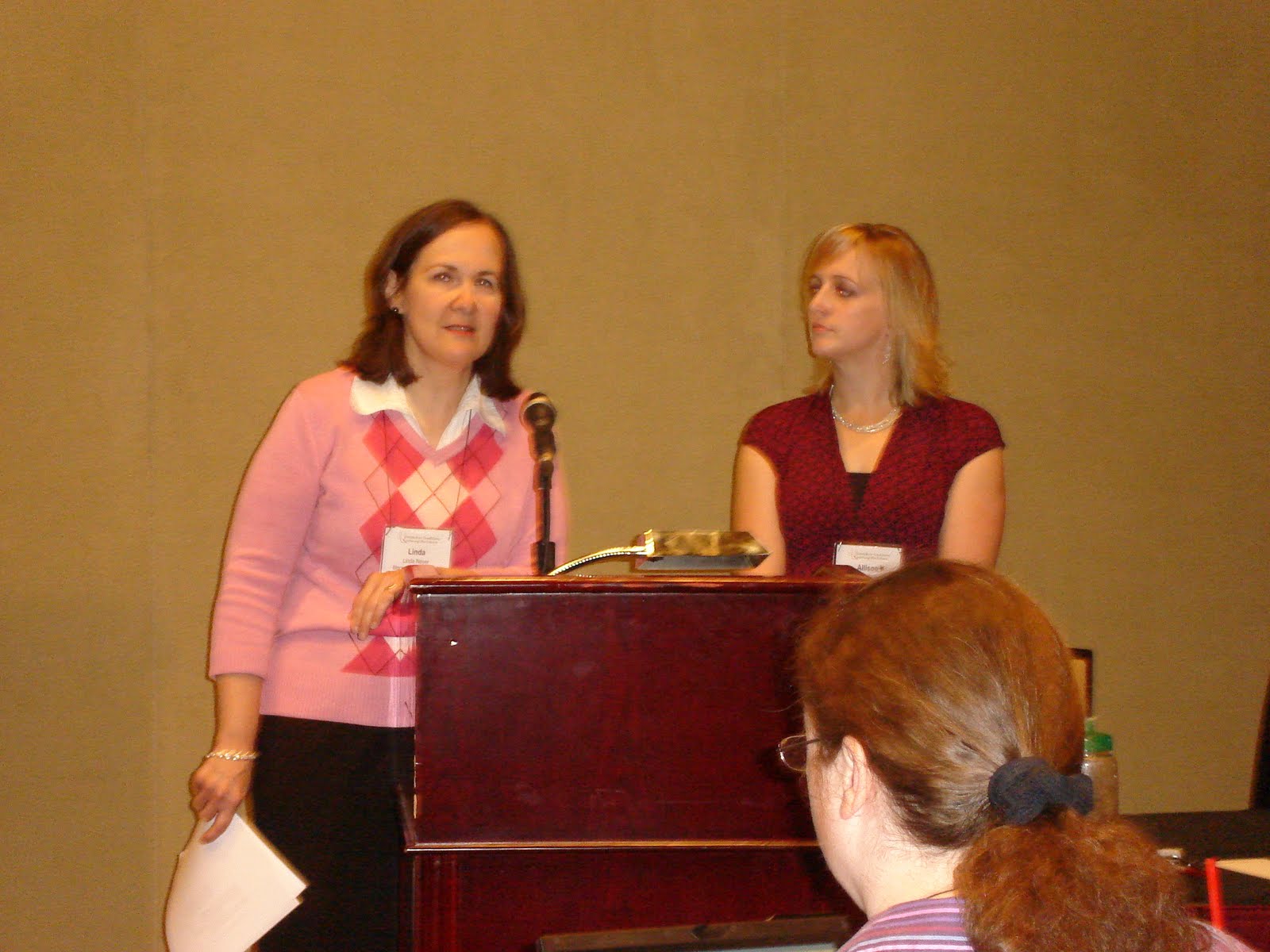
During the first part of the presentation, Linda Neyer, Health Sciences/Science Librarian at Bloomsburg University, and Allison Burrell, Librarian at Southern Columbia Area High School reported on the results of a survey completed by academic librarians about their perceptions of the research skills of incoming freshmen as compared to the skills that the librarians identified as most important for these students to be successful. A quick poll of the forty or so attendees confirmed findings of the survey that “evaluate information critically and competently” was the most important information literacy standard. In fact, the consensus of the survey was that the most important skills were the least in evidence, and the attendees agreed.
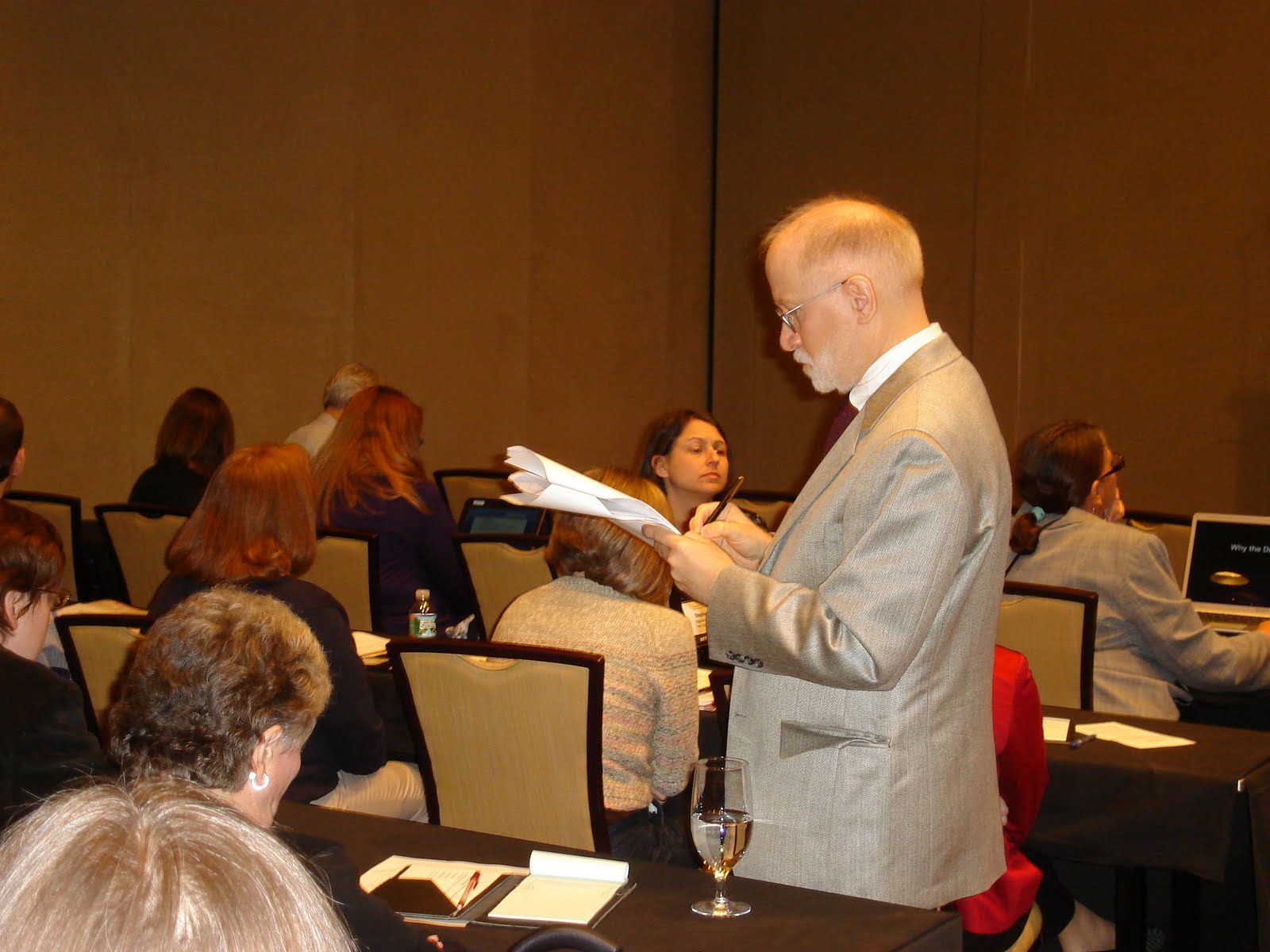 Terry Mech, King’s College Library Director, used the second part of the presentation to discuss the results of an information literacy assessment tool that over the past seven years has collected responses from 3,800 students at six different institutions. Data gleaned from these assessments corroborated the responses to Linda and Allison’s survey–incoming freshmen do not know how to “evaluate information and sources critically. Terry then looked at what factors might have contributed to the variation in test scores and found that students’ high school curriculum may be a major factor.
For more information on this topic, go to the Google Site created by Linda and Allison: PA info lit learning community
New Member Reception
>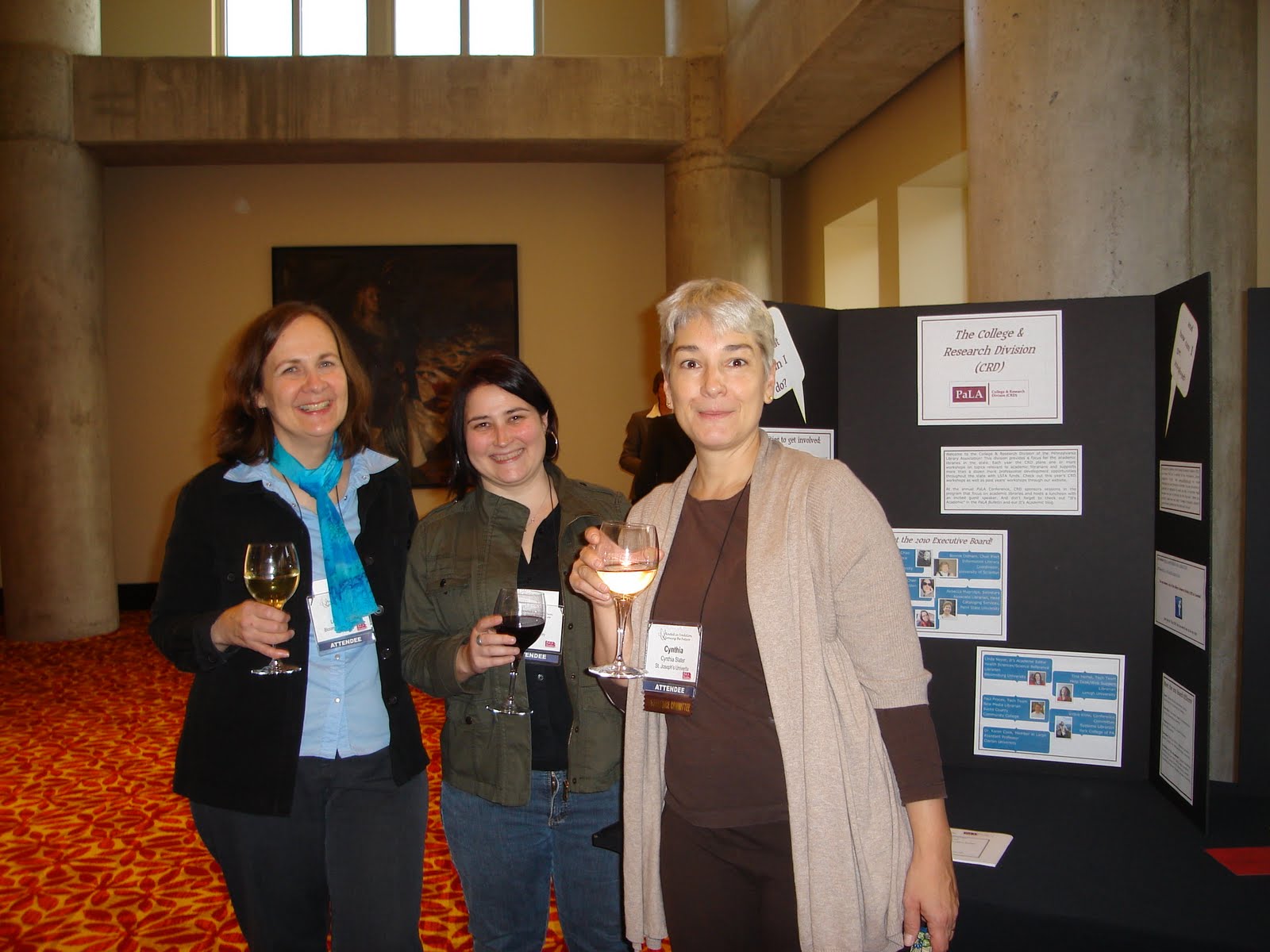
CRD Board Members Linda Neyer, 2011 Vice Chair, Amy Deuink, 2009 Chair, and Cynthia Slater, 2010 Chair get together at the New Member Reception at the PaLA 2010 Annual Conference in Lancaster.
>Beth Transue and Beth Mark, Messiah College
1401 syllabi were analyzed, under direction of provost, in addition to looking at info lit outcomes, also looked at:
1. clear statement of clear objectives (96% did)
2. whether syllabus included integrity policy (66% did not)
3. statement about ADA disabilities statement
4. grading scales (about 30% did not include info)
5. course management systems – about 12% mention (from 2006)
6. writing center – did they refer students? .2% require, 9% recommend
7. learning center – .1% require, 8% recommend
For library, looked for mention of
-library and library instruction – 9% (have 5 librarians)
-information literacy – 11%
-reserves – 13% list items on reserve
-websites and databases – 22% recommended websites, 2% recommend databases (but not all library databases)
-citation styles – 24% mention; APA, MLA, ‘other’
Gen ed had the largest number of syllabi
Some syllabi had assignment info, but not enough for collection development purposes
Solution: collect separate assignment information
Unplanned benefits
-appreciation of provost
-request to present data to Academic Council (deans and admin)
-subsequently presented to two schools within college
-raised visibility of librarians as campus stakeholders
-prepared the way for expanded project (assignment analysis)
What we learned — begin planning at least a year in advance when dealing with other academic offices
Library Assignment Analysis Project
-meet with provost again, who approved the project
-asked to present proposal to school deans for their buy-in and for them to be communication channel to depts.
-deans agreed, recommended timeline and wording changes
-one dean suggested using a form faculty could fill out in lieu of submitting written assignment directions (problem will be that you can’t see what they are handing out)
Got good return (about 1/2 by spring 2010), again used a student work to extract data
842 assignments
Assignment types:
research paper & presentations most common types of assignment, in addition reserve readings, reflection essay, ‘other’ (if an assignment students had to complete required use library resources, should have been included, but faculty may not have realized)
-page length by course level did increase over 4 years (used minimum number e.g. 5-8, entered ‘5’)
-number of sources by assignment type
-number of sources by course level (leveled out for 2 – 4th years) may be due to faculty not ‘spelling it out’ for students
-where forms where used, some narrative info was lost, but did provide info not included in some written assignments
-individual follow up provided opportunities to raise awareness of faculty regarding unknown library resources
Interesting project; unfortunately I could not stay till the end.


 Adam Balcziunas
 Alex K.
 Alexandrea Glenn
 Andrea Pritt
 aprilnkelley
 Ashley Purvis
 Bethann Rea
 blj13
blj13 Brendan Johnson
 Amanda Boyer
 Bret Stiffler
 Bonnie Powers
 Christopher Lemery
 clarewithers
 clblibrarian
 Kelly Clever
 Charlotte M. Johnson
 colemanluzerne
 CRD of PaLA
 crdvirtualjournalclub
 cre5314
 csgarth
 Erin B.
 danajkerrigancv
 denisewetzel1
 Darren G. Poley
 elm43
elm43 James D'Annibale
 Annie Jansen
 Jill Hallam-Miller
 jennifercribbs
 Jenn Monnin
 Jen Hasse
 Jessica Showalter
 johnmeier1
 Kelly Safin
 Kim Karim
 Kristen Seikaly
 Kayla Van Osten
 Cecelia Lasley
 librarianjsmith
 Linda Neyer
 mabogino1
 Matthew McNelis
 Meg Massey
 Maggie Savidakis-Dunn
 Rebecca
 miskatoniclibrarian
 Maureen Bentz
 Michele G. Anfuso
 Nicole Miyashiro
 paulmcmonigle
 Rob Sieczkiewicz
 ronlmccoll
 Sam Bardarik
 shannahollich
 smartin592
 Ula Lechtenberg
 It's Academic