What Kind of “World” is a Library? part two: Thinking, Ek-sistence and letting a World World
“Thinking accomplishes the relation of being to the essence of the human being.” M. Heidegger, Letter on “Humanism” in Pathmarks (Cambridge, 1998) 239.
A library is not a static environment into which the user enters like an explorer imbued with a sense of entitlement to master whatever or whosoever is “discovered.” That mode of thinking is a response to the challenge of enframed existence which conceals as much as, if not more than, it reveals. It makes the library a place where resources including the librarians are simply a standing reserve “inventory to be ordered and conscripted” by tools that are ready-to-hand (See: Mark Blitz, “Understanding Heidegger on Technology,” The New Atlantis, Winter 2014, 68). Something electronic communication, data provision and digital technology all do very well in cyberspace, and the world of “our library” should not be a dehumanizing video game simulation. Futurists at library conferences pronounced a decade ago, libraries should not try to compete with Google because they will lose. “Our library” must not care to even try. Not because it is a fool’s errand, or folly for a library to be thought of differently, counter-culturally or even perhaps anarchically. It is because human interactions with ideas, histories, arts, sciences, cultures, technologies, other realities and other people dissolve the false dichotomy of a subject to objects relationship. A library ought to be a shared environment of “others” where this freely occurs. A library certainly can be a place for exploration and discovery. Stewardship of a world, however, means empowering each human being in it to realize all the “things” and everybody there, including themselves, are indigenous. This is significant for determining: “What kind of “world” is a library?”
“All ways of thinking, more or less perceptively, lead through language in a manner that is extraordinary.” M. Heidegger, The Question Concerning Technology, in The Question Concerning Technology and Other Essays (Garland, 1977) 3.
Since world-forming our library must be real and not just a theoretical mental exercise, and administrators are often far too risk averse to shepherd an open and candid “blue-sky” discussion, librarians need to foment the dialogue about how our library admits the essence of the human being, i.e., ek-sistence. “World-forming” because human beings have a creative ek-sistence, within which each one dwells poetically. “Real” in the sense that we can inhabit ek-sistence not just fantasize about it. “Ek-sistence,” to use Heidegger’s neologism, because human beings do not merely exist. They are “destined to think” what it means ‘to be’ (Heidegger, Letter on Humanism, Pathmarks, 247). Libraries are relevant, not when they do reactive technology-chasing or even proactive agenda-setting, but when librarians cultivate thinking, provide paths for creative interactions, and make clearings for language. This last statement is offered as a step toward answering: “What kind of “world” is a library?”
All our heart’s courage is the
echoing response to the
first call of Being which
gathers our thinking into the
play of the world.
In thinking all things
become solitary and slow.
Patience nurtures magnanimity.
He who thinks greatly must
err greatly.
M. Heidegger, The Thinker as Poet, in Poetry, Language, Thought (Harper, 1971) 9.
Collaborating with Student Clubs: Games without Borders
Like many universities and colleges across the commonwealth, Penn State Brandywine has a large international student population. We also have a large population of students for whom English is a second (or third) language, though they were born in the United States. Our Multilingual Student Programs faculty and advisors host well-attended events, trips, and lunchtime talks, and the Multicultural Club is one of the most active student groups on campus. Naturally, the library wanted to be involved with these students and their enthusiastic presence at Brandywine.
One very easy way which we found to be connected to the group involves games. A few times a semester, the Multicultural Club hosts an International Game Break, where snacks are provided and students come to play games that are popular in countries outside the United States. Some examples of the tabletop games that the Multicultural Club purchased are Go, which originated in China around 5,500 years ago, Ludo, which is from India circa 3300 BC, Xiangqi, which many are familiar with as Chinese Checkers, Machi Koro, originally designed and released in Japan, and Carrom (aka Karrom), a shuffleboard game that is popular in Nepal, India, Pakistan, and Bangladesh. For our international and multilingual students, these games are often a piece of home that they can share with their new friends. For our U.S. students, once they experience them at an International Game Break event, they want to play again.
The library got involved very easily by barcoding and circulating these games, after discussing the process with the Multicultural Student Club. The club needed a place to house the games when not in use, we had shelf space; they wanted a process to let students borrow them for an afternoon or overnight, we had the means to make that happen. An easy partnership between the library and the Multilingual Student Programs coordinator began. The library now also displays the games and their history around midterms and finals week, as a stress-reduction suggested activity, and a collaboration between the Multicultural Student Club and library is in the works to purchase more games for student use.
While not all campuses have the kind of population that Brandywine does, any kind of collaboration between student groups and the library benefits students, the library, and the campus as a whole. For example, students now see the library as a place not only for computers and books, but also to meet their friends to borrow a game. The library has a more active role in promoting events for the Multicultural Club and Multilingual Student Programs. Our international students see the library as a welcoming place that embraces their culture, which in turn plays a small but important part in these students feeling comfortable at Brandywine. As Brandywine Vairo Library, and university libraries everywhere, strives towards equity, diversity, and internationalism, we hope to work more with our diverse population and student clubs to promote their events and activities.
The Connect & Communicate Series presents
IF I APPLY: Updated CRAAP Test for Evaluating Sources
Presenters: Kat Phillips, Sabrina Thomas and Eryn Roles
February 16th, Friday, 1pm– on Zoom!
Evaluating sources for credibility is the first step to healthy civic learning. Traditionally, systematic source evaluation remained focused on source content with the most notable example, the CRAAP Test. Kat Phillips, Sabrina Thomas and Eryn Roles have consistently recognized that twenty-first century source evaluation must begin reflectively. First, the researcher must take personal inventory on one’s emotions attached to the investigative topic. Often, the open internet is a place to find hyperpartisan information that does not correctly reflect fact. In this session, we will provide a new simple acronym to foster intellectual integrity during inquiry thinking. The IF I APPLY test is a fresh way to introduce students to source evaluation in order to encourage lifelong learning.
Join Kat, Eryn and Sabrina as they discuss their successes & next steps learned from this semester.

Kat Phillips
Kat Phillips is the Nursing & Allied Health Liaison Librarian at Penn State University.She works closely with both the College of Nursing and the Health & Policy Administration department faculty in curriculum development, information literacy standard integration for individual classes and assignments, and embedded librarian services for distance classes. She is involved with both the Pennsylvania Library Association and the West Virginia Library association, serving on several committees between each, and is also active in other regional and national associations.
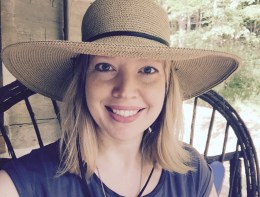
Sabrina Thomas
Sabrina Thomas is an instruction and research librarian for Marshall University. She is currently the library liaison for Art and Design, Communications, and Women’s Studies. Sabrina teaches in multiple capacities from online eight week courses, embedded, and one-shot classes. She is passionate about empowering students through teaching source evaluation and promoting digital citizenship. Currently, her research focuses on coordinating efforts on information literacy instruction in public libraries, K-12 schools and community groups in order to combat viral misinformation.
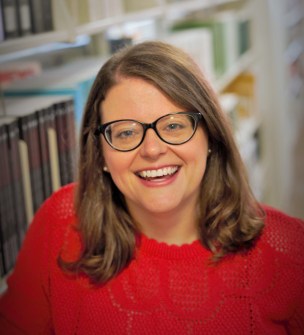 Eryn Roles is a research and instruction librarian at Marshall University in Huntington,WV. Currently she is the library liaison for English and Appalachian Studies and serves as a mentor for students in their first years at MU. She also serves on many association committees including the steering committee for the Appalachian Studies Association and the membership committee for the West Virginia/Western Pennsylvania chapter of ACRL. She, along with Kat Phillips and Sabrina Thomas, co-founded the WV LIRT.
Remember, C&CS is an online gathering of librarians for us to connect about our projects. We have a interest in hearing from you! Please let us know if you have an idea for a program!
Links to the sessions will be sent out 48 hours before the scheduled time.
State of Copyright Union
First off, complements to Plagiarism Today which reminded everyone to renew the DMCA registration which expired end of December. (https://www.plagiarismtoday.com/2017/12/21/reminder-reregister-dmca-agents-december-31st/?utm_source=newsletter-31&utm_medium=email&utm_campaign=Daily+Email+Newsletter). They also had an annual summary of notable activities which I am taking a liberty to summarize and comment by Jonathan Bailey.
- 2017 was a constant stream of plagiarism stories, mostly accusations of plagiarism against prominent figures. They included Neil Gorsuch, David Clarke, Marine Le Pen, Rev. Bill Shillady and the Trump administration. What they all had in common is they were allegations from political opponents attempting to discredit their foes. Some of the allegations had weight, most did not.
- PETA attempting (and failing) to convince a court a monkey can hold a copyright. Despite some great litigation taking place, copyright litigation news was, on the whole, cringe-worthy in 2017.
- Despite the cries of “alt facts” and “fake news” most mainstream publications, large and small, strive every day to report accurately and fairly. The New York Times (and many other publications) eliminated the public editor position due to financial pressure. Once the representative for the public in the newsroom and the defender of ethics, the position is waning at a time where journalism’s credibility is under attack.
- Piracy has never been a static thing and 2017 highlighted streaming services have been slowly taking the spotlight. Shift in piracy means methods for fighting infringement have to change as well.
- Essay mills, sites creating school assignments for pay, were in the forefront. The essay mills have also worked hard to make themselves known, turning to Twitter bot armies to peddle their wares and the war between school and essay mill has ramped up. However, studies show the majority of students who pay for a written paper don’t do so through a website, but through a friend or classmate.
So, while 2018 promises to be another wild ride, there are a few things that we can probably expect to happen.
- AI has been a tech buzzword, finally starting to see the fruits. Bots already control much of what you see and do online and, soon, they may control much of how you create and how you plagiarize. This came into the spotlight some in 2017 due to a paper published on automated paraphrasing and an article about students using Wolfram Alpha to “cheat” in math class.
- Plagiarism hunters to be aggressively looking at nearly every candidate in hopes of finding something to make a story.
3.Ad Blocking has never really left the spotlight. 2017 was the year of the ad blocking DMCA debacle which saw an anti-ad blocking firm file a DMCA takedown notice against an ad blocking list. With visitors feeling further encroached and creators feeling their backs are to a wall, the stage is set for another round in this fight.
4.Legislative Uncertainty: Despite an early push to pass a bill allowing the President to appoint the Register of Copyrights, the bill has since stalled in the Senate. With 2018 being an election year and Congresspersons taking time away to campaign, we’re unlikely to see significant forward momentum on copyright issues. This is despite the fact there are key issues to consider, such as modernization of the copyright office and streamlining music licensing.
5.DMCA The U.S. Copyright Office is slated to take up two separate DMCA-related issues in 2018. The first being a much-anticipated report on the effectiveness of the DMCA safe harbor provisions and the second it’s triennial rulemaking on exemptions to the DMCA provisions against circumventing technological measures to control access to copyrighted works (DRM). Both are likely to spur heated debates about the DMCA. No matter what comes out of these processes they will be controversial and they will be deeply contested so expect a lot of discussion about the DMCA in 2018.
6. Fair Trade – NAFTA, TRANS PACIFIC PARTNERSHIP and others include copyright provisions in their dealings. As long as Congress is as deadlocked as it is, it’s unlikely that anything legislative will come from those conversations.
Call for Panelists: Negotiating with Vendors
Do you have experience negotiating vendor contracts for your library or district? Do you want to share your experience with other librarians? In a joint sponsored program, the College and Research Division and the Public Library Division are looking for a few savvy negotiators to discuss their experiences working with vendors for their institution.
We are planning a virtual panel session for the end of March that will give some insight to librarians that would like to learn more about the process. We would like to have representatives from a variety of different types of libraries – academic, public, school, or special, as well as a district level negotiator. The panel will include a vendor representative that will give some perspective from the other side of the table. Some questions for discussion:
- How do you prepare for the negotiation?
- What do you consider standard practice?
- What parts of an agreement are vendors most willing to negotiate beyond price (duration, support, payment options, etc.)?
- How do you close the gap between what you want and what is offered?
- What pitfalls have you come across in the process?
- With ever shrinking budgets, do you see vendors being more flexible?
- Do vendors try to impose non-disclosure agreements?
- What advice would you give a first time negotiator?
If you are interested in being a panelist, please send a letter of interest to CRDPALA@gmail.com by February 16th, 2018 and attach your CV. If you have any questions please contact, Betsy Reichart at betsy.reichart@pennfoster.edu.


 Adam Balcziunas
 Alex K.
 Alexandrea Glenn
 Andrea Pritt
 aprilnkelley
 Ashley Purvis
 Bethann Rea
 blj13
blj13 Brendan Johnson
 Amanda Boyer
 Bret Stiffler
 Bonnie Powers
 Christopher Lemery
 clarewithers
 clblibrarian
 Kelly Clever
 Charlotte M. Johnson
 colemanluzerne
 CRD of PaLA
 crdvirtualjournalclub
 cre5314
 csgarth
 Erin B.
 danajkerrigancv
 denisewetzel1
 Darren G. Poley
 elm43
elm43 James D'Annibale
 Annie Jansen
 Jill Hallam-Miller
 jennifercribbs
 Jenn Monnin
 Jen Hasse
 Jessica Showalter
 johnmeier1
 Kelly Safin
 Kim Karim
 Kristen Seikaly
 Kayla Van Osten
 Cecelia Lasley
 librarianjsmith
 Linda Neyer
 mabogino1
 Matthew McNelis
 Meg Massey
 Maggie Savidakis-Dunn
 Rebecca
 miskatoniclibrarian
 Maureen Bentz
 Michele G. Anfuso
 Nicole Miyashiro
 paulmcmonigle
 Rob Sieczkiewicz
 ronlmccoll
 Sam Bardarik
 shannahollich
 smartin592
 Ula Lechtenberg
 It's Academic