C&CS with Carmen Cole and Joslenne Peña, Code For Her: Reimagining Computing Education for Academic Library Outreach on Dec 5, 2018
Join the Connect and Communicate series on
December 5, 10 am EST
for
Code for Her: Reimagining Computing Education for Academic Library Outreach
Presented by Carmen Cole and Joslenne Peña
Register here for the Zoom link!
Currently, there are few opportunities for Penn State affiliates to learn computer programming skills in a non-credit bearing, cost-free learning environment purposefully targeted towards underrepresented populations in tech. In spring 2018, the Penn State University Libraries piloted Code for Her, a beginner coding workshop series targeted to female and gender-diverse individuals. Through hands-on learning, Code for Her workshop participants gain the confidence to pursue future self-education with a foundational knowledge of HTML, CSS, and JavaScript in a supportive, empowering environment.
Attendees will learn about the highly successful pedagogical method of “code dissection” utilized for Code for Her and the resulting learning gains achieved, as well as the additional active learning methodologies employed by the instructors. Presenters will also introduce qualitative research findings and reflections from workshop participants on the Code for Her learning environment and their attitudes towards programming.
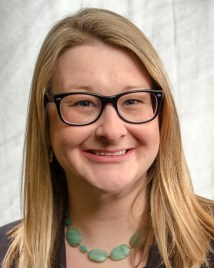 Carmen Cole is the Sally W. Kalin Librarian for Learning Innovations and Information Sciences & Business Liaison Librarian for the Penn State University Libraries. She holds a MSLS from Clarion University of Pennsylvania and an MFA from Bowling Green State University. Carmen has presented at PaLA, ALA Midwinter and Annual conferences, IFLA, and Women Advance I.T. She is the founder of Code for Her.
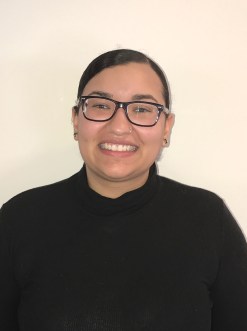
Joslenne Peña earned her MS in Information Sciences and Technology in 2015, and is a PhD candidate in Informatics at Penn State. She recently completed a one-year internship as a Research Associate in Human-Centered Systems at Honeywell Aerospace. Joslenne has presented at the iConference (2018 and 2016), ACM Technical Symposium on Computer Science Education, ACM Richard Tapia Celebration of Diversity in Computing, Grace Hopper Celebration of Women in Computing, and EDULEARN. She is the Coding Workshop Consultant for Code for Her, and has previously taught coding for iD Tech and the iTech Academy.
C&CS rescheduled for Nov 19 at 1pm
Our session, Deconstructing Environmental Bias will be next week, Monday at 1pm. We still have some space if you’d like to join us for the session. Information about it is in the previous blogpost located here: https://crdpala.org/2018/11/05/ccs-presents-deconstructing-environmental-conflict-bias-news-perspective-nov-15-at-1pm-est/
We look forward to seeing you then!
They Were Already Here
At this year’s PaLA Conference, I presented a poster entitled “We Built It and They Came: Launching a Library Workshop Series with Broad Appeal.” I enjoyed talking with the public and academic librarians who stopped by to discuss their own experiences with workshops. After an hour of continuous conversation, I realized that one question had opened nearly all of those interactions:
How did you get people to come?
To launch a popular workshop series, we naturally did more than merely “build it;” indeed, much of my poster detailed the reasons we have been successful. I explained how we named (‘Savvy Scholar’), marketed (posters on campus, website banner ad, social media), and otherwise promoted (emails to all students and faculty, in-class reminders) the initiative. Yet I left Harrisburg that day feeling as though there must have been more to it. I suspect many of the librarians I spoke with felt the same way.
Like those who stopped to speak with me, I too had felt little confidence that many students would initially attend our series when we launched it in the fall of 2017. I had heard the naysayers and read the literature. When we filled 89 seats during the intensive two-day schedule that September, however, I assumed all the steps I described in my poster had surprisingly done the trick. I suppose, likewise, that those same steps came as little surprise to those who stopped to read my poster. They are, most likely, what any library would do to get such a program off the ground. Nevertheless, conference attendees who read my poster and its ostensible reasons for our attendance numbers, were still asking:
How did you get people to come?
Though it would not make for much of a poster, I recently arrived at another “answer” for why our workshop series is successful. Namely, several strong, individual relationships between librarians and students, or between librarians and faculty, formed a nucleus with great attractive powers. Our success was not due nearly as much to the broad scope of our marketing, or our attempts to offer something for everyone, but was instead built upon a handful of people who trusted and believed in one another. As I reflect on those who attended our initial workshops, I realize that we already knew a significant number of them quite well. Those who attended multiple workshops were even more likely to have spoken with us at the reference desk—whether to say hello each morning or to ask for help with challenging research questions. Despite all the worry over attracting people, we already had a guaranteed audience.
As the ‘Savvy Scholar’ series continues, I will likely continue to hear:
How did you get people to come?
Among my many answers to that question I will now begin with the following:
Most of them came because they were already here.
Program Reviews and the Library
For many years our librarians have participated in Program Reviews with our academic departments. These are done approximately every five years. At first we simply provided information about library resources that support the program. However, our role has evolved so that we are fully functioning members of the committees. Each committee always includes a faculty member from an unrelated department who can provide additional insights “from the outside looking in” and the librarians also function in a similar capacity. It has come to our attention that our level of involvement may be somewhat unusual. I encourage other librarians to consider increasing your involvement in program reviews.
As a full committee member I take on research about other areas of the review and assist in preparing the written report. I also attend the sessions on the day that the external reviewer comes to campus. After the site visit, I meet with the committee for follow-up and preparation of the executive summary. Other committee members seem to value our skills and insights. Because I participate in so many different reviews (at least one per year and sometimes two or three), I can provide information to the committee based on my other experiences over the last twenty-two years.
This participation has increased support from faculty. It has also given me greater understanding of each major so that information literacy initiatives can be improved. After program reviews I have created additional LibGuides and usually receive more requests for information literacy sessions. Although it takes a fair amount of time to serve on a program review committee, it is well worth the effort.
Sustaining Healthy Organisms: The Role of the Librarian When the Scholarly Ecosystems are Shrinking
During a recent Scholarly Kitchen Webinar on “The Future of Publisher Independence in a Consolidated Scholarly Ecosystem” offered by the Society for Scholarly Publishing (SSP), University of Illinois at Urbana-Champaign librarian and professor Lisa Janicke Hinchliffe mentioned Roger Schonfeld’s writing from earlier this year related to the subject (Cf. “Research Infrastructure and the Strategic Decisions of Universities.” Ithaka S+R (blog), January 10, 2018). The phrase that really struck home was “lock in.” As in publishers attempting to “lock-in” stakeholders by becoming platform-based content and service providers who seek to manage the research workflow from end to end. As was also pointed out during the Webinar, this is really an idiosyncratic development resulting from many isolated business decisions rather than a conspiracy mapped out in advance, despite the disturbing thoughts about the latter which fuel the imaginations of librarians.
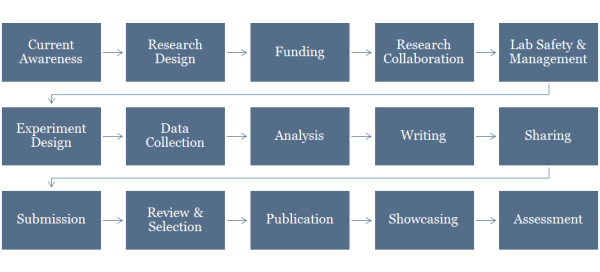
“What Is Researcher Workflow?” Ithaka S+R (blog), December 13, 2017.
https://sr.ithaka.org/blog/what-is-researcher-workflow/
Nonetheless, librarians cannot afford to be ostriches when it comes to the retail business models being adopted by the academic publishers with whom we largely work. A recent article about RBMs states, “the logic of value cocreation in platform business models involves versatile actors, engaged in sharing and collaborating to exchange service symbiotically” (Fehrer, et al. 2018). Which means libraries need to see themselves as relational collaborators and not simply customers. However, this takes librarians being aware of the seismic shifts going on. As the same article points out, “The orchestration of actors beyond the platform within the broader platform ecosystem—coupled with advanced technologies for analytics, artificial intelligence and autonomy, is changing the landscape of business.” In fact, within“key research areas” Fehrer, et al. articulate, “Finally, academics are encouraged to investigate the ‘dark side’ of platform ecosystems. Market concentration and collective actions may result in negative dynamics for focal actors, the economy, the environment or the society. These effects have to be explored in light of platform ecosystems.” Now the fears of Orwell’s Big Brother do start to creep in.
While the idea of publishing ecosystems that assist scholars in a streamline fashion from “current awareness” to “assessment” seems attractive, the sustainability risk, to continue the metaphor, is that the biome will shrink rapidly as the number of ecosystems diminish. The best analogy Hinchliffe gave is the how most universities use either Banner or PeopleSoft and have become either a Mac or Microsoft campus. So, what does that mean for the library-publisher relationship when it becomes increasingly just another university-vendor relationship? What does this do the role of the library as a stakeholder, if we become simply the conduit for platform-based services? What does this do to scholarship, if scholars are channeled by only a few one-stop discovery and dissemination platforms? Although it seems unlikely for large research institutions to place too many limits on its scholarly community, what does this do to libraries at mid-size and smaller schools? Even the big dogs usually only have one enterprise system, one learning management system, and one integrated library system. A healthy research environment, including the library, will have many kinds of habitats where knowledge creation, intellectual growth, natural hybridization and the wildlife of the academe can flourish.
Work Cited: Fehrer, Julia A., Herbert Woratschek, and Roderick J. Brodie. “A Systemic Logic for Platform Business Models.” Journal of Service Management 29, no. 4 (July 2, 2018): 546–68. https://doi.org/10.1108/JOSM-02-2017-0036.


 Adam Balcziunas
 Alex K.
 Alexandrea Glenn
 Andrea Pritt
 aprilnkelley
 Ashley Purvis
 Bethann Rea
 blj13
blj13 Brendan Johnson
 Amanda Boyer
 Bret Stiffler
 Bonnie Powers
 Christopher Lemery
 clarewithers
 clblibrarian
 Kelly Clever
 Charlotte M. Johnson
 colemanluzerne
 CRD of PaLA
 crdvirtualjournalclub
 cre5314
 csgarth
 Erin B.
 danajkerrigancv
 denisewetzel1
 Darren G. Poley
 elm43
elm43 James D'Annibale
 Annie Jansen
 Jill Hallam-Miller
 jennifercribbs
 Jenn Monnin
 Jen Hasse
 Jessica Showalter
 johnmeier1
 Kelly Safin
 Kim Karim
 Kristen Seikaly
 Kayla Van Osten
 Cecelia Lasley
 librarianjsmith
 Linda Neyer
 mabogino1
 Matthew McNelis
 Meg Massey
 Maggie Savidakis-Dunn
 Rebecca
 miskatoniclibrarian
 Maureen Bentz
 Michele G. Anfuso
 Nicole Miyashiro
 paulmcmonigle
 Rob Sieczkiewicz
 ronlmccoll
 Sam Bardarik
 shannahollich
 smartin592
 Ula Lechtenberg
 It's Academic