Science Information Literacy and First Year Students
In May 2018, I was hired as the new Science, Technology, Engineering, and Mathematics (STEM) Librarian at the Penn State Harrisburg Library. I have always had a love of and a passion for science, which led me to a bachelor’s degree in biology years ago. I have been working in libraries for close to ten years and while I enjoy working with students in all disciplines, I have a particular, nostalgic affinity for undergraduate science students. I remember those classes, those assignments, and those expensive textbooks. It is a familiar world and one that I truly enjoyed. In my new role as the STEM Librarian on campus, I am always looking for opportunities to share my love of science with undergraduate students.
Recently our campus’s quantitative skills coordinator approached me with an idea that led to a general discussion about science literacy, diversity in STEM fields, and our shared love of science. As we were chatting, we decided to create a first year seminar presentation geared toward science majors on our campus. I am interested in science literacy and science information literacy and she is interested in studying tactics and resources for undergraduate students. It seemed like the perfect collaboration for us and over the past few weeks, we have been brainstorming our presentation together.
Admittedly, I have a few lofty questions that I consider when I work with undergraduate science students. What are their feelings about science? Do they understand science in a general sense? Do they trust science? How does this trust (or distrust) manifest in their personal lives? In their educational careers? I recognize that this first year seminar session will not be sufficient to answer all of the questions I have. However, it is a good place to start for now.
Our plan is to begin the session by discussing junk science vs. legitimate science, how to locate relevant and trustworthy information, then allowing the discussion to chart the rest of the course. With a few planned stops relating to the ACRL Framework along the way. We are also designing a science related activity in which the students will gather in groups to complete the exercise. Our current idea is to present a problem and ask the students how to work through it utilizing the library resources at their disposal. For example, let us say that the students were given the OK to create a community garden on the roof of their dorm building. What plant(s) will they choose and will they grow in Central Pennsylvania? Do they have access to electricity or a water supply on the roof? If no, how will they design a system to ensure the garden is properly maintained?
Our hope is that this activity will appeal to all of the student participants. Perhaps the student is a biology major with an interest in botany. Maybe the engineering students in the session figure out a novel way to transport water onto the roof. The math student uses her geometry skills to create the optimum greenhouse layout for the roof size. We will be asking the groups to share their findings and ideas with the rest of the class and I am looking forward to hearing all of the responses. This session may not go as planned but sharing my interest in science literacy with even a few students will be meaningful for me. A brief assessment questionnaire will be given to the participants at the end of the session. I am keeping my fingers crossed that the responses will assist me in making this one of many first year seminars geared toward STEM related library resources. Additionally, I hope it will open the gates to future discussions surrounding science information literacy on our campus.
C&CS Digital Badges will be rescheduled due to weather
Update: Session is rescheduled for February 26, 2019 (Tuesday)– at 2pm.
Registration link is still available here.
Stay warm and safe everyone. With most of Pennsylvania closed due to the polar vortex and snowstorms, we will be rescheduling the Digital Badges session with Torrie Raish and Emily Rimland. Stay tuned for more information.
Keeping Your Mind Sharp in the Stacks
Considering we just flipped our calendars to 2019 (Ok, it’s been a couple of weeks, but close enough) you probably still have your New Year’s resolutions fresh in your mind. Surely, you’ve thought of the obvious ones: Get a better job or a promotion. Read more Lose weight. Exercise more. But what about exercising your mind?
So much of what we do in the library strains our mental muscles more than our physical ones. So it should be just as important to focus on your brain to keep it, well, focused.
Here are some things you can do to keep your mind sharp and keep yourself on task as you move through 2019:
Practice Attentive Listening
When having conversations with colleagues and students, remain engaged when listening by recapping what they are saying and using connecting words like, “Ok”, “I understand”, and “Yes”. While this is a very important skill to help with reference interactions and conversations with faculty, administration, and vendors, it will also help build and maintain focus.
Mindful Mediation
Mindful meditation is a form of relaxing your mind and refocusing your attention on the here and now. Meditation can come in many forms, such as a meditative body scan, focused breathing, and movement meditation (such as yoga). It can be very helpful in dealing with the anxiety of keeping track of all the things you have going on.
Read Long Books Slowly
Who says you can’t have your cake and eat it too? Reading a book or novel slowly may help us keep and build our attention spans. We often read so many short emails and articles online, that we often begin looking for the information we need quickly before moving on to something else. Reading a long book at a slow pace can help us move beyond basic facts and focus on more complex thoughts.
Focus on One Thing at a Time
While it may be hard to devote your attention to only one thing with so much going on, it can often be more productive. Instead of allowing yourself to be pulled in many directions, focus all your attention on completing a single task before moving on. This can often save time, and your sanity.
Take a Short Break
Even though we are often asked to do so much, there is also only so much that we can do. If you feel overwhelmed or can’t find your focus, take a 5-10 minute break to meditate, go for a walk, or just look out a window. It allows your brain to reset and recharge so you can come back more engaged and more effective.
Exercise (with your body)
Yes, this is a list about mental exercise but one of the most effective ways to keep your brain focused and in shape is by keeping your body in shape too. Studies have shown that even moderate exercise can help people ignore distractions better than if they didn’t exercise at all.
Swimming Upstream: The Streaming Media Ecosystem
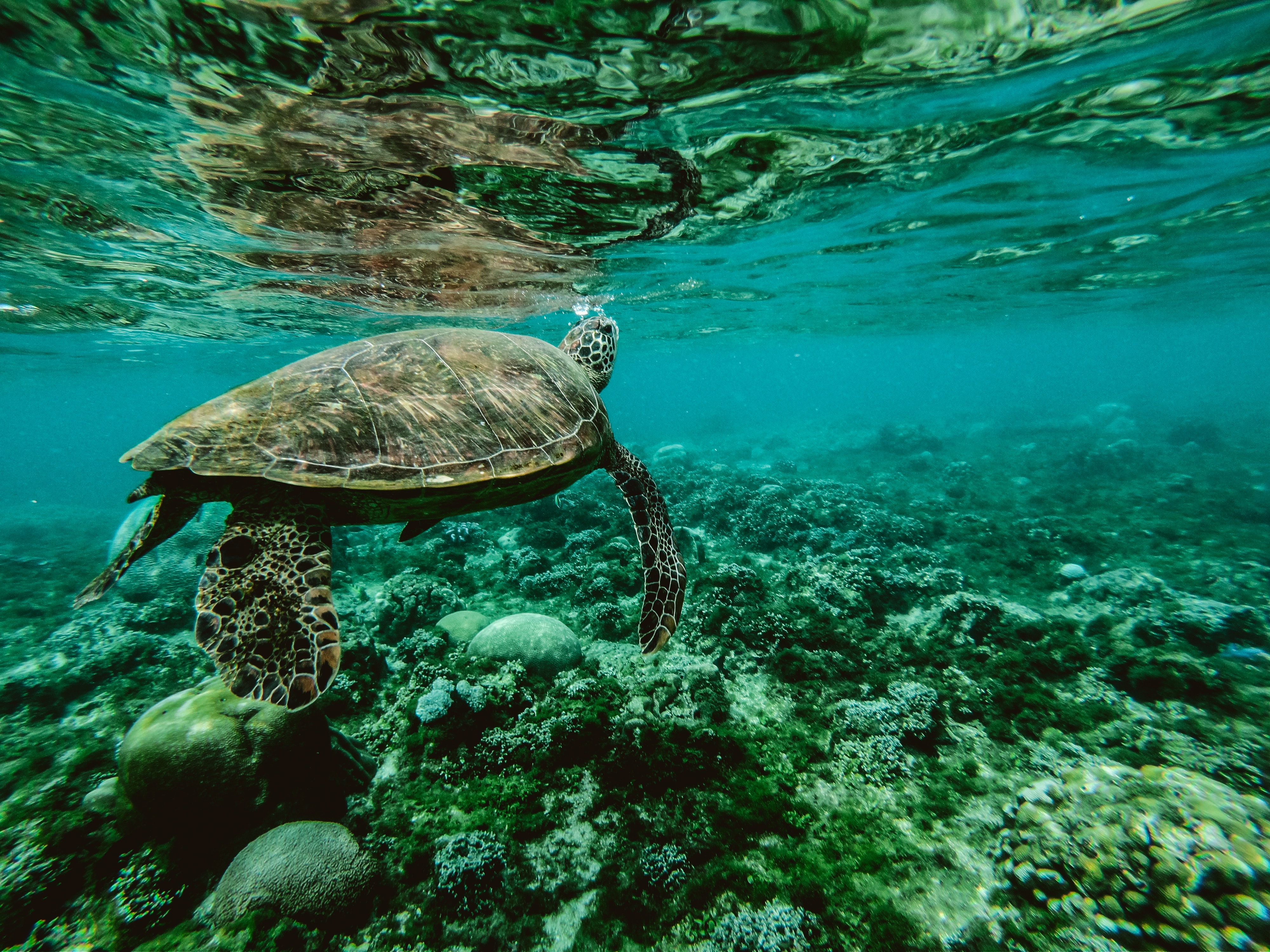
Streaming media is nothing new; however, it continues to present new challenges for libraries. For academic libraries, where faculty and students prefer the ease of access streaming media provides to the constraints of placing and watching DVDs on reserve or the necessity of using one or more class sessions to view a film as a group, having at least one (and usually more than one) streaming option becomes a necessity. Streaming films can be watched 24/7 on many devices anywhere that has an internet connection.
That ease of use comes at a cost. And that cost is not always known. With subscription models like Academic Video Online (AVON), users have unlimited viewing ability with a known, yearly cost. With PDA programs, like the one Kanopy provides, licenses are triggered after set criteria are met, and the cost of triggers may add up more quickly than one expects and may easily blow a hole in the budget if not monitored conscientiously. In these PDA programs, there may be options to mediate access, which requires users to request films. But once a campus community gets used to instant viewing on demand, it may be difficult to change course midstream.
There is the added complication of home use only platforms like Hulu, Netflix and Amazon Prime, with an individual subscription model where contract law (consumers agree to terms that permit only at-home viewing) overrides any exemption provided by the Face-to-Face Teaching Exception under the Fair Use Guidelines provided by statutory law (Netflix terms of use here). These platforms do not make any provisions for educational use, with the exception of a very short list of Netflix documentaries (see the fourth bullet below). Some of these films are exclusive to the platform and not even available in DVD format.
Another layer of complexity involves PPR–Public Performance Rights. Most films on streaming platforms commonly used in higher education come with PPR; however, we have run up against at least one exception to that rule. Also, there are always films that are not available in streaming format that are requested for campus film festivals. So in addition to paying for streaming platforms, libraries may end up paying for expensive, institutional copies of DVDs.
Speaking of DVDs, some argue that a physical format is still desirable from both a budgetary and a preservation perspective. Streaming films can be removed from platforms, sometimes without notice, and faculty can find themselves without access to a film they have relied upon as part of their syllabi in the past. Ownership opportunities for streaming films can be limited.
Last, there are films that are available to stream but only if an institution has its own platform for hosting. Vendors like Kanopy and AVON do permit hosting of local media; however, there are several requirements that have to be met. And there are always films that are just not available in streaming format, period. Faculty may ask that a DVD be digitized; however, copyright laws come into play and are usually prohibitive for whole DVDs (clips may be okay). Finally, there are films that are still only available on VHS (see the second bullet point below), although these are generally permitted to be digitized since the format is considered to be obsolete.
The ecosystem is multilayered and can be difficult to navigate. Fortunately, there are some resources that can help.
- Videolib mailing list. videolib@lists.berkeley.edu. This list is a great resource for tracking down PPR, streaming formats, rights holders and engaging with others in discussions about many of the issues outlined above.
- Academic Libraries Video Trust (ALVT). (From the website): The National Media Market (“NMM”) has launched the Academic Libraries Video Trust (“ALVT”), a service facilitating the preservation of audiovisual (“AV”) works in the collections of member libraries. The principal activity of ALVT is to provide a clearinghouse or repository of digital versions of selected AV works, generally works currently available only in the obsolete VHS format. The service is built on opportunities allowed to libraries and archives for the preservation and replacement of works in their collections, pursuant to Section 108 of the U.S. Copyright Act. NMM offers this service in order to encourage the preservation and appreciation of the educational films, motion pictures, documentaries, and other works that are increasingly out of reach because of the obsolete technology.
- IMBDPro. For a modest fee, users can subscribe to an enhanced version of IMBD that provides industry contacts useful for tracking down rights holders and other pertinent information about a film.
- Netflix Educational Screening of Documentaries. This page sets forth the language that will be available on any Netflix film listed that permits educational screenings. Unfortunately, Netflix does not provide a definitive list. Users may look up films here to find out if the provision applies.
- National Media Market. The only conference in the US that is dedicated to librarians who work with film and video.
Don’t get caught in this fast-moving current without a strong toehold. The more you learn, the easier it will be to row gently down the stream.
With a Little Help from my Friends (Interlibrary Loans)
My first three months as an interlibrary loan librarian for a community college have been a very rewarding experience. Using OCLC WorldShare®, I have been able to connect with libraries all over the United States for both lending and borrowing purposes. Naturally, there are regulars with whom I do consistent business; those libraries who are in the locality and whom I can rely upon for fast and secure lending. We know where each other is located within the area and have probably attended a seminar or conference together at some stage in our careers. In my case of working two part-time jobs, I see interlibrary loans being requested from the public library where I also work and I think to myself, “Why bother even shipping that out? Save the postage and I’ll run it over there the next time I work, which is usually three nights a week.” I am enthralled by the connectivity between our institutes, no matter the type of library or the population served.
Then there are those libraries who are on the other side of Pennsylvania or on the other side of the United States helping me out with journal articles and printed material. It is a wonderful, reciprocal relationship and I am very appreciative to OCLC WorldShare® for making interlibrary loaning a smooth operation. (Which makes me wonder: What was it like for libraries prior to automated systems and OCLC? I can only imagine how much more taxing it most likely was to obtain rare articles and all those photocopies. Oh, the photocopies!)
For all the conveniences OCLC WorldShare® has to offer, there are many incidences when an article is either unavailable or comes at a cost. I have yet to have a patron agree to pay for a copy of an article. This is when I turn to my helpful librarian friends on the OCLC interlibrary loan distribution list. To contact the list owners directly please send your message to ILL-L-request@OCLCLISTS.ORG.We are quite an active group and really pull through for one another. If you work on interlibrary loans, I highly recommend this feature of OCLC. I have had responses within minutes of my requests, and I cannot thank enough the speediness and attention with which other librarians pull through for me.
However, there are times when even the extremely resourceful librarians on the OCLC interlibrary loan distribution list cannot provide me with a particular periodical. Drawing upon my passion to one day work as an academic librarian in New Zealand, I have subscribed to a few mailing lists for libraries in that corner of the globe. One list, in particular, is the NZ-Libs, a discussion of library and information services in New Zealand. As a last resort, I reach out to them to see if perhaps they might have access to a periodical which could be more popular in that hemisphere. (For instance, some south Asian and Oceania periodicals are extremely hard to find or come at a cost on OCLC WorldShare®, but a country like New Zealand or Australia might have obvious easier access to such publications.) As with my OCLC distribution list, my kiwi librarian friends are quick to answer me and assist me with my search. It really is a refreshing experience when you start to realize that we are alike no matter where we may be situated on the globe. Our academic library in little Schnecksville, Pennsylvania, is run similarly to the university libraries in the bustling metropolis of Auckland.
Aside from assisting one another in fulfilling interlibrary requests, we are also forging connections and developing a rapport with one another not only as fellow librarians but as human beings. It is so interesting to hear each other’s stories of how procedures are conducted at individual libraries and how we are all helping one another to harvest and disseminate knowledge; it is empowering in a lot of ways! Or it is encouraging when I make connections with academic and public libraries in New Zealand because I feel like it gives me a little more insight into their culture, and now I can place names with positions and locations, which can be extremely useful for when I try to make the immigration. (Unless of course, I can get into that country based solely on my attractive looks… ha ha ha.)
Are any of you serving as your library’s interlibrary loan librarian? Are you subscribed to the OCLC interlibrary loan distribution list? What other tricks might you have up your sleeve to pull off requests for rare periodicals and printed materials, or to fray the costs for some these requests? Do your patrons agree to make the payments to obtain such resources? Or do you absorb the costs for your patrons? I am intrigued to learn about how you handle those circumstances.


 It's Academic