A new way to explore the newspaper of the Catholic Worker movement started by Dorothy Day

It’s Women’s History month. A special time when well-known and a few no-so-well-known women get highlighted. Even though she was publicly acknowledged by Pope Francis as a great American during his 2015 speech before Congress, too many have heard too little about Dorothy Day. She was the co-founder of a movement that has produced Catholic Worker communities, “committed to nonviolence, voluntary poverty, prayer, and hospitality for the homeless, exiled, hungry, and forsaken.” The organ of the movement since its inception in 1933 is The Catholic Worker newspaper. As their Website goes on to say, “Catholic Workers continue to protest injustice, war, racism, and violence of all forms” (www.catholicworker.org).
What’s exciting is that an open digital archive of The Catholic Worker (1943 – 2016) has just become available, with promise of the first decade being added soon. Nonetheless, these digitized primary sources at thecatholicnewsarchive.org already give a unique and invaluable view on current world events from World War II to the early twenty-first century.
The media this week is buzzing about Pope Francis’ announcement to open the 1939-1958 files in the Vatican archives. As much as it will be a boon for scholars to be able to investigate those World War II/Holocaust-era documents, they won’t become available until March of 2020. Until then, and even on into the future, it’s great that researchers will have ready online access to some notable and freely-available historical primary sources via The Catholic News Archive, a project of the Catholic Research Resources Alliance (www.catholicresearch.org).
CRD Spring Workshop: Save the Date!
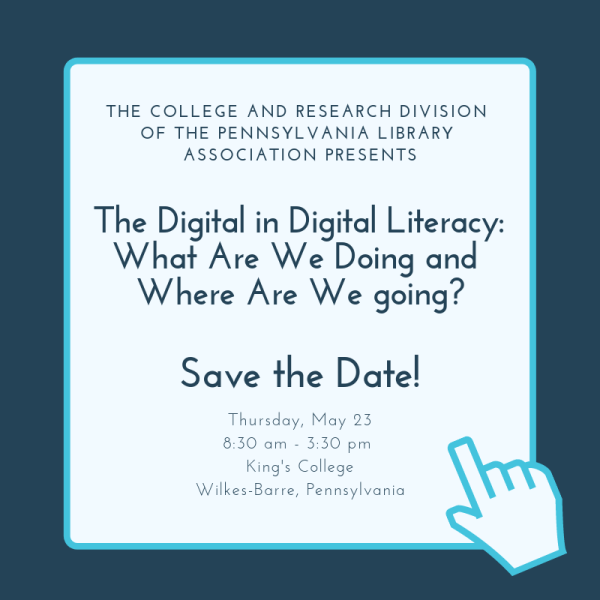
RFP will be released soon. Please join us for a great day of professional development!
Supporting OER Adoption
 The cost of college textbooks is a growing problem in academia. In 2017, the average student spent $1,200 on textbooks. At community colleges, like the one I work at, this extra cost is especially difficult for students to bear. High costs cause many students to not purchase their textbooks, which hinders their academic performance.
Libraries are trying to improve this situation by helping faculty adopt open educational resources (OER) to replace traditional textbooks. OER are freely available learning materials that replace or supplement the textbook for a course. So, what are some of the methods librarians can use to help faculty adopt OER? Below I will outline my own experiences helping faculty at Pennsylvania Highlands Community College.
- Replace the textbook with an open textbook – This is the simplest way to adopt OER. Faculty at several intuitions are making textbooks and publishing them online for anyone to use. Openstax is one example of this. They have excellent textbooks on most general education subjects. By comparing the previous textbook or syllabus for a class to the open texts available I’ve been able to suggest replacement textbooks for faculty. Of course, not every subject is covered and there is no guarantee that an instructor will approve of the available open textbooks.
- Replace the text using the Library eBook Collection: Online eBook collections may also be an option to replace textbooks. I worked with a history professor who required students to read a monograph on WWI as part of his course. I used my library EBSCO eBooks Collection to find a suitable replacement book on WWI. We verified that the book allowed for unlimited concurrent access so that the whole class could use it at once. By embedding a link to the eBook within the course LMS page students had easy access to it.
- Replace the textbooks with several different materials – One instructor reached out to me about the possibility of using an OER textbook for her class. Unfortunately, no open texts were available for this subject. Instead, I was able to help the instructor adopt OER by working with them to find journal articles, websites, videos, podcasts, book chapters, and other materials they could use to replace the text. This variety of materials was grouped by subject and placed in the course LMS page to allow student access. This method requires more work by library staff and faculty involved, but it does give you an extra option to use OER in courses where no open textbook exists. Using a variety of learning materials may have pedagogical benefits as well.
- Create a copyright free collection – I worked with an English professor who required students to purchase a collection of poetry. The entire text was made up of older works that were out of copyright. I ended up creating a large PDF which included all the poems required and could be easily posted on the course LMS page. Resources like Project Gutenberg were helpful for this particular project. I also used this method for a history class that featured a collection of readings from primary texts dating to the 1700s.
These are a few of the methods I have used to encourage OER adoption at my college. Have you tried similar things at your library? Do you have any questions for me? Let me know in the comments.
C&CS Presents: Mapping your Journey: Steps for Beginning a Librarianship Diversity Residency
Mapping your Journey: Steps for Beginning a Librarianship Diversity Residency
presented by Amanda Leftwich
March 18, 2019 at 1pm
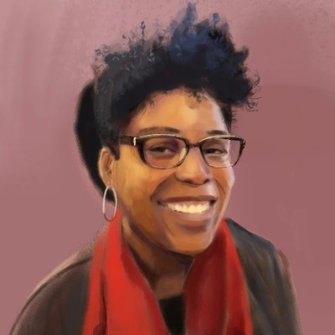
You’ve gotten a residency, now what? This webinar will highlight a diversity residency located at the Montgomery County Community College to outline the steps of entering a residency based on this experience. Amanda M. Leftwich is the Online Learning Librarian Diversity Fellow at Montgomery County Community College in Pennsylvania. This discussion will include advice for those applying, a checklist for beginning your residency journey, and practical tips for creating a timeline for residencies. Join Amanda as she discusses these aspects to help prepare future residents to be better equipped for their residencies.
Amanda M. Leftwich, MSLS is the Online Learning Librarian Diversity Fellow at Montgomery County Community College. Leftwich earned her M.S.L.S from Clarion University of Pennsylvania. She is the Creator of #mindfulinlis, a Twitter hashtag dedicated to mindful practice and techniques for LIS professionals. The hashtag, #mindfulinlis has generated over 20,700 unique impressions in October 2018 alone. She has presented and written on diversity, equity, and mindfulness since 2017. Leftwich delivers the training, has written the materials, and actively engages the audience in issues relevant to her work. She’s written articles for Letters to a Young Librarian and INALJ. She tweets @thelibmaven.
Can’t make the session? No worries! As always, session will be recorded and made available in closed captioning when available. After recording, registrants will be given links to the session and to an evaluation form.
If you would like to host a C&CS session, please contact Erin Burns or any member of the C&CS team. The team graciously thanks PaLA and the CRD and members for supporting us and these important professional development opportunities.
Information about our team, a session proposal form, and past and future sessions can be found on the CRD blog site here: https://crdpala.org/connect-communicate/
C&CS: “How do Critical Educators Approach Learning Outcomes Assessment?” Video available
Video link to Friday’s session is below. We would like to thank Rebecca and Carolyn for having this session, and to Diane Porterfield who supported us with closed captioning for the session.


 Adam Balcziunas
 Alex K.
 Alexandrea Glenn
 Andrea Pritt
 aprilnkelley
 Ashley Purvis
 Bethann Rea
 blj13
blj13 Brendan Johnson
 Amanda Boyer
 Bret Stiffler
 Bonnie Powers
 Christopher Lemery
 clarewithers
 clblibrarian
 Kelly Clever
 Charlotte M. Johnson
 colemanluzerne
 CRD of PaLA
 crdvirtualjournalclub
 cre5314
 csgarth
 Erin B.
 danajkerrigancv
 denisewetzel1
 Darren G. Poley
 elm43
elm43 James D'Annibale
 Annie Jansen
 Jill Hallam-Miller
 jennifercribbs
 Jenn Monnin
 Jen Hasse
 Jessica Showalter
 johnmeier1
 Kelly Safin
 Kim Karim
 Kristen Seikaly
 Kayla Van Osten
 Cecelia Lasley
 librarianjsmith
 Linda Neyer
 mabogino1
 Matthew McNelis
 Meg Massey
 Maggie Savidakis-Dunn
 Rebecca
 miskatoniclibrarian
 Maureen Bentz
 Michele G. Anfuso
 Nicole Miyashiro
 paulmcmonigle
 Rob Sieczkiewicz
 ronlmccoll
 Sam Bardarik
 shannahollich
 smartin592
 Ula Lechtenberg
 It's Academic