Staying focused over the summer
I’m not sure how I ended up working in a library as my sister has always told me that I don’t have a voice for libraries. And this summer I realized that I have a really hard time working when it’s quiet around me.
While our college does hold two, four-week class sessions over the summer, our library is only minimally involved in them. Few, if any, incorporate information literacy sessions. No items are placed on reserve. Students typically do not live on campus during these sessions so they aren’t hanging out in the library. I think during Summer Session I, our highest number of students in the building in a day has been about three.
We don’t have evening or weekend hours over the summer so in theory all of the library employees should be in the office together. However, at W&J our vacation is tied to the fiscal year so whatever vacation you haven’t used up by June 30th, you lose. Therefore, June ends up being a really popular time for our staff to burn vacation time. I looked at our master calendar and there was only one day in the entire month of July that no one was on vacation.
I have a list of projects that I want to work on over the summer but I’m finding it very hard to focus without the normal bustle of activity going on around me.
One thing that has helped me is to play webinar recordings, that I’ve been saving up all year, in the background while I work. Here are two free webinars that I have recently watched and thought had good practical tips.
The first one was on the MLA International Bibliography database, https://www.ebsco.com/blog/article/using-the-mla-international-bibliography-to-guide-the-research-process. I really liked the examples they shared with using the database to do some meta-analysis of how topics have been covered over the years. I also want to recommend to our English Department that they share the online tutorials on how to search the database with their students.
Today I’m watching one about searching PubMed, https://youtu.be/3CXCDFMdJBQ. I’m really interested in trying to implement the example with using dots and circles on paper to represent journals and databases to help students understand the concept of what is and is not being searched. I think I can make it apply to databases other than PubMed.
What are summers like at your library? Do you stay busy in the summer just like during the fall and spring? Or are you quiet like we are? I’m also open to more suggestions for webinars or podcasts that might be entertaining and educational.
Summer Prep for a New Liaison Librarian
I began my first librarian position during the summer of 2018. I am the first diversity library resident for Susquehanna University. This means that not only am I an early career librarian, but as the first resident of the institution there was no previous track for me to follow. I, along with my supervisor had to develop what it means to be a resident on Susquehanna’s campus. In my role as a resident, I handle instruction, assessment and liaison work for the business school.
Since this was my first library/librarian position, I felt very lost about how to organize my day. This was especially true because this was also my first salaried position, where I had the trust of my supervisor. After many jobs where I had less control over my schedule, going to a position where I had trust left me unsure but, with a desire to prove myself.
Therefore, I began to work, but I didn’t really have a clear understanding of what prep for a new year looked like.
I worked with my colleagues on assigned projects and found work to keep me going but I felt lost a lot of the time, despite the support of others.
Now going into my second year of work and looking back and planning for the future, I have a few suggestions of how to utilize your first (and any) summer.
1) Plan out your professional development for the year:
One activity that kept me busy throughout the summer was strategizing what professional development I wanted to participate in the upcoming year. I researched future conferences, signed up for listservs, participated in webinars, and read relevant articles. At the time felt like busy work to me. However, it actually was very formative for my year and I found more useful than I thought.
2) Try to plan a few events:
You do not know what the year will bring, yet. You are still new on campus and may not have a strong knowledge of the climate on campus. Nevertheless, you know where your interests lie and you should use your time to create something that will suit your interests. Try to implement all those events over the course of the year. Either way, you will have a list of projects you can refer to any point of your career.
3) Meet as many faculty and staff colleagues as possible:
This is the perfect time to get a build campus partnerships. You can make a list of departments you want to connect with and work your way through that list over the course of the summer. Faculty can be a little difficult to contact over the summer, but this is also a great time to create a newsletter. It is a nice way to greet faculty who spend their summers away from campus.
4) Be okay, not knowing:
This is something I often have to remind myself to practice. There will be days where you may not have an exact plan for the day. Or where you spend time at your desk trying to figure out how to spend your day. But that’s OKAY. Don’t put undue pressure on yourself. You only get one first summer, spend it learning as much as you can.
These are some of the recommendations to prep for your own summers. It isn’t an exhaustive list. But if you are looking for a way to better shape your summer; I would highly recommend utilizing any of the suggestions listed here. The most important one being allow yourself moments to breathe and be okay with the unknown.
Happy Summer!
“All animals are equal, but some animals are more equal than others,” wrote George Orwell in Animal Farm.
As I embark on the tall task of taking a complete inventory of our print collection (between 75 – 80 K volumes) with our staff of two over our two month summer without students on campus (our summer courses are online only), I find myself modifying this famous line as I think about the fact that we will be weeding over the next few years (and are pulling some of the really bad stuff now as we go).
Some books are more equal than others.
All of our libraries are facing space issues as we shift from print collections to digital and there is more demand on our campuses for office space, collaborative group space, and technology. What is it that justifies a book maintaining space on our shelves? What makes us add a book to the collection? How many copies of a title is enough? Too many? Why do donors to the library seem to think that we want their personal collections of books? (some of which don’t fit our mission, collection development strategy, or support our curricula).
How do we navigate this slippery slope of questions and concerns?
Just a few things crossing my mind as I wait for the scanner to recharge… Any tips/tricks/advice are welcome.
Signed,
Scanning Away the Summer,
Inventory Collecting Librarian
Organizational Fit, Banned or Expand?
Diversity, Equity and Inclusion (DEI) are hot topics right now in our profession, but perhaps it’s not just about hiring practices. To be sure, that is a good starting point, and for more than a half-century the Equal Employment Opportunity Commission has monitored this. “Title VII of the Civil Rights Act of 1964 prohibited employment discrimination on the basis of race, color, religion, national origin, or sex and also made it illegal to retaliate against those who sought relief or assisted others in their exercise of rights secured by the law” (https://www.eeoc.gov/eeoc/history/cra50th/).
Since the Civil Rights Act there have been other laws enacted such as Age Discrimination in Employment Act and the Americans with Disabilities Act of 1990 (ADA). But even if we say we are an equal opportunity employer in hiring advertising, a commitment to DEI obligates us to look at even our everyday activities with a critical eye.
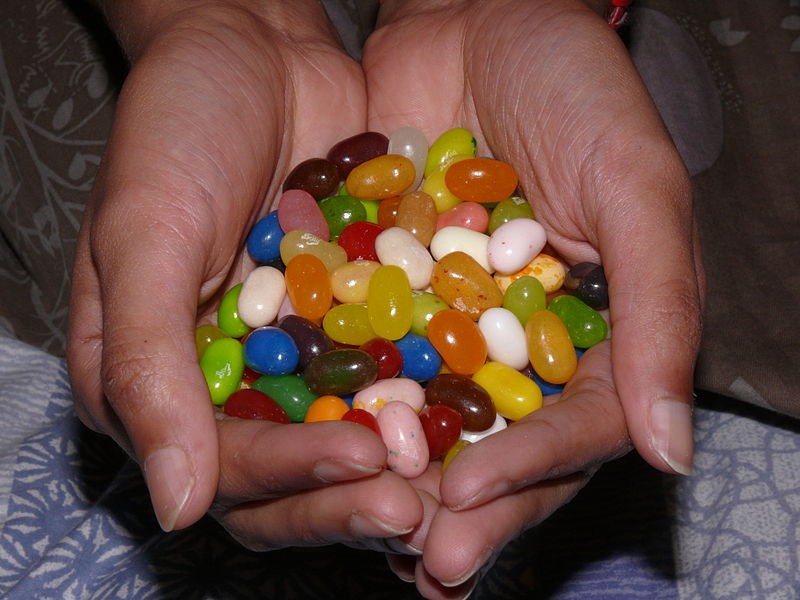
Photo credit: Andrew Gray [CC BY-SA 3.0].
We shouldn’t however just talk about axing the concept of fitness, because it’s too easy to simply say we’re against discrimination and wash our hands of it. Plus, today libraries are looking for ways to promote their value and distinctiveness and so we cannot abandon what makes them unique. Therefore, maybe we can simply grow our understanding of organizational fit with an attentiveness to DEI. One way to do this would be to establish DEI alongside other core values, so that questions of fitness are not just discussed as something to be drummed out of hiring.
An illustrative macro-level question is to ask how can we have an affirmative and a colorblind society? To celebrate pluralism and multiculturalism the metaphor was shifted from that of a melting pot to a salad. Whatever your stance, join or start a conversation in your library on whether organizational fit should expand, or be banned.
“Mapping Your Journey: Steps for Beginning a Library Diversity Residency or Fellowship” Summary
“Mapping Your Journey: Steps for Beginning a Library Diversity Residency or Fellowship” was presented by Amanda Leftwich on March 18, 2019, for the PaLA Connect and Communicate Series. Leftwich is the Online Learning Librarian and Diversity Fellow at Montgomery County Community College (often referred to as “Montco” or “MC3”) in Blue Bell, Pennsylvania. She started her position in August 2018. Her presentation begins by discussing the confusion with the terms “resident” or “fellow,” and how this can be misinterpreted as meaning that the person is serving as an intern. Quite the contrary, a resident or fellow is a professional who has recently obtained his or her MLS/MSLS, MLIS/MSLIS, or MIS, and who generally has less than three to five years of post-graduate professional experience. It is this desire to accrue more experience and to try different avenues which often encourages recent library graduates to apply for diversity and fellowship positions. These positions are temporary in status, typically ranging from one to three years, and can be tenure track. (At Montco, the positions usually last a year, although Leftwich’s particular fellowship has a two academic year duration.)
In 2008, Montco started its own Faculty Diversity Fellowship program to promote diversity, providing mentoring to minority scholars in the early stages of their careers to allow them to develop their teaching skills as they continue to work on or complete their terminal-level degrees. Faculty fellows receive mentoring from colleagues, and in return, these fellows participate as mentors in Montco’s Minority Student Mentoring Initiative (MSMI). Leftwich’s two-year fellowship is the only one of its nature in the cohort due to the ACRL Alliance agreement. She hopes that when the fellowship ends, she will be hired back as a permanent, full-time, non-teaching faculty. Her responsibilities include focusing on diversifying the collections, instruction and reference rotations (which include serving as an embedded librarian), committee work, and displays.
As with any new professional experience, Leftwich walked into her fellowship position with expectations, including knowing her coordinators’ meetings, scheduling rotations, having a designated set of responsibilities for the position, securing a mentor from within the department, creating goals and frameworks for the fellowship, and having no committee work. With a good chuckle, Leftwich explains that she did not know what this fellowship position would entail; she just signed her contract, departed from her previous employer, and entered the experience at Montco with an open mind and high hopes. As it turns out, the reality of her fellowship differed greatly from her expectations. There are no coordinators and the staff is too small for rotations. As for what is expected of Leftwich in her fellowship, she has been instructed to do what interests her, and responsibilities are not set in this particular environment. Similarly, there are no set goals or frameworks for her duration at Montco. Her mentor is from the Geography department instead of from within the library. And she has found that per her contract, she is required to serve on a committee.
Leftwich encourages those in a fellowship to ask the following questions about their journeys: What do you hope to gain from a residency? Are you looking for more reference or instructional experience? How will this position help you in the future? Is it worth the commitment? Have a clear definition of what your life will be like after this residency concludes because it will not be a permanent situation. Are you willing to be a mentor? Are you willing to be a part of a diversity initiative set by the institution? Are you willing to follow the goals and mission of the institution?
Be prepared to make your goals. Reflect and track your own work, including all work activities and accomplishments. Find a mentor or two, preferably someone outside of your department. Be a mentor. Get involved, both within your department and outside of it as well. Be flexible, but not to the point where you are a pushover. Ask questions at all stages of your residency.
Nothing is ever without its challenges and negatives, and a residency is not all “grins and giggles.” Leftwich also presents the challenges of her residency at Montco. For starters, she is the only fellow in her department. This means working alone on projects and initiatives without receiving feedback from someone on her professional level. She has no official coordinator and therefore must report to the dean. Again, she has no specified mentor, but she has found solace and support with her co-workers, in particular, the information literacy librarian. There is no communication about the fellowship position’s requirements or needs, so it does require discipline and structure to come up with your own framework of how you want this residency to play out and what you hope to gain from it. And while this may not seem like a challenge, Leftwich does find herself on some days with a lot of free time. She advises that you will need to structure your own day; you cannot wait to have it structured for you by your co-workers or deans. Leftwich also notes that there is no “publish or perish” culture on campus, although she does enjoy researching and writing. Since there is not a requirement among faculty to publish, there is no internal promotion of her writing when she does do it, and no one keeps track of it, except for Leftwich herself. This poses a challenge in that you want to be prepared should you go from a non-“publish or perish” culture to one that requires regular submissions for publication. Share your research externally, Leftwich advises.
Despite these challenges, Leftwich ends on a positive note, stating that you should take the opportunity to soak it in all and gain valuable experience from your residency. Remember to relax and enjoy the adventure!
You may view Leftwich’s presentation on YouTube.


 Adam Balcziunas
 Alex K.
 Alexandrea Glenn
 Andrea Pritt
 aprilnkelley
 Ashley Purvis
 Bethann Rea
 blj13
blj13 Brendan Johnson
 Amanda Boyer
 Bret Stiffler
 Bonnie Powers
 Christopher Lemery
 clarewithers
 clblibrarian
 Kelly Clever
 Charlotte M. Johnson
 colemanluzerne
 CRD of PaLA
 crdvirtualjournalclub
 cre5314
 csgarth
 Erin B.
 danajkerrigancv
 denisewetzel1
 Darren G. Poley
 elm43
elm43 James D'Annibale
 Annie Jansen
 Jill Hallam-Miller
 jennifercribbs
 Jenn Monnin
 Jen Hasse
 Jessica Showalter
 johnmeier1
 Kelly Safin
 Kim Karim
 Kristen Seikaly
 Kayla Van Osten
 Cecelia Lasley
 librarianjsmith
 Linda Neyer
 mabogino1
 Matthew McNelis
 Meg Massey
 Maggie Savidakis-Dunn
 Rebecca
 miskatoniclibrarian
 Maureen Bentz
 Michele G. Anfuso
 Nicole Miyashiro
 paulmcmonigle
 Rob Sieczkiewicz
 ronlmccoll
 Sam Bardarik
 shannahollich
 smartin592
 Ula Lechtenberg
 It's Academic
![Andrew Gray [CC BY-SA 3.0]](https://commons.wikimedia.org/wiki/File:Jellybeans_in_cupped_hands.jpg)