Open and FAIR go Together Like a Horse and Carriage
The State of Open Data Report has been produced 2016-2019 by Digital Science and Figshare. What’s different about 2019? The number of respondents, which remained relatively the same for the first three years, quadrupled to over 8000 world-wide according to Briony Fane, “What is the State of Open Data in 2019?” in The State of Open Data Report 2019 (Digital Science, October 24, 2019), 8-12.
Fane goes on to say, the value of a citation to a dataset was rated highly or more highly than was a citation to a standard research paper. What makes this attitude interesting is that while a third of respondents published their first peer-reviewed article in the 2010s nearly half already have tenure and over a third are professors. So, the idea that researchers who have already passed over the coveted professional thresholds care only about traditional forms of scholarship is not a truism. But this may be the case because researchers who are established in their careers are less concerned about getting scooped by sharing their data and are more interested in collaborating with other scholars.
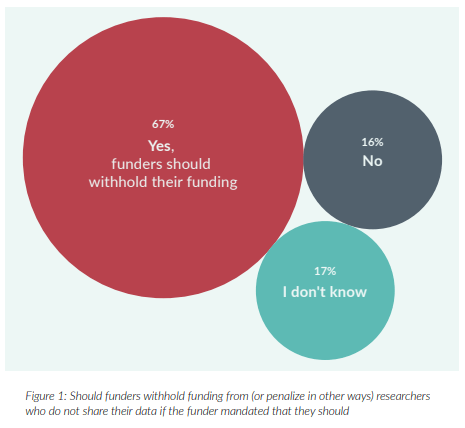
It may seem logical that over a third of respondents have concerns about misuse of data. However, the second most frequent concern was uncertainty about copyright and licensing. It is encouraging though that the percentage of respondents who don’t know what license covered their data when it was made openly available has dropped significantly since the first report four years ago.
The sad reality these reports reveal is that most researchers still don’t know what FAIR principles are when it comes to open data. But on the positive, a majority “of respondents who had never used open data in their research would be willing to do so” (Fane 11).
Some other “Big Takeaways” identified by Briony Fane, a Data Analyst with Digital Science:
- “full citation (61%), co-authorship (42%), consideration in job reviews (45%) and financial reward (38%) all ranked highly as important mechanisms for researchers as credit for sharing their data openly”
- “65% of respondents reported that they curated their data for sharing either privately or publicly”
- “79% of 2019 respondents were supportive overall of a national mandate for making primary research openly available.”
There have been tremors in the research publishing community since an open letter with now over 60 signatories was sent late last year to petition for a White House Executive Order to require open access for publicly funded research. Based on The State of Open Data Report 2019, an important step a librarian can take is to educate researchers about the FAIR principles and ensure research data is Findable, Accessible, Interoperable, and Reusable.
Call for Presenters – Share Your Ideas, Knowledge, & Experience at the Pennsylvania Library Association 2020 Conference!
The 2020 Pennsylvania Library Association Conference, Mountains of Possibilities! will take place October 18 – 21, 2020 at Kalahari Resorts & Conventions in the Poconos.
The 2020 Conference Program Committee is currently accepting proposals for sessions to take place during the conference, to include more than sixty educational sessions on topics of interest for the library community. Suggested topics
If you are an expert on a topic that you feel will be of interest to this group, we invite you to submit a session proposal!
The deadline for submissions is noon (EST) on Monday, March 16.
For more information on the conference, and the submission link and requirements, CLICK HERE, and by all means plan to join us at Kalahari! You won’t want to miss it!
Outreach Efforts to Computer Science Students and Faculty
As a STEM Librarian I serve a diverse group of students enrolled in science, engineering, and technology related disciplines. I have been in my current role for almost two years now and I have been successful at making inroads with several engineering departments as well as the biology department. However, a new goal that I have in mind is to increase my outreach to our computer science students and faculty. I want to do more beyond adding relevant books to our library collection.
After reading about how great the book is and having conversations with fellow librarians who found it insightful, I have started reading Algorithms of Oppression: How Search Engines Reinforce Racism by Safiya Umoja Noble (2018, New York University Press). I am only halfway through the book right now, but I will note that my colleagues have steered me in the right direction. I do not intend to write a book review here but if you have any interest in algorithm bias, machine learning, or search engines – I highly encourage you to read this work. At last year’s PaLA’s annual conference one of our colleagues gave a brief lightning talk about bias in computer science programming (it was enlightening) and just yesterday I attended a Library and Information Technology Association (LITA) webinar called “Engaging with Algorithm Bias: How Librarians Can Meet Information Literacy Needs of Computer Science and Engineering Students” presented by three librarians and one computer science faculty member. The presenters discussed their recent work on surveying computer science student’s perception of search engines and algorithm bias. They used their survey results and discussions with students to create a learning module all about algorithm bias that they’ve deployed at three different institutions to different audiences. I thoroughly enjoyed the webinar and would encourage you to reach out to the presenters with any questions. While I still need to finish Algorithms of Oppression, both the book and webinar have already given me ideas on how to increase my outreach to the computer science department.
In the future, I am planning on reaching out to the department again (my first attempt last year was not as successful as I hoped) to build connections with faculty and the program director. I know that I need to learn a lot more about their department, courses, and students before I can embark on a meaningful relationship. It seems the topic of algorithm bias and the oppression of certain users by search engines would fit well in a course on computer ethics. I will be investigating the computer sciences course that are offered on my campus to determine possible entry points and areas of collaboration. One opportunity for growth in this area is to reach out to the computer science capstone courses and offer research assistance relevant to their capstone projects as I do with our engineering courses. As I learn more about the discipline and the needs of computer science students on my campus, I am hopeful that my outreach efforts will be successful.
If you are a librarian with computer science liaison duties and/or interested in algorithm bias – I would love to hear your suggestions! Have your outreach efforts to computer science students been positive experiences? Is there something you would or would not do again? Please feel free to comment on this post or contact me directly at alp5088@psu.edu.
CRD Virtual Journal Club Spring Series is here!
Join the College and Research Division’s Virtual Journal Club spring series! This series we will focus on critical librarianship (#CritLib). All members of PaLA are welcomed. You can read a recap of our fall series here.
The CRD virtual journal club spring series will meet February 19, March 25, and April 22 from 1:00-2:00pm. Those interested in participating can sign up at https://forms.gle/RGYhRTYTr4yiP8R58.
For our first session, we will be reading these two articles:
Garcia, K. (n.d.). Keeping up with…critical librarianship. ACRL. http://www.ala.org/acrl/publications/keeping_up_with/critlib
Eamon, T. (2015). A decade of critical information literacy: A review of the literature. Communications in Information Literacy, 9(1), 24-43. https://files.eric.ed.gov/fulltext/EJ1089135.pdf
Prior to the February meeting, registered participants will receive an email containing a link to article we will be discussing, a list of discussion questions/prompts, and the online Zoom meeting invitation.
If you have any questions or suggestions for the planning committee, please feel free to contact us at CRDVirtualJournalClub@gmail.com.
C&CS Presents: Centering Student Voices on Feb 20th, 2020 at 11am
Centering Student Voices: Conducting Library Research with an Undergraduate
with
Hailley Fargo, Student Engagement Coordinator, Penn State University, University Park
and
Ally Mastrangelo, Undergraduate Research Assistant with Mapping the Student Engagement Journey, Penn State University, University Park
February 20th, 2020 at 11am EST
Register for the Zoom Link here
Library research is often conducted around undergraduate students, but these students usually do not have a say in the research project design. If libraries can find ways to include undergraduates in their research projects, there is potential for not only student-centered research, but also an opportunity for the library to provide a meaningful undergraduate research experience. Additionally, both the student and library benefit from this collaboration. The student learns more about the field of LIS and refines their research skills while the library benefits by learning more about how our students can use their disciplinary background in our research setting. This presentation will present the process of hiring, training, and collaborating with an undergraduate student. Specifically, this presentation is an overview of Mapping the Student Engagement Journey, an exploratory, qualitative research project on student engagement experiences. The presenters will discuss how this research project benefits from the undergraduate student, who is both a collaborator and insider, helping to strengthen the project itself to gather results.
Hailley Fargo is the Student Engagement Coordinator at Penn State University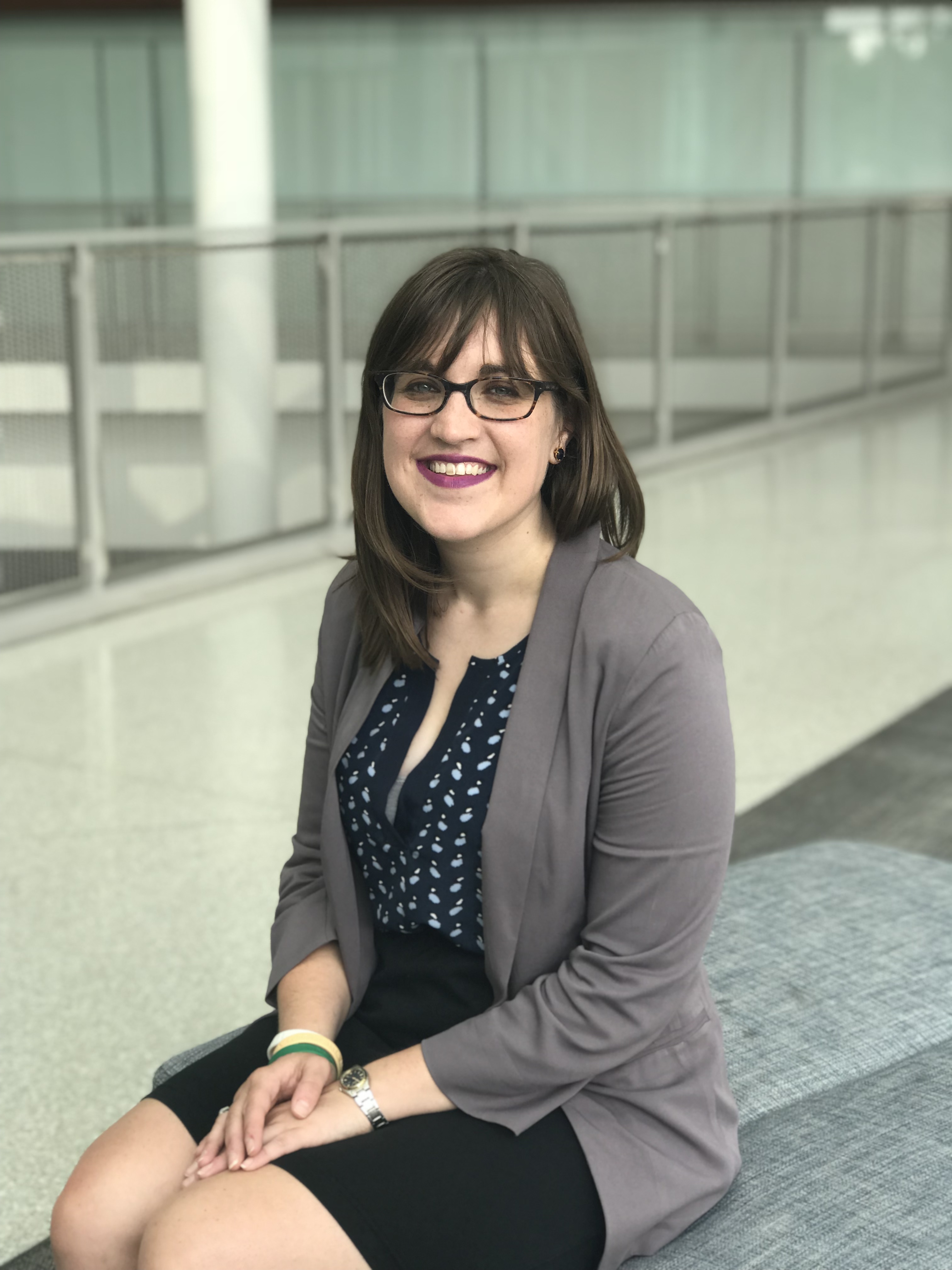 , University Park campus. This role liaises with non-academic units, collaborates with colleagues to create an aligned approach to student engagement, and explores ways to enhance library student employment. Hailley’s research interests include the library’s role in student engagement, peer-to-peer services, information literacy, and undergraduate research. Hailley is also a co-founder of The Librarian Parlor (libparlor.com), a blog dedicated to building community around LIS research. Check her out on Twitter @hailthefargoats.
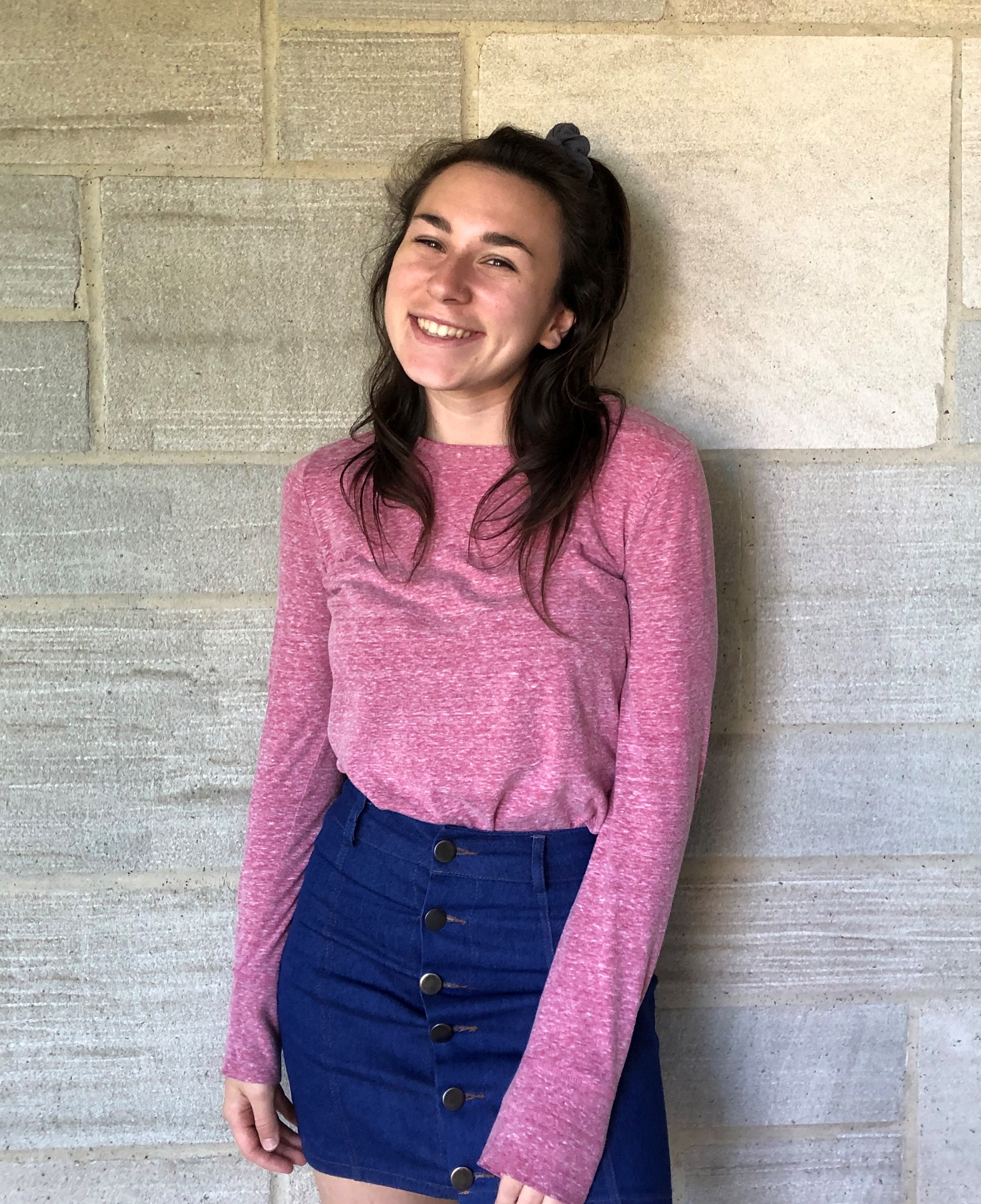 Ally Mastrangelo is the Undergraduate Research Assistant with Mapping the Student Engagement Journey. She just graduated from Penn State in Fall 2019 with degrees in Labor and Employment Relations and Psychology and she plans to begin law school in Fall 2020. Ally is intrigued by this project because of her previous research experience and involvement in student engagement opportunities at Penn State. She is a Research Assistant with the Underrepresented Perspectives Lab in the Psychology Department and was involved in various student engagement opportunities as an undergraduate, including New Student Orientation, Penn State Alternative Breaks, and the Italian Honors Society.


 Adam Balcziunas
 Alex K.
 Alexandrea Glenn
 Andrea Pritt
 aprilnkelley
 Ashley Purvis
 Bethann Rea
 blj13
blj13 Brendan Johnson
 Amanda Boyer
 Bret Stiffler
 Bonnie Powers
 Christopher Lemery
 clarewithers
 clblibrarian
 Kelly Clever
 Charlotte M. Johnson
 colemanluzerne
 CRD of PaLA
 crdvirtualjournalclub
 cre5314
 csgarth
 Erin B.
 danajkerrigancv
 denisewetzel1
 Darren G. Poley
 elm43
elm43 James D'Annibale
 Annie Jansen
 Jill Hallam-Miller
 jennifercribbs
 Jenn Monnin
 Jen Hasse
 Jessica Showalter
 johnmeier1
 Kelly Safin
 Kim Karim
 Kristen Seikaly
 Kayla Van Osten
 Cecelia Lasley
 librarianjsmith
 Linda Neyer
 mabogino1
 Matthew McNelis
 Meg Massey
 Maggie Savidakis-Dunn
 Rebecca
 miskatoniclibrarian
 Maureen Bentz
 Michele G. Anfuso
 Nicole Miyashiro
 paulmcmonigle
 Rob Sieczkiewicz
 ronlmccoll
 Sam Bardarik
 shannahollich
 smartin592
 Ula Lechtenberg
 It's Academic