Anticipating the future is human nature, risky and necessary. At least according to the introduction of the Horizon Report just released by EDUCAUSE, Emerging Technologies & Practices and Influential Trends, 2020. However it also acknowledges that the accuracy of predictions in past Horizon Reports are “middling” at best.
So, this year they have kept the ternary time horizon structure of past reports but adopted identifying trends which will cause departures from the past, impact the present, and help determine the future. Evidence for these trends is included. The trend categories are social, technological, economic, political and higher education.
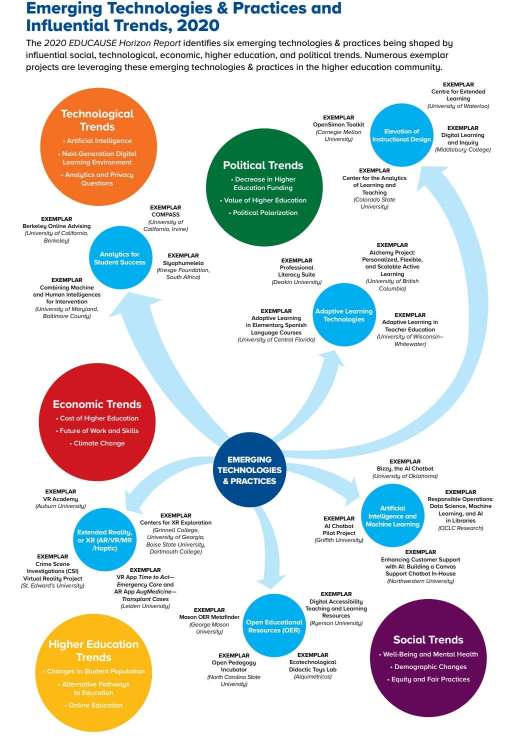
Mind Map by EDUCAUSE based on 2020 Horizon Report
They have stood by the Horizon Report’s standard of not simply making a list of “hyped technologies for the field to debate and debunk” (4). The emerging technologies and practices they do discuss on pages 13-31 are:
- elevation of instructional design, learning engineering and user-experience design
- open educational resources
- artificial intelligence/machine learning
- cross-reality technologies
- analytics for student success
- adaptive learning
The report also presents scenarios on how the future may unfold in the next 10 years: growth, constraint, collapse, or transformation. Even if growth is achieved it will be “with some unrealized goals and even some setbacks” (33). Constraint would be due to “the values of efficiency and sustainability” and “escalating financial pressures as a result of shrinking enrollments and decreased funding from state and other sources” (34). Collapse would be the result of “a new ecosystem of education” (35). Transformation considers “two primary forces: the dangers posed by climate change and the advances in digital technology” (36).
Another important new component is a series of essays responding to the findings of the Report (pages 37-55). Written by Horizon Report panelists, they touch on implications for educational and global sectors, such as U.S. Community Colleges, Australian Higher Ed, “Corporate Perspective on AI/Machine Learning,” and “Campuses Most at Risk from Climate Change.” The Report includes its methodology and roster of panelists.
Yesterdays session, “Academic Libraries and Autism Spectrum Disorder” is now available on YouTube. Link will remain available for a year. Gerry and Sebastian are wonderfully informed about the topic. Slides will be available on the C&CS page, https://crdpala.org/connect-communicate/
Special thanks to Sara Pike for doing our closed captioning and Diane Porterfield for moderating.
We also invite those who are not PaLA members to consider joining the Pennsylvania Library Association, which helps support programs like this one. If interested in becoming a member or for more information about the CRD, contact Katie Manwiller at Katie.Manwiller@desales.edu
Thanks!
- Work in close collaboration with a co-editor to manage all aspects of Pennsylvania Libraries: Research & Practice, producing 2 issues each year.
- Oversee all submissions moving through the publication process from initial submission to peer review, revision, layout, and final proofreading.
- Work closely with a volunteer editorial team including news editors, copy editors, and layout editors.
- Recruit and communicate with peer-reviewers as needed.
- Communicate and work with authors to provide feedback on submissions as well as strong editorial guidance as needed.
- Prepare updates and editorials as appropriate.
- Oversee use of Online Journal System (OJS) software platform by authors, reviewers, and editorial staff, answering questions about its functionality and recommending best practices
- Conduct or assist with training of new editorial staff
- Remain in close communication with the journal publisher, the University Library System, University of Pittsburgh and the journal sponsor, the College & Research Division (CRD) of the Pennsylvania Library Association (PaLA).
- Solicit submissions for all types of articles.
- Experience writing for professional publications.
- Significant experience working in Pennsylvania libraries.
- Current member of the Pennsylvania Library Association and the College & Research Division.
- Excellent communication skills required. Co-Editor must be willing and able to respond to numerous email messages in a timely manner.
Preferred Qualifications
- Editorial experience.
- Knowledge of issues related to open access scholarly publishing.
Submit a letter of interest and a resume to Emily Mross, PaLA College & Research Division Chair, at ELM43@psu.edu by March 31.
OER Webinars from Millersville University
Millersville University will be hosting a series of free webinars about OER all this week. Several webinars focus on case studies of using OER for a specific class, which should lead to useful real-world advice. Here are some of the topics they’ll be covering.
- BUILDING OER INITIATIVES AS PART OF THE OPENSTAX INSTITUTIONAL PARTNERSHIP PROGRAM
- K-12 OPEN EDUCATION RESOURCES
- CASE STUDY: BIOLOGY ADOPTION AND DESIGN
- CASE STUDY: ART HISTORY OPEN ADOPTION
- CASE STUDY: ENGLISH COMPOSITION ADOPTION
To see the full details and times of each webinar visit their website here: https://www.millersville.edu/cae/open-education/index1.php
C&CS Presents
Academic Freedom for Academic Librarians:
Do We Have It, and How Do We Know?
Presented by Danya Leebaw and Alexis Logsdon
March 13 at 1pm EST, noon central
Click here for Zoom Registration link
In this session, Danya Leebaw and Alexis Logsdon will discuss the landscape of academic freedom for academic librarians. Many academic librarians think that we are protected by academic freedom policies, but is that really true? We conducted a survey in 2018, collecting information from hundreds of librarians on their experiences with academic freedom. In this session, we will highlight key findings, including how academic freedom experiences correlate to socioeconomic identities and job status. We will also offer concrete suggestions for exploring your own existing academic freedom protections and ways to advocate for stronger ones.
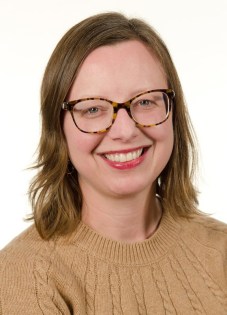
Danya Leebaw
Danya Leebaw is the Social Sciences & Professional Programs Director at the University of Minnesota Libraries. Prior to this position, she was a social sciences librarian at Carleton College and a business librarian at Emory University. She earned her MLIS at the University of Pittsburgh and her BA in History from Grinnell College.

Alexis Logsdon
Alexis Logsdon is the Humanities Research and Digital Scholarship Librarian at the University of Minnesota Libraries. Before Minnesota, she served as a research and instruction librarian at Macalester College, and in a variety of adjunct and temporary librarian positions prior to that. She holds an MLIS from UW Milwaukee, an MA in English from UC Berkeley, and a BA in English from the City College of New York (CUNY).
C&CS would like to thank the CRD and PaLA for continued support of our initiative, which is paid for in part by membership dues. If you are not a PaLA member but are a student or active librarian in Pennsylvania, consider joining PaLA!


 Adam Balcziunas
 Alex K.
 Alexandrea Glenn
 Andrea Pritt
 aprilnkelley
 Ashley Purvis
 Bethann Rea
 blj13
blj13 Brendan Johnson
 Amanda Boyer
 Bret Stiffler
 Bonnie Powers
 Christopher Lemery
 clarewithers
 clblibrarian
 Kelly Clever
 Charlotte M. Johnson
 colemanluzerne
 CRD of PaLA
 crdvirtualjournalclub
 cre5314
 csgarth
 Erin B.
 danajkerrigancv
 denisewetzel1
 Darren G. Poley
 elm43
elm43 James D'Annibale
 Annie Jansen
 Jill Hallam-Miller
 jennifercribbs
 Jenn Monnin
 Jen Hasse
 Jessica Showalter
 johnmeier1
 Kelly Safin
 Kim Karim
 Kristen Seikaly
 Kayla Van Osten
 Cecelia Lasley
 librarianjsmith
 Linda Neyer
 mabogino1
 Matthew McNelis
 Meg Massey
 Maggie Savidakis-Dunn
 Rebecca
 miskatoniclibrarian
 Maureen Bentz
 Michele G. Anfuso
 Nicole Miyashiro
 paulmcmonigle
 Rob Sieczkiewicz
 ronlmccoll
 Sam Bardarik
 shannahollich
 smartin592
 Ula Lechtenberg
 It's Academic