Beyond Stir-Crazy, Beware Traumatic Stress
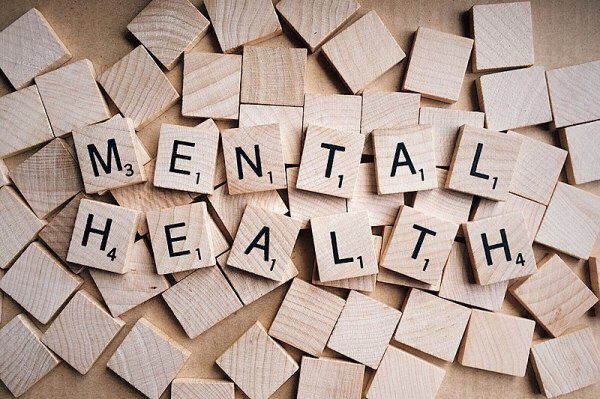
Many news sources have been offering advice over the last few months on how to cope with the stress of working from home, social distancing, and generally sheltering in place. With large parts of Pennsylvania moving into green or yellow status–for up to date information, see the Process to Reopen Pennsylvania website–we should be prepared for a new wave of anxiety, because the move is not without controversy and people remain fearful despite measures to mitigate the spread of COVID-19. Agnostic of political persuasion and where you stand on the issues, such as masks, there is one very real challenge that we should all acknowledge: quarantine fatigue.
There is of course crisis fatigue, pandemic fatigue, philanthropy fatigue, moral fatigue, compassion fatigue and even Zoom fatigue, but what is meant here by quarantine fatigue is the general erosion of mental health as a result of being in the midst of the pandemic even if you are not a health care worker or someone dealing with the disease directly. A blog post by the Cleveland Clinic states:
If you’ve felt any of these, you’re most likely feeling the effects of quarantine fatigue:
- Irritable.
- Stressed.
- Anxious.
- Eating more.
- Eating less.
- Unable to sleep.
- Unmotivated or less productive.
- Having racing thoughts.
- Or just on edge in general.
A recent feature from a local newspaper in Delaware, ‘Battle Fatigue’: Counselor offers advice on dealing with virus-related stress, mentions “sources for mental health assistance.” In Pennsylvania, there is also 2-1-1, a free 24/7 phone helpline which provides information and makes referrals to a wide range of health and human services (www.pa211.org), and the Pennsylvania Department of Human Services has an extensive resource website Mental Health in PA.
Suggested reading:
“Are You Experiencing Coronavirus Quarantine Fatigue?” Health Essentials from Cleveland Clinic, 14 May 2020, https://health.clevelandclinic.org/are-you-experiencing-coronavirus-quarantine-fatigue/.
Koehn, Nancy F. “Leadership Lessons From the Shackleton Expedition.” The New York Times, 24 Dec. 2011, https://www.nytimes.com/2011/12/25/business/leadership-lessons-from-the-shackleton-expedition.html.
Lufkin, Bryan. “How to Avoid Burnout amid a Pandemic.” Worklife, 30 March 2020 https://www.bbc.com/worklife/article/20200330-covid-19-how-to-learn-a-new-skill-in-coronavirus-quarantine.
“Quarantine Fatigue: How Will You Decide to Rejoin the World?” Psychology Today, 5 May 2020, https://www.psychologytoday.com/blog/mental-mishaps/202005/quarantine-fatigue-how-will-you-decide-rejoin-the-world.
Yuko, Elizabeth. “The Reason You’re Exhausted Is ‘Moral Fatigue.’” Rolling Stone, 27 Mar. 2020, https://www.rollingstone.com/culture/culture-features/corona-exhausted-moral-fatigue-974311/.
“‘Zoom Fatigue’ Is Taxing the Brain. Here’s Why That Happens.” Science, 24 Apr. 2020, https://www.nationalgeographic.com/science/2020/04/coronavirus-zoom-fatigue-is-taxing-the-brain-here-is-why-that-happens/.
Beginning June 5th, the county of Lehigh will be moving into the yellow phase as dictated by Governor Wolf. Things will certainly feel much different for us at Lehigh Carbon Community College as we make the slow transition of opening the doors of our physical library and offering our services hands-on to our patrons. As necessitated, we will need to proceed with caution. Our library will remain closed to students, staff, faculty, administration, and the public for the time being, with only librarians and library staff reporting to the physical building. Curbside service will be provided to our patrons three days a week; Tuesdays, Wednesdays, and Thursdays between the hours of 10:00 am and 5:00 pm. Patrons will need to give us twenty-four hours notice of requesting curbside service, or else our circulation staff need not report to the library that day.
While I am not circulation staff, I am proceeding forward by going in one day a week starting Tuesday, June 9th, to check on interlibrary loans. Already several libraries through OCLC and Access PA have shipped back items borrowed from us, so I am anxious to see if they have successfully made the transit. One of our librarians who lives close to the campus has been going into the library a few times a week even while we are in the red phase to check the mail and our book drop. (As can be expected, we are getting a lot of returned rentals meant for the campus store. Has anyone else had that issue?) He has confirmed for me that several interlibrary loans have been shipped to us.
Our president has been holding virtual “town hall” meetings to discuss protocol and procedures as we move into the yellow phase. Working remotely will still be encouraged where feasible. While there has been speculation that our county would be moving into the green within three weeks, I believe this is jumping the gun. From what I understand, this speculation has been based on the counties which moved into the yellow back on May 8th, and who are now moving into the green come June 5th. However, it is important to note that these are more rural counties, such as Bradford, where there were cases of COVID-19 not even in the triple digits reported. I believe it has been easier for these counties to proceed with moving forward into the green phase. Lehigh County needs to take it slower, in my opinion. As of Saturday, May 30, Lehigh County has 3,628 confirmed cases of COVID-19, making it the sixth-highest number of infection by county within Pennsylvania. Our neighboring county, Northampton, ranks seventh with 2,866 confirmed cases. The other county which our community college supports, Carbon, moved into the yellow phase last week and has only 227 confirmed cases of COVID-19.
Guidelines have been sent out to us regarding what to expect once we return onto campus. We cannot make impromptu stops; we need to report a schedule to our supervisors and stick to it so there is a thorough record of who is on campus in case an incident of COVID-19 is confirmed among one of us. We will most likely be responsible for providing our own masks, although there will be places on campus where we can get one should we need it. Other disinfecting materials, such as sprays, wipes, and hand sanitizer, will be provided by the college. I will need to develop some kind of protocol for handling interlibrary loans, such as sanitizing and quarantining materials before returning them.
I am curious to hear what other colleges moving into the yellow phase next week will be doing, especially those counties with a high number of confirmed cases of COVID-19, such as Philadelphia, Montgomery, and Delaware counties. Are you providing curbside services? When will you be opening your doors to your students? What about the public? How are you handling your interlibrary loans? Are you nervous about being back on campus?
CRD Virtual Journal Club Spring Wrap-Up
This past spring, the College & Research Division hosted a virtual journal club, which met online twice during the semester to discuss scholarship in the library science field and a third time to discuss what libraries are doing during COVID-19. The CRD Journal Club was originally established in Summer 2018, and runs in the summer, spring, and fall of each year. The theme for the Spring 2020 semester was critical librarianship.
During the first session, the group read and discussed “Keeping up with…critical librarianship,” Kenny Garcia and published on the ACRL website, as well as “A decade of critical information literacy: A review of the literature,” by Eamon Tewell and published in Communications in Information Literacy. Participants discussed the main ideas behind critical librarianship and the difficulties in promoting critical thinking when students are focused on transactional models of reference with less critical engagement and the librarians’ time in the classroom is limited. Discussants shared ideas for following up with the students after information literacy sessions, such as being included in the course’s online shell, which may help to provide another venue in which to engage with the students. Another takeaway from the discussion was emphasizing to students that information is born at a specific point within specific contexts.
The second article discussed was “The problem with grit: Dismantling deficit thinking in library instruction,” by Eamon Tewell and published in Portal: Libraries and the Academy. This article focused on the idea of moving away from deficit thinking and generated discussion on how we can best meet students where they are; for example, in the classroom we should not make assumptions about students’ experiences with the library and we should find ways to incorporate their own experiences and perspectives into the lesson through ice breakers, group activities, or soliciting topics of interest for sample searches.
Due to the impacts of COVID-19, many journal club members expressed interest in having a discussion of how libraries were reacting to the move to online services. This session was advertised to all CRD members, and participants discussed plans that went well and what they were considering changing for the future. Discussion ranged from plans for reopening to ideas for keeping the library and librarians involved if instruction remains online, and also emphasized the importance and ways in which we can continue to communicate with our researchers.
Though the semester changed quite radically and the focus of conversation shifted, this series was successful at first taking a look at our own profession and the impact we can have in engaging with our students and then at how we can continue to function in a (sometimes constrained) online environment.
Look for our upcoming emails and let us know at crdvirtualjournalclub@gmail.com if you have any suggestions for topics/issues you would like to discuss!
Slavery, History, Memory and Reconciliation
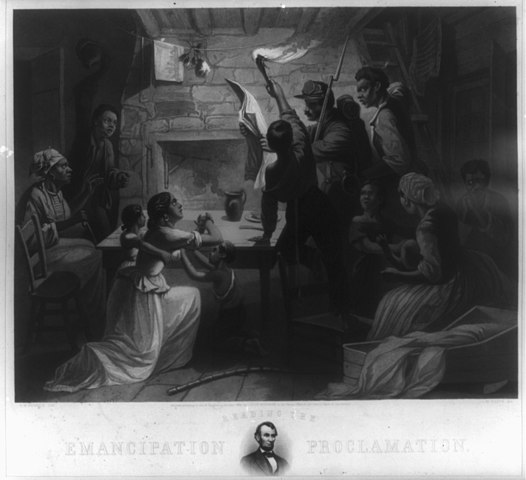
The 1619 Project has its advocates and its critics, but the fact that slavery is a part of American history is undeniable. Less well known is the role that communities of faith had in not only the abolition of slavery but also the owning of enslaved African Americans.
Members of the Society of Jesus, a men’s Catholic religious order better known as the Jesuits, did employ slaves in many states, including Pennsylvania, before the abolition of slavery in the United States. Because this is a little known part of Jesuit history, and even though certainly something of which Jesuits today are ashamed, The Slavery, History, Memory, and Reconciliation Project (SHMR) is supported by the Jesuit Conference of Canada and the United States and “motivated by a desire to uncover the truth of people’s stories, to honor their memories and heal relationships.”
If this sounds interesting, there is the opportunity to hear the Project Coordinator, Research Coordinator, and an Advisory Committee member, “discuss the connections being made with descendants of the enslaved, community members and scholars, the research needed to facilitate these conversations, and communication with all stakeholders on what transformative solutions might look like.”
This panel discussion will be the keynote at the virtual annual meeting of the Catholic Research Resources Alliance (CRRA) Thursday, May 7, 2020, 2 p.m. There is no registration fee for this Webinar and participation is open to all. You just need to sign up to attend.
ACRL DLSDG: COVID-19 Virtual Exchange: Continuing Remote Support Through the Summer and into Fall
As the COVID-19 pandemic continues to run its course, many Pennsylvania colleges and universities are faced with the probability of continuing remote instruction and support well into the Fall 2020 semester. The Association of College and Research Libraries (ACRL) is presenting a Zoom meeting to discuss librarians offering remote reference and assistance to students, faculty, administration, and staff further into 2020. This will take place on Monday, May 4th, at 12:00 PM.
Register now and take a look at the other virtual sessions hosted by the ACRL.
How is everyone adjusting and managing? What are your college’s plans for the summer and fall semesters? Our college’s Summer I session will be completely online, but our Summer II session has yet to be determined. I can honestly say that I have been enjoying my time in my house and love working remotely. How does everyone else feel?


 Adam Balcziunas
 Alex K.
 Alexandrea Glenn
 Andrea Pritt
 aprilnkelley
 Ashley Purvis
 Bethann Rea
 blj13
blj13 Brendan Johnson
 Amanda Boyer
 Bret Stiffler
 Bonnie Powers
 Christopher Lemery
 clarewithers
 clblibrarian
 Kelly Clever
 Charlotte M. Johnson
 colemanluzerne
 CRD of PaLA
 crdvirtualjournalclub
 cre5314
 csgarth
 Erin B.
 danajkerrigancv
 denisewetzel1
 Darren G. Poley
 elm43
elm43 Heather Burychka
 James D'Annibale
 Annie Jansen
 Jill Hallam-Miller
 jennifercribbs
 Jenn Monnin
 Jen Hasse
 Jessica Showalter
 johnmeier1
 Julie Durci
 Kelly Safin
 Kim Karim
 Kristen Seikaly
 Kayla Van Osten
 Cecelia Lasley
 librarianjsmith
 Linda Neyer
 mabogino1
 Matthew McNelis
 Meg Massey
 Maggie Savidakis-Dunn
 Rebecca
 miskatoniclibrarian
 Maureen Bentz
 Michele G. Anfuso
 Nicole Miyashiro
 paulmcmonigle
 Rob Sieczkiewicz
 ronlmccoll
 Sam Bardarik
 shannahollich
 smartin592
 Ula Lechtenberg