Equitable Reference and Instruction During COVID-19
As we return to the library in one form or another, many of us are bracing ourselves for a full academic year of working while also watching and/or teaching our children, caring for extended family members, or otherwise just trying to survive during a pandemic.
But, for all our struggles, we must keep in mind that our students are dealing with the same problems, if not more. This is especially true for students who already struggle to find success in higher education, particularly students from underrepresented groups and first-generation students. Now, more than ever, we as librarians need to make our reference interactions and instruction sessions as equitable as possible to eliminate as many barriers to education and information literacy competency as we can. While this type of evaluation of our services should be an ongoing process, there are some simple, easy ways we as librarians can improve our instruction and reference services:
- Avoid library jargon. Even students that have experience with libraries may struggle to understand all the technical terms we use on a regular basis. This is especially true for international students and students without much experience with libraries and can be exacerbated if students are viewing the session through weak internet connections. Sharing or linking to a “glossary” of library terminology, ideally in multiple languages, can be helpful for all students to best understand the resources available to them through the library.
- Allow students to use their lived experiences in class assignments and activities. Students from underrepresented populations, especially first-generation students, can feel out-of-touch with higher education, often because they do not see people like them, or with their experiences, represented in class assignments. While librarians may not have a say in all of the assignments of the classes for which we provide instruction, for those assignments that we do it can be tremendously valuable to provide students to pick topics that are important to them and representative of their life experience. Even if librarians have no control over the assignments, in the classroom we can develop activities that follow an asset-based approach which can allow students to use their lived experiences as a way to deepen their information literacy knowledge and skills.
- Engage in reference best practices of friendliness and a level of caring and empathy for the student and their questions. We know library anxiety is a real problem and may be amplified during this pandemic. Therefore, it is crucial that we work hard to create a connection with the student, respect their questions and viewpoints, and remain positive throughout the whole interaction. Keep the student engaged in the reference interaction by verbally walking them through the steps you are taking to locate an answer. These steps will help the student feel valued and involved in the interaction.
While small steps such as these will not eliminate all of the barriers students face when pursuing a college education, they may help alleviate some of the additional anxiety caused by this pandemic and can serve as a starting point for further examination into the creation of more equitable and just services in academic libraries.
Technical Services Round Table Creating an Experts Directory
With practically all of the Pennsylvania Library Association’s in-person conferences and gatherings moved to virtual platforms this year, it may seem distressing for the association’s divisions, chapters, and round tables to find constructive means of coming together to collaborate on projects. Without the benefits of face-to-face contact to feed off of one another’s energy, laughter, and critiques, projects have had to be mulled over and refined through an endless parade of Zoom or BlueJeans meetings and emails. Nonetheless, we have proven time and again to be a resilient association that has often faced its fair share of stumbling blocks and hurdles, only to surmount them. To that end, I am pleased to announce the latest project in development among members of the Technical Services Round Table (TSRT).
Librarians and library associates who have technical services skills — acquisitions, collection development and management, systems management, cataloging and classification, preservation and archives, continuing resources, etc. — will soon have the opportunity to share with other members of the association that they are knowledgeable about details of these practices through the Technical Services Round Table Experts Directory. Our round table will be notifying the association when we are ready with our survey tool, where participants will be able to fill out what skills they possess and become a part of the resource directory. This makes it easier for other librarians and library associates to reach out to a technical services “expert” should they be faced with a question, challenge, or just good ol’ curiosity about this aspect of our profession.
The Technical Services Round Table would like to especially thank Megan Babal, the Public Service and Outreach Librarian with the Henry Buhl Library at Grove City College. With her direction and assistance, we have been creating a template for the survey that we will use to gather the information necessary to create content for the directory. Babal has also been instrumental in guiding us through the components of Google Data Studio, which will allow for interactive use of the directory once placed on PaLA’s website. It is my sincere hope that those of you with technical services skills/knowledge will consider completing and submitting the survey to be included in the directory so that your contact information will be readily available for those who need a helping hand or a question answered. While our Annual Conference will be much different this October, the TSRT is aiming to have more information ready to present to our fellow PaLA members at that time.
Affordable Learning PA Virtual OER Summit
 Affordable Learning PA is planning to host an online Summit this September. The Affordable Learning Summit is an opportunity for librarians, faculty, and others to collaborate on building a network dedicated to making higher education more accessible and affordable.The theme for this year’s Summit will be Advocate PA: Getting the Word Out about OER. The entire series will be free to all participants.
Stay tuned for details about the event and options to register!
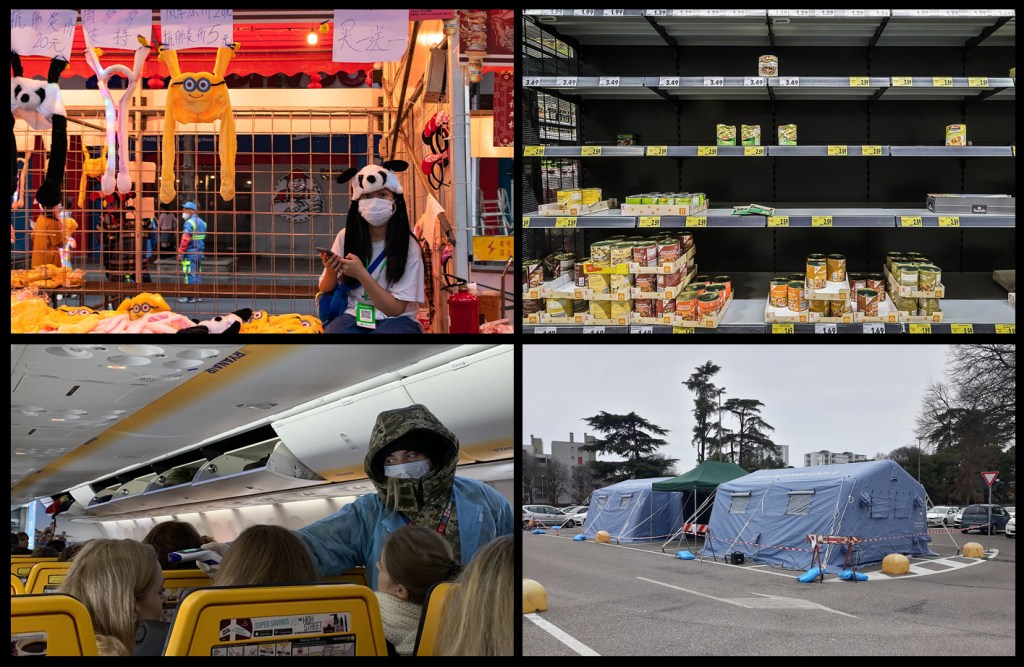
The COVID-19 pandemic has affected our communities in unique ways. It is for this reason that the Villanova University Archives, Falvey Memorial Library’s Digital Scholarship Librarian, and the Albert Lepage Center for History in the Public Interest are collaborating on the “Documenting COVID-19” collection effort.
In this initiative all Villanova students, faculty, full and part-time staff, and alumnae/i are invited to:
- Submit their story;
- Share photographs;
- Create or submit a video or audio recording;
- Create or submit a collection of digital objects;
- Share any reflections from this unique period. This may include experiences about school, work, home, or events surrounding the BLM protests.
The stated goal is to ensure that future generations will have original sources of information regarding the lives and times of Villanovans who experienced this global pandemic.
According to Preservation & Digital Archivist Beaudry Allen, collecting will be ongoing throughout the pandemic and in the subsequent weeks after the pandemic has passed. People are allowed to submit as many times as they like as events or emotions change. All submissions will be preserved in the University Archives at Falvey Library.
Also, unlike traditional collection initiatives, this collecting process is spontaneous and premised upon “crisis collecting.” This means that collecting activities occur simultaneously to events unfolding. The policies are based on the University’s Archives collecting policy and on best practices developed by the Tragedy Response Initiative of the Society of American Archivists. Read the policy and scope documents here.
If you have any questions about the project please contact: documentingcovid@villanova.edu.
-Adapted from Falvey Memorial Library’s “Documenting Covid-19: Submit Your Story!” webpage, which also has more information about the project leaders.
RDA Update Forum
I took a cataloging and classification course back in the spring of 2016 while I was working on my Master of Library Science. While the course proved to be my Achilles’ heel, RDA seemed very intriguing to me, so I am happy to announce that the North American RDA Committee is holding its first online RDA Update Forum on Monday, August 3rd from 3:00 to 5:00 PM EST.
This free webinar will feature presentations from members of NARDAC and other RDA experts on recent activities and key RDA topics. The session will be recorded and publicly shared. Register now!
Program line-up (order and title of presentations subject to change)
- RDA Hot Topics, Thomas Brenndorfer, NARDAC Representative to the RSC
- RDA/PS conversion project update: the LC/PCC policy statements, Melanie Polutta, LC Representative to NARDAC
- Getting ready for the new RDA Toolkit: updates from Library and Archives Canada, Thi Bao Tran Phan, CCC Representative to NARDAC
- Translating the new RDA Toolkit into French, Daniel Paradis, Translations Team Liaison Officer
- RDA Toolkit Update, James Hennelly, Director of ALA Digital Reference
- RDA conformance in a complex environment, Stephen Hearn, ALA Representative to NARDAC
- 3R is almost done – what’s next? Kathy Glennan, RSC Chair
This notification comes courtesy of sent on behalf of Dominique Bourassa, ALA Representative to/Chair of NARDAC.


 Adam Balcziunas
 Alex K.
 Alexandrea Glenn
 Andrea Pritt
 aprilnkelley
 Ashley Purvis
 Bethann Rea
 blj13
blj13 Brendan Johnson
 Amanda Boyer
 Bret Stiffler
 Bonnie Powers
 Christopher Lemery
 clarewithers
 clblibrarian
 Kelly Clever
 Charlotte M. Johnson
 colemanluzerne
 CRD of PaLA
 crdvirtualjournalclub
 cre5314
 csgarth
 Erin B.
 danajkerrigancv
 denisewetzel1
 Darren G. Poley
 elm43
elm43 James D'Annibale
 Annie Jansen
 Jill Hallam-Miller
 jennifercribbs
 Jenn Monnin
 Jen Hasse
 Jessica Showalter
 johnmeier1
 Kelly Safin
 Kim Karim
 Kristen Seikaly
 Kayla Van Osten
 Cecelia Lasley
 librarianjsmith
 Linda Neyer
 mabogino1
 Matthew McNelis
 Meg Massey
 Maggie Savidakis-Dunn
 Rebecca
 miskatoniclibrarian
 Maureen Bentz
 Michele G. Anfuso
 Nicole Miyashiro
 paulmcmonigle
 Rob Sieczkiewicz
 ronlmccoll
 Sam Bardarik
 shannahollich
 smartin592
 Ula Lechtenberg
 It's Academic
