Misinformation & Collaboration
Never has it been clearer that the rampant spreading of misinformation is a large problem in the United States. The contradictory information and messaging about the COVID-19 pandemic from people in positions of power, on social media, and from news outlets has caused, at the very least confusion, at the most extreme health risks. In the midst of the 2020 Presidential Election, we are currently seeing even more misinformation, lies, and extreme bias through news outlets and social media. We are fortunate to have immediate access to so much information, but how do we cull the authoritative information from the misinformation? More importantly, how do we, as information professionals, teach our students to critically evaluate all sources successfully?
This year has made it even more apparent that our role in teaching information literacy has become even more necessary. I would go so far as to say that it should be mandatory in this digital age for students to learn about evaluating web resources. I believe cultivating student’s critical thinking skills can be more of a group effort between faculty and librarians. Working together would increase student’s ability to make informed decisions and choices using authoritative sources. It takes effort and sometimes a long time to evaluate web sources, and students may give up before diving deep. I wish it was easier to determine trustworthy sources, but maybe the silver lining is that students have the opportunity to develop and enhance their critical thinking skills, which will help them throughout their schooling and careers. Though misinformation is everywhere, I hope to see librarians really focus on information and digital literacy to combat its spread, and work together with faculty to teach patience, thoroughness, and critical thinking when evaluating sources.
An Opportunity to get Your Maps on the Map!
by Paige Andrew
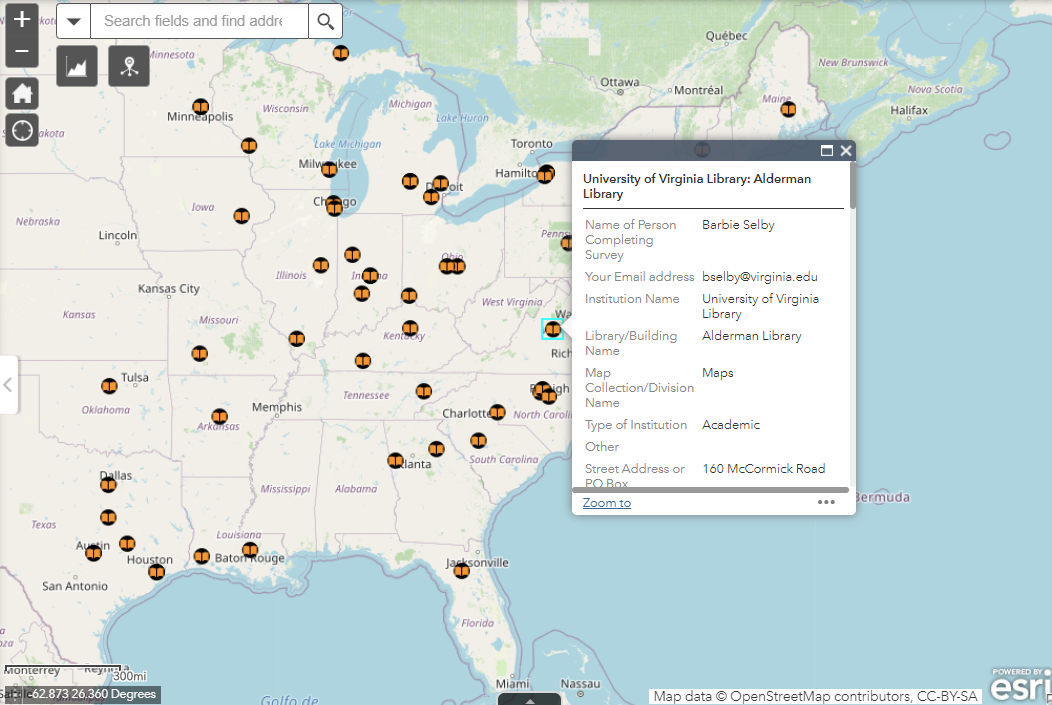
The Guide to U.S. Map Resources, a published directory by the American Library Association’s former Map and Geography Round Table (MAGERT), now the Map and Geospatial Information Round Table (MAGIRT), is a detailed source of hundreds of map/cartographic resources collections in libraries and similar repositories throughout the country. This reference resource was last published in its third edition in book form in 2006 with Christopher J.J. Thiry as editor and many regional editors pitching in to complete it. I was one of two regional editors covering the state of Pennsylvania at the time it was being organized and completed.
Naturally, one of the downsides of a physical directory is the lack of ability to keep changes/additions up to date, which was a major reason that a MAGIRT colleague of mine approached our Executive Board in fall 2015 with the idea to “do over”, this time online. Carol McAuliffe, Curator of the Map & Imagery Library at the University of Florida, formed a steering committee with five participants, including myself, to look into how this goal might be carried out. Soon thereafter we became a working group that put more than four years of effort into launching a brand new directory describing map collections across the United States.
I am pleased to announce that, with a changed name, an interactive online platform, and a method for anyone managing a map collection at any kind of institution to self-apply, the Online Guide to U.S. Map Collections launched in August. While the current number of entries for various map collections is small, recently recruited and trained “regional coordinators” are reaching out to map collections that were previously in the 2006 edition to get them to re-join and simultaneously scouring their assigned regions for additional entries for new institutions. We aim to grow the directory well past the 500+ entries that were in the 2006 edition so that researchers everywhere will have an at-the-touch-of-a-fingers tool to collections of maps and other cartographic resources near and far.
So, fellow CRD members, here is your chance to “join the club” as it were! To add your map collection’s information into the directory go to: https://www.arcgis.com/apps/webappviewer/index.html?id=87e0701cfadf44758917724cf43605b4&extent=-14695398.5106%2C2508383.194%2C-7063925.6066%2C7483516.491%2C102100 and you will find a map of North America scattered with icons of the locations of map collections currently established in the database. (if you click on one, information about the collection pops up) Look at the left Info Bar and note the “Take the Survey to Get on the Map!” sentence as there is a link there to a survey tool. Please note that the survey is 2-part, the first part is short and focused on contact information including an easy-to-use “Location” finder, but if you want to also let the world know how many maps you have, the subject strengths in the collection and so on continue on to the second part where indicated at the bottom. It’s your choice.
Pennsylvania was well-represented in the last edition of the Guide but nowhere close to being comprehensively covered. As you can imagine, nearly all of those earlier entries were for university/college collections, which we need to include this time around also but we really want to dig deeper and find even tiny map/atlas collections residing in local historical societies, museums or within a special library or similar. (Or, does your institution have a collection on campus but outside of your library? There are universities that still maintain department-owned collections out there so if you know of one or more of these reach out to them please!) With that in mind, even if your library/institution does not have a map collection of any kind please share the link above to the Guide, and details you’ve learned here, with anyone you know in your community that does, or might.
Meanwhile, would you be interested in actively participating in growing this resource tool as a member of the regional coordinator team? All you have to do is reach out to the Guide’s leaders via magirtonlineguide@gmail.com and they will happily welcome you, get you trained in required duties and the details of the process to garner new and old entries, and set you to work.
If our goals to successfully populate and greatly enlarge the number of entries in the directory for U.S.-based cartographic collections are achieved, we have already considered ranging outside of our boundaries to become an international resource. But first we need to make a 34-year-old reference source bigger, better, and well-known online.
Finally, if you have any questions at all about this Guide and the ongoing project please feel free to contact me at any time (pga2@psu.edu or 814-867-0786)
Paige Andrew
Cartographic Resources Cataloging Librarian
Penn State University Libraries
Member, College and Research Division, and Technical Services Round Table of PaLA
Past member, Online Guide Resource Team and current Secretary, MAGIRT, ALA
CRD Members: Sign Up for the 2021 PaLA Mentorship Program
Are you looking for someone with professional library experience who can share advice with you? Are you someone with a wealth of wisdom and experience you’d like to share? Sign up for the 2021 PaLA Mentorship Program! The program will run from January 2021 through September 2021. It is run by the Mentorship Subcommittee, a subcommittee of the PaLA Membership Committee.
To participate, you must be a member of PaLA as this program is a members-only benefit. Mentees should have five years of professional experience at their current position level or less to sign up. Students are also encouraged to participate! Mentors should have at least five years of professional experience.
Participants should expect to communicate at least monthly with their mentor/mentee. Participants will also be expected to complete two surveys: one at the midpoint of the program, and one at the end.
To learn more about the program and to sign up, go to https://www.palibraries.org/page/MentorshipProgram. (You must be logged in to the PaLA website to view this page). If you have any questions about the mentorship program, email palamentorship@gmail.com. The deadline to sign up is December 1, 2020.
“Experimental Publishing, Then and Now”

You are invited to Villanova University’s Digital Seeds Lecture “Experimental Publishing, Then and Now” featuring Whitney Trettien, PhD, Assistant Professor of English, University of Pennsylvania, Thursday, November 5, from 4–5 p.m. via Zoom.
Sponsored by Falvey Memorial Library, this virtual event is free and open to the public. However, to attend you must register.
When we consider the role of the (digital) humanities today, we do so from within a fragmented field where the center no longer holds. This moment of creative destruction presents an opportunity to shift into a new register — one defined not by minute clefts between theories or methods but by a renewed commitment to how we compose and share our work.
Specifically, how we publish — how we use media to make public the stories we spin about texts and their past lives.
Drawing on her own experiments in creative/critical publishing (including most recently with the Manifold platform), as well as the deep history of writing with scissors and paste, Trettien will chart the politics, praxis, and urgency of digital publishing today. To learn more about Trettien’s research, please visit her website at: http://whitneyannetrettien.com/
This talk is part of Falvey Memorial Library’s Digital Seeds speaker series.
For more information about Falvey Library’s support of Digital Scholarship, please contact Villanova’s Digital Scholarship Librarian Erica Hayes erica.hayes@villanova.edu.
Sign Up Now for Connect and Communicate November Book Discussion
Please join the Pennsylvania Library Association College and Research Division’s Connect and Communicate Series program for November.
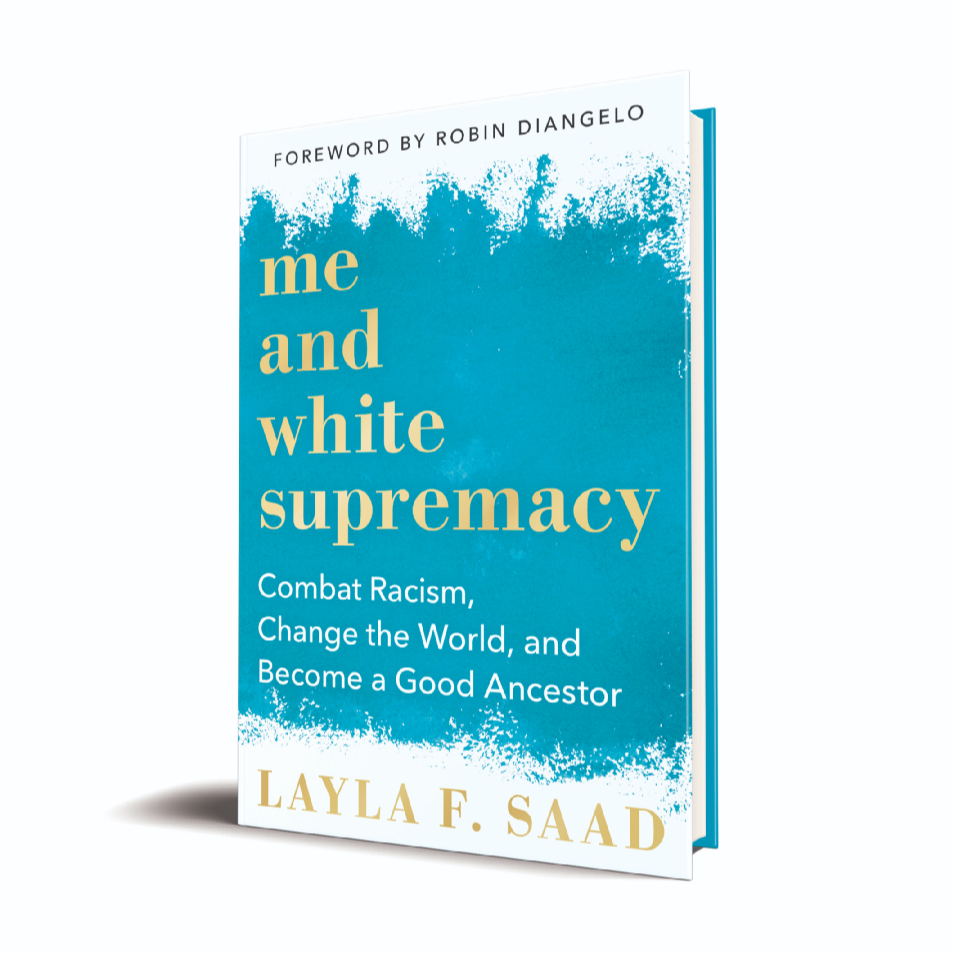
Throughout the month, we will read, reflect on, and discuss Me and White Supremacy by Layla F. Saad. This is a workbook companion to many of the anti-racist readings and programs we have participated in since the Summer, and was recommended by CRD Keynote Speaker Sofia Leung at PaLA 2020.
Please sign up this week by filling out the form here: https://forms.gle/Sjs42H4rnDN5TRwf9.
You do not need to read the book in advance. We will work through the book in groups throughout the month. Once we have a sense of the number of registrants, we will contact everyone to determine meeting plans. At this time, we plan to facilitate our work via Microsoft Teams.
Many PaLA 2020 registrants received free copies of Me and White Supremacy as part of their conference registration. If you do not have a copy of the book and would like to participate, a limited number are still available. Be sure to provide your mailing address during registration. Requests will be filled on a first come, first served basis. We will notify you if we are unable to accommodate your request.
Questions? Please email Emily at ELM43@psu.edu.
This project is made possible by a grant from the Institute of Museum and Library Services as administered by the Pennsylvania Department of Education through the Office of Commonwealth Libraries, and the Commonwealth of Pennsylvania, Tom Wolf, Governor.
Support is also provided by the College and Research Division of the Pennsylvania Library Association. https://crdpala.org/


 Adam Balcziunas
 Alex K.
 Alexandrea Glenn
 Andrea Pritt
 aprilnkelley
 Ashley Purvis
 Bethann Rea
 blj13
blj13 Brendan Johnson
 Amanda Boyer
 Bret Stiffler
 Bonnie Powers
 Christopher Lemery
 clarewithers
 clblibrarian
 Kelly Clever
 Charlotte M. Johnson
 colemanluzerne
 CRD of PaLA
 crdvirtualjournalclub
 cre5314
 csgarth
 Erin B.
 danajkerrigancv
 denisewetzel1
 Darren G. Poley
 elm43
elm43 James D'Annibale
 Annie Jansen
 Jill Hallam-Miller
 jennifercribbs
 Jenn Monnin
 Jen Hasse
 Jessica Showalter
 johnmeier1
 Kelly Safin
 Kim Karim
 Kristen Seikaly
 Kayla Van Osten
 Cecelia Lasley
 librarianjsmith
 Linda Neyer
 mabogino1
 Matthew McNelis
 Meg Massey
 Maggie Savidakis-Dunn
 Rebecca
 miskatoniclibrarian
 Maureen Bentz
 Michele G. Anfuso
 Nicole Miyashiro
 paulmcmonigle
 Rob Sieczkiewicz
 ronlmccoll
 Sam Bardarik
 shannahollich
 smartin592
 Ula Lechtenberg
 It's Academic