Notes from “Next Steps in Shared Collection Management”
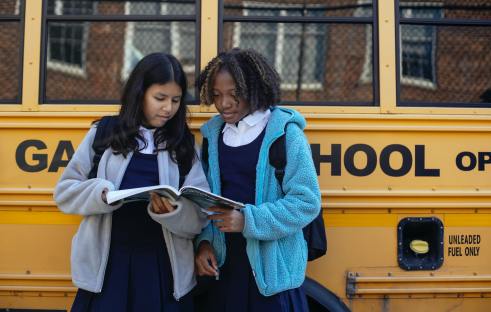
Photo by Mary Taylor from Pexels
Last week, I had the great pleasure to moderate a panel at the 2021 Charleston Conference as a part of my work with the Partnership for Shared Book Collections. I led three speakers, Linda Wobbe, Heather McQueen, and Boaz Nadav Manes, in conversation about shared print and resource sharing. We discussed what we thought the role of shared print in resource sharing initiatives might look like, what challenges we will probably come up against, and identified ways for resource sharing librarians and staff to participate in the development of shared print in resource sharing programs.
We talked a lot about the digital side of shared print, and how many unknowns there still are. Controlled digital lending (CDL) is still in development and largely decentralized, but it was agreed upon that CDL is the future. Automated lending was also discussed, since so much of interlibrary loan is automated already. Challenges include ensuring complete metadata and the discoverability of retention commitments, the emerging issues surrounding lending digital materials (licensing, policies, and copyright for example), the lack of collection statistics beyond one’s home institution, and the need for interoperability between platforms and vendors. For shared print programs to succeed in resource sharing, we need to think more large-scale–more globally (this was also a theme of one of the keynotes, Paul Saffo’s “How to Think Like a Civilization”).
We also highlighted the importance of including resource sharing practitioners in these conversations. The developments made in resource sharing and shared print can feel like they’re all being made by administrators and vendors, but there is a real desire among the Partnership for Shared Book Collections to include front-line resource sharing practitioners at the table. I made a point from my own observations that resource sharing staff need to be empowered to attend these meetings. They need to be able to step away from their daily duties to bring that first-hand experience to the wider library field. For supervisors, maybe this looks like planning for redundancy in duties so tasks still get accomplished while a staff person is in a meeting. Maybe this also looks like supervisors seeking out opinions of their teams and then acting as an active representative for them in these meetings.
These are conversations we really want to keep going, since we’re going to have to contend with these issues more as time goes on, and budget realities and patron expectations put increasing pressure on our resource sharing programs. Another one of the goals of this panel was to identify the resources and initiatives that are already happening that will help resource sharing navigate the shared print environment. We hope that this panel will be shared among resource sharing practitioners to give them an introduction to these conversations. [NB: as of posting, the video has not yet been made available]
Moderating this panel was an incredible learning experience. Not only did I learn more about the topics we discussed, but I learned about moderating panels in general. Organizing a group of people from different institutions, keeping them on track, keeping everyone within our allotted time, and making connections between the points being made in real time, was an experience that I found very valuable. I definitely think this panel was a success, and hopefully it facilitates discussion beyond just the four of us.
Register now! C&CS Presents “How to Build an Engaging Library Workshop,” 11/17 @ 1:30 pm
Connect and Communicate Presents
How to Build an Engaging Library Workshop
Presented by Katie Odhner
November 17, 2021 at 1:30 pm EST
Register here: https://us06web.zoom.us/meeting/register/tZUvcOysqjguE9Bdzb4wxyWSyneTyqO6wrVI
In this session, you will learn strategies for planning a library workshop from marketing, to developing an objectives-driven and interactive workshop structure, to assessing your program outcomes.
Katie Odhner is a Reference and Instruction Librarian at Penn State Abington, where she teaches information literacy and helps plan and run programming as a member of the library outreach team.
As a reminder, the Zoom link will be sent approximately 48 hours before the session. We will mute participants on entry into the Zoom room. Session will be recorded and available on YouTube after the session. As always, we will do our best to provide closed captioning during the session.
If you would like to present with C&CS, please contact the C&CS team: https://crdpala.org/connect-communicate/
This project is made possible by a grant from the Institute of Museum and Library Services as administered by the Pennsylvania Department of Education through the Office of Commonwealth Libraries, and the Commonwealth of Pennsylvania, Tom Wolf, Governor.
Support is also provided by the College and Research Division of the Pennsylvania Library Association: https://crdpala.org/
CFP: PaLA CRD Connect and Communicate Series
The Pennsylvania Library Association’s College and Research Division Connect and Communicate Series looks forward to providing another year of excellent programming that is relevant to and useful for academic librarians.
If you have a session you would like to share with our academic library community, we invite you to submit a proposal. If there is a speaker you would like to hear from, you are also welcome to include that information in our proposal form.
Please submit your ideas here: https://forms.gle/LAjB7DBqudTgHfKF7
There’s more information here: https://crdpala.org/connect-communicate/
Recordings of the most recent recent sessions are available on the C&CS YouTube channel: https://www.youtube.com/channel/UCIdr724MhuZV7bh_iOOlc-Q
Thank you!
CRD Connect and Communicate Team
The Comeback Code
Picture it. Western PA, 2012 or 2013. A group sits at a restaurant booth, looking at a ketchup bottle label with a square space and pixel pattern. It’s a QR (Quick Response) code, and I’m explaining how it works. The group is not impressed. We pick up our menus and choose our breakfasts.
Fast forward into a global pandemic. Contact with people and surfaces is a bigger deal when it comes to menus, keypads, keyboards…the list goes on. From this dismal situation, the QR code re-emerged as a touch-free way to scan a code to access forms, menus, and other online information on your own phone or tablet.

With this resurgence, QR codes are also being used for marketing and outreach in higher education. Here are a few examples on social media from libraries or other institutions around Pennsylvania:
- Gettysburg College
- Penn State York
- Slippery Rock University
- Shippensburg University
- PALCI
- University of Pittsburgh
At our library, QR codes have been used to provide quick access to LibGuides and other online tools, like our study room booking system. We often see students successfully using them. In part, this may be because many mobile phones now have QR code readers already installed.
The QR code can be convenient for the person scanning them, but there’s still a need to be smart about privacy and other concerns. Just like any website URL, codes send the user to websites that may be tracking activity and collecting data. For example, a company might record a customer landing on a product page via a QR code, and then promote that product to them on their next visit.
Codes could also lead to malicious websites, just like a spam or phishing email link. Experts suggest avoiding a code in an email from an unknown sender, or a code printed on a label or flyer by itself. This Washington Post article from earlier this month explains. Creators should provide some context with QR codes, so the audience knows the purpose.
Of course, QR codes may not always be the right — or most accessible — tool for the job. Patrons may not have smartphones and data plans, or would prefer not to use them. We often include a short URL with our codes for that reason.
Like any initiative, deciding to create QR codes requires some thoughtful consideration of audience, purpose, and timing. This time, it seems like QR codes will be around for a while.
Pennsylvania Library Association’s Teaching, Learning, & Technology Round Table Invites You to Attend a Webinar!
I would like to share the following message from the Pennsylvania Library Association’s Teaching, Learning, & Technology (TL&T) Round Table’s current chair, Sam Bardarik. I am the incoming Vice-Chair for this round table come January 2022 and I am hoping you will join us!
The Teaching, Learning, & Technology Round Table (TL&T) of the Pennsylvania Library Association (PaLA) invites you to attend a free webinar titled “The Locomotive Engine of Change – Technology Innovation in Academic Libraries.” TL&T is hosting this webinar on Tuesday, November 9, 2021 from 2:00 to 3:00 p.m.
Our speaker is Dr. Karen Rege, former PaLA member and current Dean for Information and Innovation at Harford Community College in Bel Air, MD. Using her considerable experience as a college administrator, she will identify the successes and challenges in implementing and sustaining large technology projects, balancing technology-related budgets, and changing the role of the reference librarian in order to best address the advances in teaching and learning through technology and pedagogy. Looking at technology from this perspective can better inform our decision-making from both our current vantage point and as we look toward what is on the horizon.
Please register here: https://www.palibraries.org/event/TLT2021FallWebinar
After registering, you will receive a confirmation email containing information about joining the webinar.
We look forward to seeing you there!
Sam Bardarik
Chair, 2021
Teaching, Learning, and Technology Round Table
Pennsylvania Library Association
tltroundtableofpala@gmail.com


 Adam Balcziunas
 Alex K.
 Alexandrea Glenn
 Andrea Pritt
 aprilnkelley
 Ashley Purvis
 Bethann Rea
 blj13
blj13 Brendan Johnson
 Amanda Boyer
 Bret Stiffler
 Bonnie Powers
 Christopher Lemery
 clarewithers
 clblibrarian
 Kelly Clever
 Charlotte M. Johnson
 colemanluzerne
 CRD of PaLA
 crdvirtualjournalclub
 cre5314
 csgarth
 Erin B.
 danajkerrigancv
 denisewetzel1
 Darren G. Poley
 elm43
elm43 James D'Annibale
 Annie Jansen
 Jill Hallam-Miller
 jennifercribbs
 Jenn Monnin
 Jen Hasse
 Jessica Showalter
 johnmeier1
 Kelly Safin
 Kim Karim
 Kristen Seikaly
 Kayla Van Osten
 Cecelia Lasley
 librarianjsmith
 Linda Neyer
 mabogino1
 Matthew McNelis
 Meg Massey
 Maggie Savidakis-Dunn
 Rebecca
 miskatoniclibrarian
 Maureen Bentz
 Michele G. Anfuso
 Nicole Miyashiro
 paulmcmonigle
 Rob Sieczkiewicz
 ronlmccoll
 Sam Bardarik
 shannahollich
 smartin592
 Ula Lechtenberg
 It's Academic