Reflection on DEI opportunities for a health librarian
I appreciate this chance to share and reflect on my librarian experience through this blog. Diversity equity and inclusion. Such an important topic. With diverse perspectives, backgrounds and experiences, the library profession can continue to grow into a strong community of professionals. Over this past year I have humbly had the opportunity to engage in learning and training about how to recognize my own personal biases, how to create inclusive environments for all people and participate in learning on topic of the devastating and long-lasting effects of racism within healthcare and medicine. I thought I would take this opportunity to share and shine a light on the wonderful initiatives that I have had an opportunity to participate in through libraries and the library professional development support groups. These examples can help you too, as you search, as I did, for meaningful ways to participate and encourage change.
Creation of a racism and medicine toolkit of knowledge resources.
- With the help of librarians and medical staff a creation of a curated group of resources specifically geared to educational health professionals
Creation and management of Gold Humanism Book Collection focused on diverse voices and perspectives.
Work with local library chapters and Diversity, Equity and Inclusion committees to look for ways to make a difference. Example of some of the projects I have had a chance to work on.
- Monthly newsletters sharing resources opportunities for training and exposure to informational materials on various topics including some topics such as LGBTQ health and invisible disabilities.
- Work with locally recognized established organizations within the field of diversity and inclusive education
Establishment and maintaining a Volunteer and Services partnership with local organizations that promote inclusivity and diversity practices.
- Committing to volunteer hours to support ongoing programs that benefit diverse communities.
-Marlowe B.
A return on investing in student employees
By: Kim Karim
Libraries train their student employees in many areas including, but not limited to: circulation, outreach, ducement delivery and archiving. Whether the training is on-the-job or over a period of several days before or during the semester, student employees are given the information and tools they need to help each library carry out its mission and services to their college community.
During the summer of 2022, our Head of Access Services and I created and carried out a two-day student training program, which varied greatly from the training I would do during each student’s library shift. The more students that were hired before the semester started (which was usually more for the fall), the busier I would be the first several weeks into the academic year. My very first academic semester was nearly five years ago when I was hired to be the Circulation Supervisor. I not only had to learn all the policies and procedures myself, but in turn had to teach nine new student employees that same information. I started one month before the semester began. It was stressful!
Thinking back to that time, it would have been extremely helpful to have a designated training period with those students as a group. Repeating the same information over and over to students each day, for multiple days and weeks in a row, was extremely daunting. Information got lost and the connection with my students waivered, as by the end of the day I was mentally drained from repeating myself. Our new training program, however, which was planned and executed with little negative outcome, is not only better for me as their supervisor, but better overall for the students.
They are able to get all the information about the library at the same time and in the same capacity as their peers. They are able to ask questions more freely, work together with their peers using hands-on activities, and feel better prepared heading into the semester with a real understanding of how our library functions.
The return? Students begin to form a real connection with their peers and the staff. This happened right away with our students, both returning and new. This fall, we hope to continue to build on the success of our first training experience. With any luck, a new batch of enthusiastic employees will rise up and begin their successful tenure at the circulation desk.
Reminder – Connect and Communicate Presents “I Want It That Way: Student and Faculty Attitudes Toward Ebook Piracy”
Presented by
Haley Dittbrenner & Rob Sieczkiewicz
Wednesday, June 28, 2023 at 3:00 pm
Do you know how common digital piracy is on your campus? Are you curious about why students use pirate sites to download eBooks, and what their instructors think about this? In this interactive conversation, we will discuss the findings of our survey of Susquehanna University students and faculty, and explore attendees’ attitudes toward and experience with shadow libraries. Finally, we will conclude with a conversation about how these findings about the use of pirate sites might be used to inform library Open Educational Resources (OER) programs.
Haley Dittbrenner is a junior student at Susquehanna University. She studies creative and professional writing as well as publishing and editing. She currently works as a student manager at the Blough-Weis Library. She wants to make a career out of open access and publishing librarianship. Rob Sieczkiewicz is Associate Professor and Director of the Blough-Weis Library at Susquehanna University. Previously he was a digital scholarship and instruction librarian, and before that a university archivist. His research interests include digital humanities, information literacy, and open access.
We will mute participants on entry into the Zoom room. We will mute participants on entry into the Zoom room. We will enable Zoom’s Live Transcription feature during the session, and it will be recorded and available on the C&CS YouTube page afterwards.
If you would like to present with the Connect & Communicate Series, please contact the C&CS team.
This project is made possible by a grant from the Institute of Museum and Library Services as administered by the Pennsylvania Department of Education through the Office of Commonwealth Libraries, and the Commonwealth of Pennsylvania, Josh Shapiro, Governor.
Support is also provided by the College and Research Division of the Pennsylvania Library Association.
WIFI Hotspots for Student Checkout
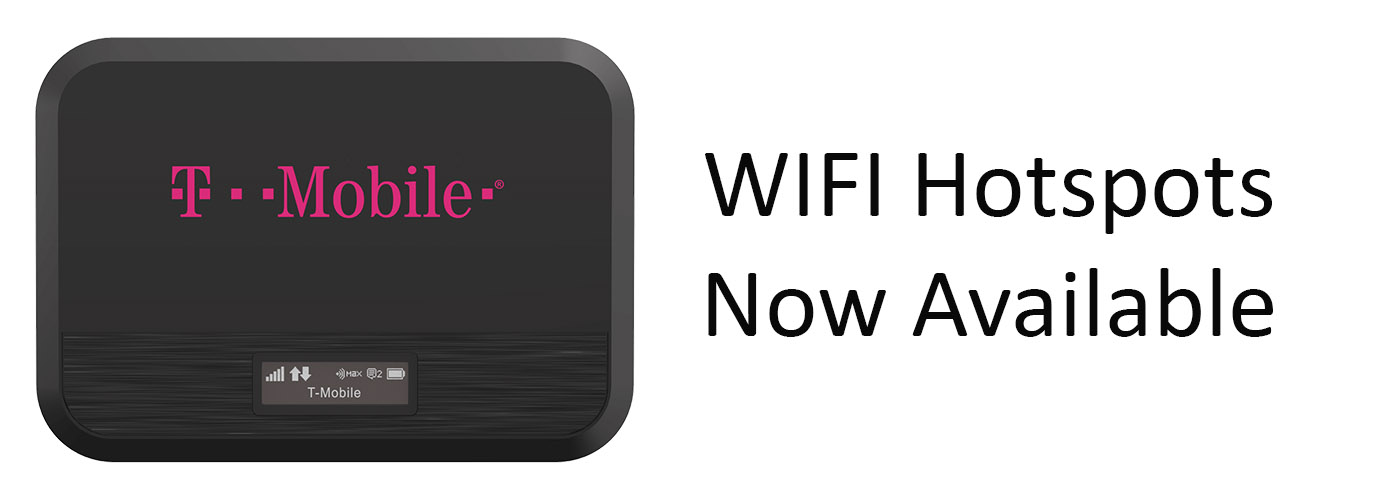
Rural communities still struggle with internet access, which can lead to serious challenges for college students. My library had debated circulating WIFI hotspots to students for years but concerns of price and managing them held us back. After the switch to online learning in 2020, we began researching WIFI hotspots again to see if we might make them available for our students. There were no shortage of local public libraries who were offering them to patrons, so we knew it could be done. We eventually determined that T-Mobile was a frequent partner with several public libraries so we reached out to them about the costs and other details. After meeting with some of their representatives, we found the costs reasonable and signed on for 12 WIFI hotspots that we would offer to students beginning in the 2021-22 academic year. Our early results were positive with there being many periods when every hotspot was checked out. We could only help so many students at once with 12 hotspots, but the students we did help let us know our help mattered a lot. We also found the hotspots were useful to fellow employees. We sometimes circulate them to help staff who are travelling on college business to areas without internet access. One afternoon our regular ISP went down, bringing work to a halt in every department, except the Library with out little hotspots ready to go.
We have had some bumps along the way, however. A few students dropped out and never returned their hotspots. Hotspots can disappear just as easily as books. Hotspots also require some management. Unused hotspots need to be deactivated to prevent monthly charges for them, then reactivated when circulated. None of this is too time consuming but libraries should be aware these aren’t set it and forget it devices. If you’re curious, our hotspot policies page has some more details. Of course, you can always reach out to me at akirby@pennhighlands.edu if you have questions about circulating hotspots at your library.
Rising to the Challenge of HyFlex
The concept of HyFlex learning in Higher Education is not new. However, the recent disruption to traditional classroom instruction caused by the pandemic reinvigorated discussion around the idea. Simply put it is an instruction model that designs courses which offer students the choice to participate in a class in person or synchronously using video conferencing, or asynchronously online via a learning management system. Thus, providing the greatest flexibility to the student, but without compromising the learning outcomes for every student.

Brian Beatty, who first developed the model in 2006, articulates on page 32 of Hybrid-flexible Courses Design: Implementing Student-directed Hybrid Classes (EdTechBooks.org, 2019) there are 4 values with associated principles for HyFlex design:
- Learner Choice: Provide meaningful alternative participation modes and enable students to choose between participation modes daily, weekly, or topically.
- Equivalency: Provide learning activities in all participation modes which lead to equivalent learning outcomes.
- Reusability: Utilize artifacts from learning activities in each participation mode as “learning objects’ for all students.
- Accessibility: Equip students with technology skills and equitable access to all participation modes.
Dr. Beatty continues his professional engagement and there is a great deal of insight on the HyFlex Learning Community site which grew out of his book.
The EDUCAUSE Learning Initiative (ELI) published “7 Things You Should Know About the HyFlex Course Model.” The National Education Association offers some advice on “Rethinking the Classroom for Hyflex Learning” that defines some key terminology, gives direction on implementation, and describes common pedagogical practices. J.P. Pressley does a good job in an article for EdTech magazine “Explaining the Difference Between HyFlex and Hybrid Teaching Models.”
“Student choice, Universal Design, and flexibility are key pillars of HyFlex’s promise. But less mentioned in the HyFlex conversation are questions about how we design the infrastructure and assemble the stakeholders required to build and support the environment in which we can successfully implement courses designed for HyFlex, with equal success for any modality a student chooses” Tracey Birdwell, Program Director, Mosaic Initiative, Indiana University Bloomington wrote in her piece “Learning Spaces,” 2023 EDUCAUSE Horizon Report, Teaching and Learning Edition, 37.
So, what role do librarians have at their institution as it faces this trending multimodal practice? Perhaps we should consider transforming our information literacy programs and start retooling our instructional spaces for the HyFlex modality. Because as this short video “An Introduction to HyFlex” by Dr. Beatty concludes: it is a student-driven hybrid, that “improves access to high quality equitable learning.”


 Adam Balcziunas
 Alex K.
 Alexandrea Glenn
 Andrea Pritt
 aprilnkelley
 Ashley Purvis
 Bethann Rea
 blj13
blj13 Brendan Johnson
 Amanda Boyer
 Bret Stiffler
 Bonnie Powers
 Christopher Lemery
 clarewithers
 clblibrarian
 Kelly Clever
 Charlotte M. Johnson
 colemanluzerne
 CRD of PaLA
 crdvirtualjournalclub
 cre5314
 csgarth
 Erin B.
 danajkerrigancv
 denisewetzel1
 Darren G. Poley
 elm43
elm43 Heather Burychka
 James D'Annibale
 Annie Jansen
 Jill Hallam-Miller
 jennifercribbs
 Jenn Monnin
 Jen Hasse
 Jessica Showalter
 johnmeier1
 Julie Durci
 Kelly Safin
 Kim Karim
 Kristen Seikaly
 Kayla Van Osten
 Cecelia Lasley
 librarianjsmith
 Linda Neyer
 mabogino1
 Matthew McNelis
 Meg Massey
 Maggie Savidakis-Dunn
 Rebecca
 miskatoniclibrarian
 Maureen Bentz
 Michele G. Anfuso
 Nicole Miyashiro
 paulmcmonigle
 Rob Sieczkiewicz
 ronlmccoll
 Sam Bardarik
 shannahollich
 smartin592
 Ula Lechtenberg