Call for Co-Editors, Pennsylvania Libraries: Research and Practice (PaLRaP) due 10/31/23
Pennsylvania Libraries: Research & Practice (PaLRaP) Seeks two Co-Editors
This is a two-year renewable-term volunteer opportunity, beginning in January 2024.
Responsibilities
- Work in close collaboration with a co-editor to manage all aspects of Pennsylvania Libraries: Research & Practice, producing 2 issues each year.
- Oversee all submissions moving through the publication process from initial submission to peer review, revision, layout, and final proofreading.
- Work closely with a volunteer editorial team including news editors, copy editors, and layout editors.
- Recruit and communicate with peer-reviewers as needed.
- Communicate and work with authors to provide feedback on submissions as well as strong editorial guidance as needed.
- Prepare updates and editorials as appropriate.
- Oversee use of Online Journal System (OJS) software platform by authors, reviewers, and editorial staff, answering questions about its functionality and recommending best practices
- Conduct or assist with training of new editorial staff
- Remain in close communication with the journal publisher, the University Library System, University of Pittsburgh and the journal sponsor, the College & Research Division (CRD) of the Pennsylvania Library Association (PaLA).
- Solicit submissions for all types of articles.
Required Qualifications
- Experience writing for professional publications.
- Significant experience working in Pennsylvania libraries.
- Current member of the Pennsylvania Library Association and the College & Research Division.
- Excellent communication skills required. Co-Editor must be willing and able to respond to numerous email messages in a timely manner.
Preferred Qualifications
- Editorial experience.
- Knowledge of issues related to open access scholarly publishing.
Submit a letter of interest and a resume to Andrea Pritt, PaLA College & Research Division Chair, at ALP5088@psu.edu by October 31.
C&C Presents: Multiverse of One-Shots: Expanding First Year Information Literacy Instruction Across the Curriculum
Presented by
Cecelia Lasley
Tuesday, October 17, 2023 at 11:00 am
Do you feel stuck in a universe of one-shots for first year information literacy instruction? Come to this session to hear about Washington & Jefferson College’s “multiverse” approach to the first year experience, combining sessions in First Year Seminars and English Composition with the Orientation experience. We’ll discuss the successes and challenges of this program, including faculty buy-in and librarian workload distribution. Share your own experiences with your first year instruction and collaborate with fellow librarians to better improve first year student success!
Cecelia Lasley is currently the Instruction and Student Success Librarian at Washington & Jefferson College. She earned her MSLIS with a concentration in Cultural Heritage Informatics from Simmons University in 2022. Her work centers around advocating for Primary Source and Information Literacies and fostering student engagement in academic libraries.
We will mute participants on entry into the Zoom room. Session will be recorded and available on YouTube after the session. We will enable Zoom’s Live Transcription feature during the session.
If you would like to present with C&CS, please contact the C&CS team.
This project is made possible by a grant from the Institute of Museum and Library Services as administered by the Pennsylvania Department of Education through the Office of Commonwealth Libraries, and the Commonwealth of Pennsylvania, Josh Shapiro, Governor.
Support is also provided by the College and Research Division of the Pennsylvania Library Association.
The Campus Community – the CCBC Way!
At the Community College of Beaver County (CCBC), we take the “Community” in our name seriously! Within our campus community, we offer many events and student organizations to connect students, faculty, and staff. Within the larger community of our county, CCBC’s presence is at the heart. Events such as our “Touch a Plane” Day (coming up October 23!) and Community Days offer exciting opportunities for families to engage with the campus. Our pet-friendly walking trails have been featured in numerous county publications and invite the public to experience the beauty of our campus. Our evening and weekend Community Education programs attract community members seeking knowledge and personal growth.
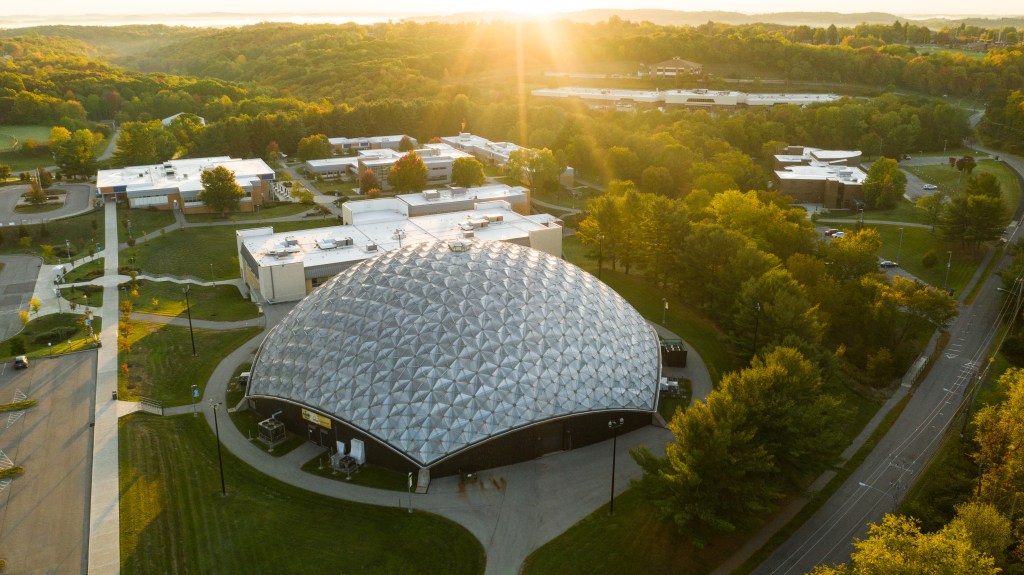
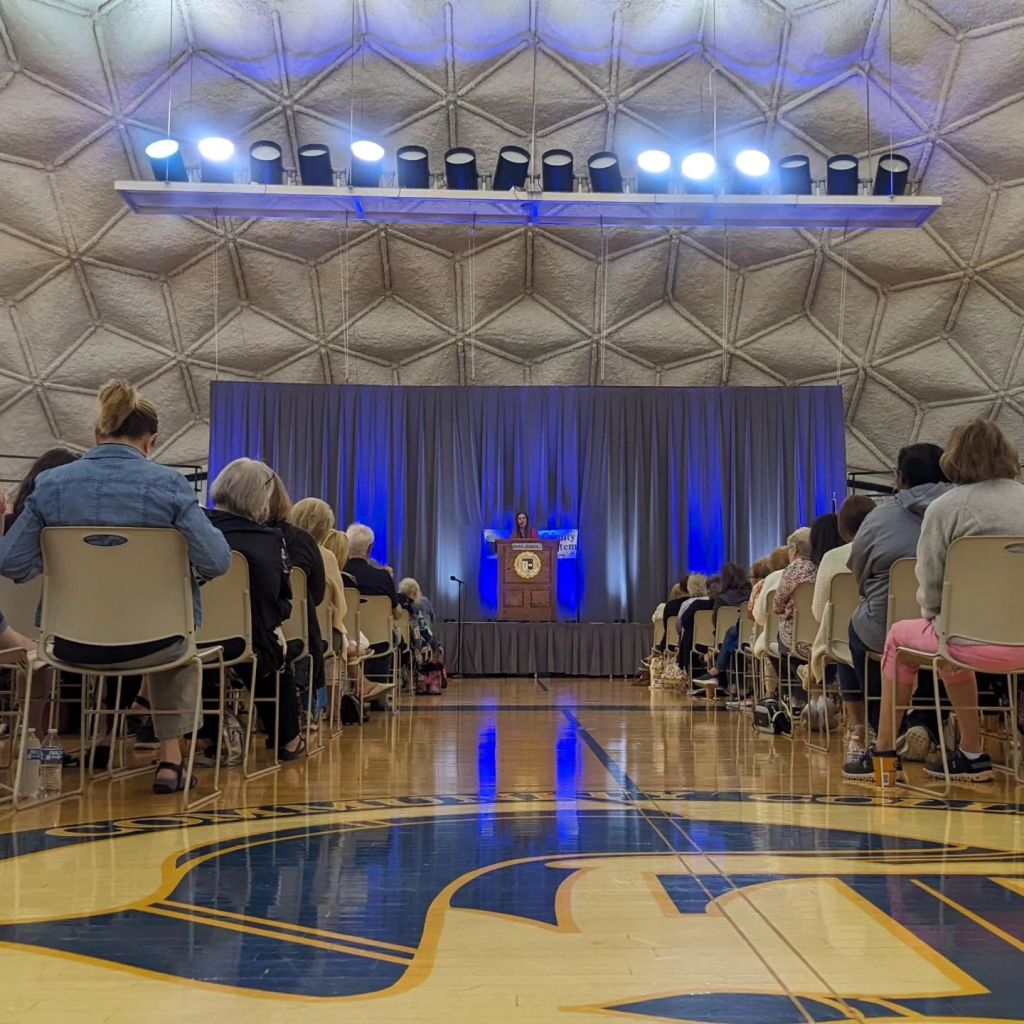
The Library at the CCBC is well positioned to support these efforts, particularly in our partnership with the Beaver County Library System. This partnership offers unique advantages for both our campus and the wider community. Just last week, this partnership brought about a literary event: “An Evening with Marie Benedict”. This evening brought together students, employees with over 200 avid readers from our county community for a celebration of history and literature. Leading up to the visit, ‘Book Pairing Events’ such as crafting nights and history seminars were held around the county and advertised on our campus. The evening event was initially scheduled for one of our lecture rooms but, within weeks, registration exceeded capacity. Our partnership allowed us to transition to the use of our “Golden Dome” which can accommodate up to 2,500 attendees.
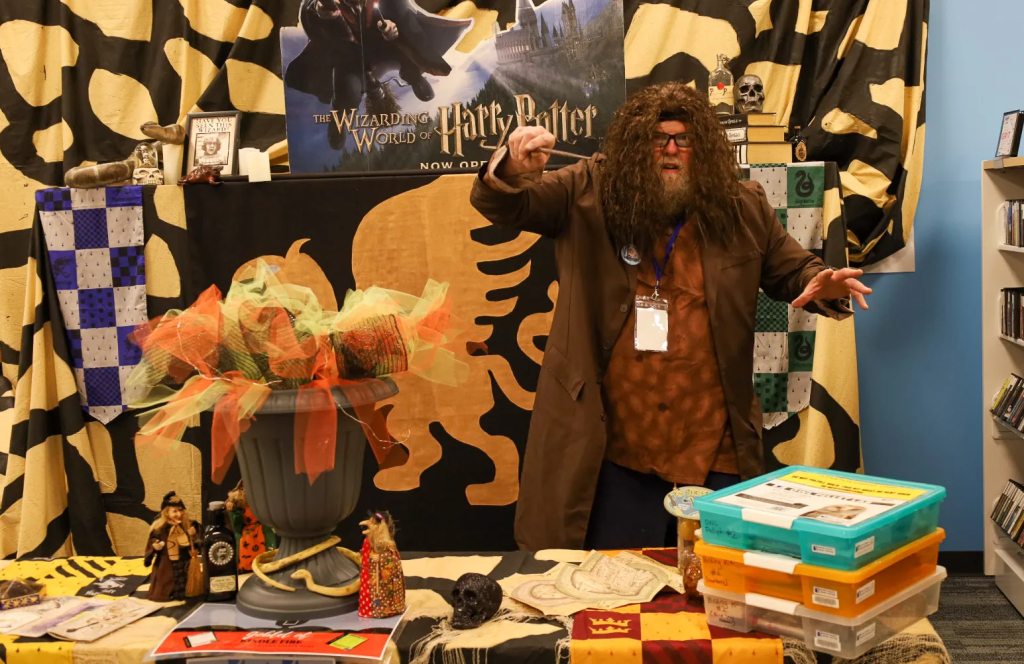
In October, we will join the Beaver County Library System in the space again for the third annual “LibraryCon” on Saturday, October 21! This family friendly event is in the style of a Comic Con and partners with dozens of local parks, museums, vendors, and other organizations to provide an afternoon of free activities and resources for all. Our library space will feature a Tiny Art Gallery, tours of our space, and a quiet room with therapy bunnies!
This partnership has fostered incredible opportunities for growth, education, and enhancing the sense of community county-wide. I’d love to learn of other academic library partnerships and the unique benefits they’ve brought to other campuses. Please share your stories!
The “Golden Dome” at CCBC
“An Evening with Marie Benedict”
Previous LibraryCon setup at the CCBC library!
Digging into student employees’ expectations of their supervisors
By: Kim Karim
In a supervisor and employee relationship, understanding the expectations that each party has is crucial to a healthy working environment. Working in the realm of academia, it can be tough to connect with student employees, especially since their job as a library assistant is only one small aspect of their overall journey on the path to graduation.
To make my student circulation assistants’ experiences meaningful and fulfilling, I felt it was important to lay out expectations they had for myself and our Head of Access Services during the student training sessions we hold at the beginning of our fall semester. While I am directly responsible for the supervision of the circulation assistants, our Head of Access Services supervises our evening proctors, which was transitioned from an outside-hire position to a student-led position within the last few years.
We asked students during the first day of our training to list up to three expectations they had for their peers and three they had for their supervisors. Their answers are listed below and give an insight into the kind of leadership they are looking for when it comes to doing their job successfully:
- Communicate about library events and any important information students need to know. Continue with the weekly updates (a weekly email sent out to circulation students and proctors.)
- Give us opportunities to build trust, listen to student ideas, and treat all students equally.
- Be respectful and understanding about our needs and issues.
- Continue being nice.
- Give frequent feedback – good or bad – on job performance. Be consistent with rules.
- Help manage conflict if needed or help if someone hasn’t showed up to take over the next shift.
This year marked the second time we have held our fall training sessions, and the feedback listed above is fairly like what we heard in 2022. Students appreciate being kept in the loop of library events, and rightfully so as they are the first point of contact for our patrons.
I firmly believe that being a supervisor of college student employees goes well beyond being able to teach them library policies and procedures. It is often being a mentor or lending a listening ear on their bad days. Giving students space to be themselves, while also making sure library tasks are completed efficiently and properly. This balance can be tough to navigate, but at our library, students often say this is their favorite place to work and in general be on campus.
Have you held a similar activity with your student employees? If so, share your feedback! I’d love to read what students are saying in your library.
Experimenting With Popular Media: Using Short-Form Videos on Social Media to Market Reference Services
A new academic year offers an opportunity to try something new for students, faculty, and librarians alike. One of the new things going on around W&J and our library is a new strategy for marketing our reference services using short-form videos on social media. Short-form videos are videos created for social media that are typically no more than 60 seconds long (Oladipo, 2023). Since we are currently only using Meta platforms (Facebook and Instagram), our limit is 90 seconds. Short-form video has become the dominant form of social media content on a number of platforms since the explosion of TikTok’s popularity in 2020. So why is it noteworthy that we are catching up with the times and following in the footsteps of other very creative and successful library and cultural heritage social media accounts?
Our goal for this new strategy is to boost our reference engagement. We discuss how students can get help from a librarian and what a librarian can help students with during our instruction sessions and other events such as our orientation welcome sessions. However, our reference usage statistics remain below pre-pandemic levels. Our hope is that by meeting students where they are in the format they have come to prefer, in addition to our other efforts, they will internalize the information and start reaching out to the library for help in greater numbers. Cheng, Lam, and Chiu (2020) found in their survey of community impressions about the University of Hong Kong Libraries’ Facebook page that students viewed social media content as more helpful than other community members (pp.4-5). Even though the social media environment in Hong Kong is different from that in the United States, Cheng, Lam, and Chiu’s findings are encouraging that there is potential to increase student engagement with library services through social media marketing.
Alvis, Porter, and Ayling (2023) discussed in their RBMS conference panel, “Video Thrilled the Biblio Star: Communicating Rare Books on Video,” how to engage audiences through video content on social media and stressed the role of a central figure to hold viewer’s engagement. To ensure consistency in the central figure regardless of who creates the video for our video series, we are going to use a stuffed cat as our central figure. In addition to bringing a little childhood whimsy to the videos, we are hoping that the cat will help emphasize the simplicity of using library services. We are currently planning to have videos about how to use the Library’s chat reference, make an appointment with a librarian, and generally how librarians can help with research.
Have any of you tried similar strategies for marketing your reference services? What was the experience like? Please share in the comments!
References
Alvis, A., Porter, D., Ayling, T. (2023, June 30). Video Thrilled the Biblio Star: Communicating Rare Books on Video [Paper Panel]. RBMS: A new kind of professional, Indiana University – Bloomington/Hybrid, Bloomington, IN, United States.
Cheng, W.W.H., Lam, E.T.H., Chiu, D.K.W. (2020). Social media as a platform in academic library marketing: A comparative study. The Journal of Academic Librarianship, 48(5), 1-8. https://doi.org/10.1016/j.acalib.2020.102188.
Oladipo, T. (2023, May 30). Ask Buffer: What is Short-Form Video, and How Can You Use It?. Buffer. https://buffer.com/resources/short-form-video/.


 Adam Balcziunas
 Alex K.
 Alexandrea Glenn
 Andrea Pritt
 aprilnkelley
 Ashley Purvis
 Bethann Rea
 blj13
blj13 Brendan Johnson
 Amanda Boyer
 Bret Stiffler
 Bonnie Powers
 Christopher Lemery
 clarewithers
 clblibrarian
 Kelly Clever
 Charlotte M. Johnson
 colemanluzerne
 CRD of PaLA
 crdvirtualjournalclub
 cre5314
 csgarth
 Erin B.
 danajkerrigancv
 denisewetzel1
 Darren G. Poley
 elm43
elm43 James D'Annibale
 Annie Jansen
 Jill Hallam-Miller
 jennifercribbs
 Jenn Monnin
 Jen Hasse
 Jessica Showalter
 johnmeier1
 Kelly Safin
 Kim Karim
 Kristen Seikaly
 Kayla Van Osten
 Cecelia Lasley
 librarianjsmith
 Linda Neyer
 mabogino1
 Matthew McNelis
 Meg Massey
 Maggie Savidakis-Dunn
 Rebecca
 miskatoniclibrarian
 Maureen Bentz
 Michele G. Anfuso
 Nicole Miyashiro
 paulmcmonigle
 Rob Sieczkiewicz
 ronlmccoll
 Sam Bardarik
 shannahollich
 smartin592
 Ula Lechtenberg
 It's Academic