Bloggers Wanted for 2024!
The PaLA College & Research Division (CRD) is looking for anyone interested in contributing to the CRD blog, It’s Academic. So if you’ve been reading the blog, now is your chance to join and share some of your own ideas. We welcome new and experienced bloggers, those who want to contribute frequently, or those who would rather only post a few times a year. Contributing to the blog is a great way to get started writing about academic library topics of interest to you, to call attention to worthwhile ideas, or to publicize important events. A blog post can also be a great way to start writing about an idea that may eventually turn into more formal scholarly writing.
Interested?
Send an email to Alexander Kirby at akirby@pennhighlands.edu. Please include how frequently you would like to contribute to the blog (once a month, twice a semester, etc.) and any scheduling issues you foresee so we know when is a good time to put you on the calendar. If you have any questions, include them in your email.
PaLA – Southeast (SEPLA) Chapter Workshop – Sign-up Today!
Please join us on Friday, Dec. 1st at Upper Dublin Library from 9:15am – 3:00pm for: 2023 SEPLA Annual Meeting & Workshop: Exploring Artificial Intelligence in Pennsylvania Libraries.
Keynote Session: Artificial Intelligence in Libraries
Keynote Speaker: Jim Craner (he/him) is a library technologist with The Galecia Group where he helps libraries adopt and implement modern technology tools. With over twenty-five years of experience as a consultant, system administrator, software developer, and technology trainer, Jim brings an engaging and interactive training style to all of his events.
Click here for a full agenda. The day will also include:
- An intro to AI from a technology expert
- A panel of school, academic, and public librarians discussing AI usage
- Afternoon roundtables that allow for hands-on AI use and discussion of other hot library topics, such as intellectual freedom
- The opportunity to obtain several hours of CE credits
- A delicious box lunch is included in the price, along with the chance to socialize and network with colleagues – an amazing value!
- Raffles prizes!
- Not just a learning opportunity – this event financially supports the important work of the SEPLA chapter (PALS sponsorship, Awards, and more)
INVESTMENT: $45 PaLA Member | $50 Non-MemberREGISTER: https://www.palibraries.org/event/2023SEPLAWS
We can’t wait to see you there!
******************************
Special Offer for SEPLA Annual Meeting Attendees: 20% discount on library tech training offerings from the Galecia Group in 2024, covering artificial intelligence and more. To redeem, email Lori Ayre at lori.ayre@galecia.com
******************************
This message has been sent on behalf of the 2023 SEPLA Annual Meeting Workshop Committee
******************************
This project is made possible by a grant from the Institute of Museum and Library Services as administered by the Pennsylvania Department of Education through the Office of Commonwealth Libraries, and the Commonwealth of Pennsylvania, Josh Shapiro, Governor.******************************
Support is also provided by the College and Research Division of the Pennsylvania Library Association. https://crdpala.org/
Ready-To-Hand AI
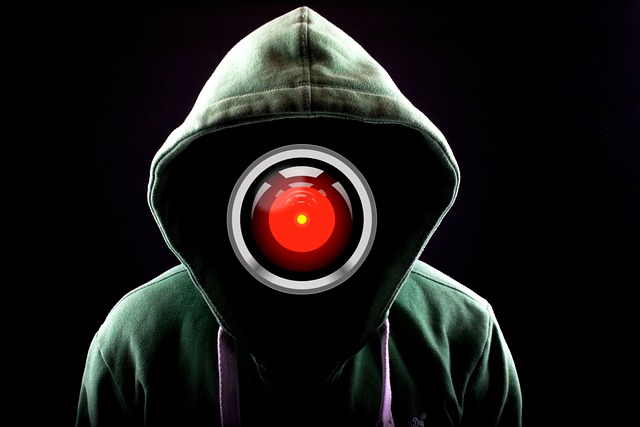
Perhaps some of you are like me and remember how the hero in the movie “WarGames” saved the day when he initiated that the supercomputer the North American Aerospace Defense Command (NORAD) had set-up to override the human factor and which could launch an all-out counterattack, the WOPR (War Operation Plan Response, pronounced “whopper”), play through on its own all of the “intelligent” scenarios of Tic-Tac-Toe and “learn” the futility of waging a nuclear war.
Interestingly an earlier form of machine learning MENACE, a backronym for Matchbox Educable Noughts And Crosses Engine, was a likely inspiration for this climatic plot twist. Noughts and Crosses is what the British call Tic-Tac-Toe, and MENACE was invented in the 1960s by British scientist Donald Michie, who set out to develop a trial-and-error device for the mechanization of game-learning. “Menace: the Machine Educable Noughts And Crosses Engine: Teaching a bunch of matchboxes how to play tic-tac-toe” is a brief article about how it works. If you want to play it virtually, go here: https://www.mscroggs.co.uk/menace/.
About a decade after “WarGames,” however, philosopher Hubert Dreyfus updated an earlier work of his which he titled What Computers Still Can’t Do, and in it he describes the four types of intelligent activity. Each one seemingly building on the lower level. He wrote, “Area IV might be called the area of nonformal behavior.” He goes on to say, “This includes all those everyday activities in our human world which are regular but not rule governed. The most striking example of this controlled imprecision is our disambiguation of natural languages. This area also includes games in which the rules are not definite, such as guessing riddles. Pattern recognition in this domain is based on recognition of the generic, or of the typical, by means of a paradigm case. Problems on this level are open structured, requiring a determination of what is relevant and insight into which operations are essential, before the problem can be attacked. Techniques on this level are usually taught by generalizing from examples and are followed intuitively without appeal to rules” (Dreyfus 293-94).
Well, the development of machine learning has come a long way since the mid to late twentieth century, or has it? Dreyfus’ critique describes the impediments thus far to artificial intelligence in three ways. Computers cannot be programed to recognize “the global organization and indeterminacy which is characteristic of perception and embodied skills” … “What is being asked for is a way of dealing with the field of experience before it has been broken up into determinate objects, but such preobjective experience is, by definition, out of bounds for a digital computer” (Dreyfus 296-97). A computer cannot create a set of needs that requires discernment of essential and inessential data during the creative act of looking at a problem which exhibits “the flexibility of a human being solving an open structured problem” (Dreyfus 298-99). “Since computers are not in a situation” they also fail to know and understand the world except as data; “whereas human beings organize the world in terms of their interests so that facts need be made explicit only insofar as they are relevant” (Dreyfus 299-300).
Artificial intelligence and its utility are now being hotly debated because these limits still exist and AI tools for writing, productivity, design, image generation, and more have become mainstream. Whatever your stance on whether computers can truly learn, the ethical use of such tools is an important ongoing discussion. Therefore, it is imperative to have some understanding of what’s out there. Here is a list of 100 AI tools in a variety of categories.
Connect & Communicate Presents: “Engagement & Community Among Student Workers: A Library Success Story”
Presented by
Kim Karim
Tuesday, December 5, 2023 at 3:00 pm
Student library employees, specifically circulation desk or similar help desk workers, go through the mundane task of sitting at their assigned desk, waiting to help patrons. This waiting game can often leave students feeling undervalued in their positions and can create a disconnect in the services libraries attempt to provide. This presentation will examine how our library bridged the gap between having little to no engagement or connection among student workers to changing not only the culture of the workplace but also the environment in the entire library. Examples of past initiatives will be examined, as well as ideas currently in place and how our student employees have grown in their passion for working at our academic library.
Kim Karim is the Library Services Specialist at John G. Snowden Memorial Library at Lycoming College in Williamsport, Pennsylvania. Kim’s main responsibilities include supervising the Circulation desk, carrying out library procedures and policies, and managing student employees. In addition, she coordinates and maintains use of library facilities by serving as the primary liaison to the campus community.
We will mute participants on entry into the Zoom room. Session will be recorded and available on YouTube after the session. We will enable Zoom’s Live Transcription feature during the session.
If you would like to present with C&CS, please contact the C&CS team.
This project is made possible by a grant from the Institute of Museum and Library Services as administered by the Pennsylvania Department of Education through the Office of Commonwealth Libraries, and the Commonwealth of Pennsylvania, Josh Shapiro, Governor.
Support is also provided by the College and Research Division of the Pennsylvania Library Association.
Preparing of Uncertain Times
I am almost halfway through my first full semester as a health sciences librarian and I have really enjoyed it. This semester has also been the start of Academic Transformation at my university. This is the term used to describe cuts to programs, faculty, and academic support units (such as the library) to realign the university mission and close the gap in a $45 million dollar deficit. The library is restructuring as part of this plan and with the uncertainty around the future, I have started to think about how I can prep for next semester. I have decided to focus on six areas that will (hopefully) ease some of the unknown.
Saying “No”: Easier said than done
I rarely say no to things; I love jumping in and doing everything I can but I also know that it’s not always the best thing for me. So first thing first, I’m (attempting to) adding “no” to my vocabulary when I feel I am at or reaching my capacity. What can “no” look like? Committees, last minute one-shots or faculty assistance, being selective with long term projects. I have many ideas and goals for the future but being selective is important.
LibGuides: Edit and forget it (for the semester)
I like to customize certain aspects of my LibGuides but I also have adapted the “one guide to rule them all” methodology a colleague shared with me. I created a master guide that includes basic information about the library, research, etc. and then plugged it in to each guide before adding any customizations. I love adding more visual and interactive elements to them and I am in the process of wrapping a few of those up. I have spent the last few weeks making other changes as well and plan to not make any additional changes until next summer. Of course, anything glaring or requests from faculty to add or adjust areas will be accommodated but I do not need to spend more time for diminishing returns.
Planning Ahead: Prepping emails and schedule blocks
Now that my semester has slowed down, I am drafting spring emails for departments to remind them of updated materials, library changes, and that I am available to come to their classes next semester. If they schedule with me now, I can get those slides ready sooner. I want to also block my calendar out now, so when I have a busy week, I can still get my must-do’s done on time.
Workshops: Instruction never stops
I asked myself earlier in the year how I could contribute to our library workshops. And I landed on taking over Tableau for beginners from a colleague who no longer does instruction as part of her job. I do not know Tableau currently but will learn the software over the next few months.
Professional Development: Where there’s a webinar, there’s a way
There’s aspects of health sciences librarianship that are new to me. One of those areas is systematic review searches and evidence synthesis work. I have not done expert searching before but I am focused on developing these skills. In addition to this work I am looking for free to low cost webinars, conferences, and organizations to get involved with. The reality for most is that conferences are expensive and having alternatives allow for the ability to continue to grow professionally without the high cost barrier. Additionally I will need to accept that I have to get outside my comfort zone and present something if I want to attend a larger conference.
Goals: Are flexible
When I started my job I wrote down goals for the year. I also write goals for each month. As I settled into my position, I have evolved, as well as my goals. This is the notebook I turn to when I’ve had a bad day and see everything I’ve accomplished and how I can adapt and move forward. And most of the time it’s not about moving forward, it’s about appreciating I can do things. I can be hard on myself and having a visual record of accomplishments helps me get over moments of imposter syndrome and give me a boost of self confidence.
In the next few weeks I will find out what next semester will look like from a library standpoint. Everyday brings a new perspective and a new wave of emotions. I enjoy my job and had a really good semester; however it’s also been painful and at times full of anger. The prep I’m doing now gives me peace of mind and is something my future self will hopefully thank me for. I continue to look for more ways to streamline my process and hope that this list will be of use to you. Libraries are a space for collaboration and I look forward to seeing what others do to help them do more with less. What are ways that you like to prep? Feel free to drop suggestions in the comments.


 Adam Balcziunas
 Alex K.
 Alexandrea Glenn
 Andrea Pritt
 aprilnkelley
 Ashley Purvis
 Bethann Rea
 blj13
blj13 Brendan Johnson
 Amanda Boyer
 Bret Stiffler
 Bonnie Powers
 Christopher Lemery
 clarewithers
 clblibrarian
 Kelly Clever
 Charlotte M. Johnson
 colemanluzerne
 CRD of PaLA
 crdvirtualjournalclub
 cre5314
 csgarth
 Erin B.
 danajkerrigancv
 denisewetzel1
 Darren G. Poley
 elm43
elm43 James D'Annibale
 Annie Jansen
 Jill Hallam-Miller
 jennifercribbs
 Jenn Monnin
 Jen Hasse
 Jessica Showalter
 johnmeier1
 Kelly Safin
 Kim Karim
 Kristen Seikaly
 Kayla Van Osten
 Cecelia Lasley
 librarianjsmith
 Linda Neyer
 mabogino1
 Matthew McNelis
 Meg Massey
 Maggie Savidakis-Dunn
 Rebecca
 miskatoniclibrarian
 Maureen Bentz
 Michele G. Anfuso
 Nicole Miyashiro
 paulmcmonigle
 Rob Sieczkiewicz
 ronlmccoll
 Sam Bardarik
 shannahollich
 smartin592
 Ula Lechtenberg
 It's Academic