Five Tips for Letting LibGuides be Your “Voice”
Your library’s LibGuides are an intricate part of your advertising scheme to attract and disseminate information for your students. In the Springshare’s October 2018 issue of SpringyNews, the author offers five creative pointers for making your library’s LibGuides proactive in drawing the attention of your students. Refine your ‘voice’ and let your LibGuides do the talking for you!
The first tip is not to come across as a salesperson with a crafty pitch about how awesome the library’s resourceful tools and programming can be for its patrons. This can dissuade your students from wanting to delve any further into what the library has to offer and that necessary human connection can be lost. Instead, weave your LibGuides into a story of how you personally discovered a problem and the action you took to fix it. Was your library’s website not accessible? Did your library not offer adequate interlibrary loan services? When you discover a problem which your students are encountering, you can construct a LibGuide which helps to explain the problem, showcases the steps taken by the library to address the issue, and also provides context by conveying just why it was in need of resolution. Further, you can promote your library by putting the spotlight on your students, especially if your library was significant in assisting that student with an obstacle or question. Create a LibGuide which capture’s the attention of your audience with an engaging narrative that communicates the feelings and emotions which the patron felt. These measures will open the receptivity of your patrons and will come across as being more genuine and less cold.
The second tip is to make sure your LibGuides URLs are as descriptive as possible, and not as short as possible. Shorter is not necessarily better. There can be a tendency to think that in order for the URL to be friendlier to use, it has to be shorter, right? The answer is no. Web resources are much more likely to be clicked on when patrons can decipher what the website contains via the URL. Therefore, keyword use in a URL is a ranking factor! Try these five tips for creating descriptive-friendly URLs:
- Match your URL to the title of the LibGuide.
- Omit stop words: and, or, the, but, of, a
- Use dashes (-) and not underscores (_) to separate your keywords.
- Always use lowercase.
- To avoid making your URL appear spam-ish, omit keyword repetition.
Location is the third tip for spicing up your LibGuides. Be where your students are, whether that be inside Blackboard, Canvas, or Desire2Learn. Put your content where students will not overlook it! Students are going to spend a good chunk of time each week looking through their courseware tools. What better way to catch their attention than by creating LibGuides for their particular courses to appear right as they log in to their courseware tool page?
Who is reading your LibGuides blog? Did you know that there is a way to track the actual individuals who are subscribed (and who are not subscribed) to your blog? Knowing this information is helpful in tailoring your blog posts and delivery. Springshare gives the following instructions on how to retrieve this information:
From inside your LibGuides Blog (either at the guide-level or the system-
wide level) go to Blog Management > Subscribers > Export the List of
Subscribers.
Lastly, the fifth tip to making your LibGuides pop is to create a “#TrendingNow” LibGuides widget. Your students are far more likely to delve into material if the subject matter is current and relevant to them. Do not make the topic too broad, such as a popular music LibGuide, but rather take a current trending album and break it down. Obviously, these #TrendingNow LibGuides will have a relatively short shelf life, so use tags to organize these particularly “in-the-moment” guides. Once they are considered “old news,” just simply remove the tag. Additionally, you can display all of your #TrendingNow LibGuides in one place by creating a guide widget. Follow these steps:
Log in to LibGuides > Tools > Widgets > Guides > filtered on tag =
TrendingNow > change sort order to Date Published (newest first).
Embed this #TrendingNow widget on your library’s homepage, blog, and LibGuides A-Z list!
“5 Tips for Letting LibGuides be Your ‘Voice'” is from the October 2018 newsletter for Springshare.
Only two days left to apply for the Pennsylvania Library Association Mentorship Program

Are you an early- or mid-career library professional looking for tips about professional growth and career planning? Or are you an experienced librarian looking for an opportunity to reflect on your career, share insight, and give back? The Pennsylvania Library Association Mentorship Program can help.
“This is an amazing program, and participating is a membership benefit of the Pennsylvania Library Association,” said Adam Haigh, Technology Librarian of the Lower Merion Library System. Haigh co-created the pilot of the mentorship program as part of the Pennsylvania Library Association Academy of Leadership Studies (PALS) in 2016 and served as a mentor last year.
“One of the unique aspects of this program is that it is mentee-driven. We encourage mentees to consider what they are hoping to get out of the program and take the initiative based on their individual goals,” Haigh added. “Mentors can serve as sounding boards for those new to the profession or for mid-career librarians seeking to take the next step in their professional development.”
The program is still accepting applications from mentees and mentors. Please register here by December 1. Applicants must be members of the Pennsylvania Library Association. There is no fee for participating in the program.
Mentees will have the opportunity to select a mentor from a list of mentor profiles in December. The program will begin in January 2019 and continue through September 2019. Discussion topics might include a review of the mentee’s resume and cover letter, new trends in technology, tips for managing conflict in the workplace, involvement in Pennsylvania Library Association, and more.
“Our hope is that participants will develop relationships with library leaders across the state that will last longer than the 9 months,” said Haigh. “The mentorship program is just the start.”
The Pennsylvania Library Association Membership Committee and Mentorship Subcommittee coordinate the program. For more information, contact palamentorship@gmail.com.
Jessica Showalter is an Information Resources and Services Support Specialist at Penn State Altoona’s Eiche Library. Say hello on Twitter @libraryjms
New issue of Pennsylvania Libraries: Research and Practice available
The latest issue of Pennsylvania Libraries: Research & Practice is now available at palrap.org
Articles include:
- In the PaLRaP Spotlight: Ann L. Kemper
- It’s Not Just for Public Libraries: An Academic Library’s Journey to Become a PA Forward Star Library
- Rethinking Computational Thinking for Public Libraries’ Youth Programs: Challenges and Recommendations
- Campus Clue: Habituating Students to the Information Search Process via Gaming
- Leveraging Citation Management Software (CMS) for Broad Library Impact
- Overcoming Challenges to Critical Information Literacy: Primary Source Analysis as Consciousness-Raising
- News Briefs from PA Libraries
Tom Reinsfelder & Larissa Gordon, Co-Editors
===========================================================================
Pennsylvania Libraries: Research & Practice (PaLRaP) is a peer-reviewed, open access journal, sponsored by the College and Research Division of the Pennsylvania Library Association. PaLRaP provides an opportunity for librarians in Pennsylvania to share their knowledge and experience with practicing librarians across Pennsylvania and beyond. The journal includes articles from all areas of librarianship, and from all types of libraries within Pennsylvania.
C&CS with Carmen Cole and Joslenne Peña, Code For Her: Reimagining Computing Education for Academic Library Outreach on Dec 5, 2018
Join the Connect and Communicate series on
December 5, 10 am EST
for
Code for Her: Reimagining Computing Education for Academic Library Outreach
Presented by Carmen Cole and Joslenne Peña
Register here for the Zoom link!
Currently, there are few opportunities for Penn State affiliates to learn computer programming skills in a non-credit bearing, cost-free learning environment purposefully targeted towards underrepresented populations in tech. In spring 2018, the Penn State University Libraries piloted Code for Her, a beginner coding workshop series targeted to female and gender-diverse individuals. Through hands-on learning, Code for Her workshop participants gain the confidence to pursue future self-education with a foundational knowledge of HTML, CSS, and JavaScript in a supportive, empowering environment.
Attendees will learn about the highly successful pedagogical method of “code dissection” utilized for Code for Her and the resulting learning gains achieved, as well as the additional active learning methodologies employed by the instructors. Presenters will also introduce qualitative research findings and reflections from workshop participants on the Code for Her learning environment and their attitudes towards programming.
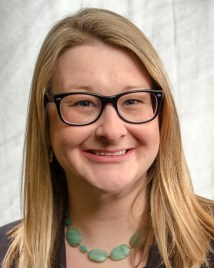 Carmen Cole is the Sally W. Kalin Librarian for Learning Innovations and Information Sciences & Business Liaison Librarian for the Penn State University Libraries. She holds a MSLS from Clarion University of Pennsylvania and an MFA from Bowling Green State University. Carmen has presented at PaLA, ALA Midwinter and Annual conferences, IFLA, and Women Advance I.T. She is the founder of Code for Her.
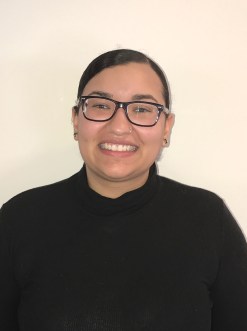
Joslenne Peña earned her MS in Information Sciences and Technology in 2015, and is a PhD candidate in Informatics at Penn State. She recently completed a one-year internship as a Research Associate in Human-Centered Systems at Honeywell Aerospace. Joslenne has presented at the iConference (2018 and 2016), ACM Technical Symposium on Computer Science Education, ACM Richard Tapia Celebration of Diversity in Computing, Grace Hopper Celebration of Women in Computing, and EDULEARN. She is the Coding Workshop Consultant for Code for Her, and has previously taught coding for iD Tech and the iTech Academy.
C&CS rescheduled for Nov 19 at 1pm
Our session, Deconstructing Environmental Bias will be next week, Monday at 1pm. We still have some space if you’d like to join us for the session. Information about it is in the previous blogpost located here: https://crdpala.org/2018/11/05/ccs-presents-deconstructing-environmental-conflict-bias-news-perspective-nov-15-at-1pm-est/
We look forward to seeing you then!


 Adam Balcziunas
 Alex K.
 Alexandrea Glenn
 Andrea Pritt
 aprilnkelley
 Ashley Purvis
 Bethann Rea
 blj13
blj13 Brendan Johnson
 Amanda Boyer
 Bret Stiffler
 Bonnie Powers
 Christopher Lemery
 clarewithers
 clblibrarian
 Kelly Clever
 Charlotte M. Johnson
 colemanluzerne
 CRD of PaLA
 crdvirtualjournalclub
 cre5314
 csgarth
 Erin B.
 danajkerrigancv
 denisewetzel1
 Darren G. Poley
 elm43
elm43 James D'Annibale
 Annie Jansen
 Jill Hallam-Miller
 jennifercribbs
 Jenn Monnin
 Jen Hasse
 Jessica Showalter
 johnmeier1
 Kelly Safin
 Kim Karim
 Kristen Seikaly
 Kayla Van Osten
 Cecelia Lasley
 librarianjsmith
 Linda Neyer
 mabogino1
 Matthew McNelis
 Meg Massey
 Maggie Savidakis-Dunn
 Rebecca
 miskatoniclibrarian
 Maureen Bentz
 Michele G. Anfuso
 Nicole Miyashiro
 paulmcmonigle
 Rob Sieczkiewicz
 ronlmccoll
 Sam Bardarik
 shannahollich
 smartin592
 Ula Lechtenberg
 It's Academic