Preparing Tomorrow’s Scholars
As the Electronic Resource and Interlibrary Loan Librarian, I find myself being ghosted a lot. And when I say “ghosted” I mean ghost citations and other AI hallucinations. When I receive an interlibrary loan request (ILL), I always check the citation first for accuracy. Thankfully, 98% of the time, these are correct and I can proceed with the request. The other 2%? That’s where the ghosts come in.
I’m thankful that ghost citations are not a huge problem at my university, however I see the potential for a host of problems in the academic world. Over 10,000 peer-reviewed research papers were retracted due to AI fraudulency in 2023 alone (Yates, 2025). If a trained researcher is having a hard time distinguishing real or fake information, how is a college student, new to research, going to know what to look for? This is where academic librarians come in to save the day. I like to think we have cool capes.
The world of research integrity is under attack from many fronts; we all see it in our everyday jobs. Students are turning to AI to make their lives easier. Research faster. But, as information professionals, we need to teach them that easier and faster isn’t always going to give them the result they’re looking for, or at least what their professors want. Going to college offers students the opportunity to be open to critical and creative thinking. AI tends to dampen that. A study out of MIT shows that 83% of students who use AI to help write their papers don’t remember what they read or wrote, because they lacked engagement in the assignment (More Curricular, 2025).
This next generation of students needs to be critical and creative thinkers, or the robots we fear may rule the world someday win. We are human. And humans need to use our brains. Tease out the next problem. Understand how to fix global warming. Machines are not going to sustain us. Only our living brains will. I imagine our world becoming like the fictionalized story in Wall-E (which is my favorite Disney movie). That story has the potential to come true, and that should scare us. Living in a garbage infested environment. No trees, no plants. Living on a “cruise ship” in outer space. Those people can’t even walk because they don’t use their muscles. Seem familiar? We can use machines to help. To aid us. But they should always be secondary to human thoughts, emotions, and creativity.
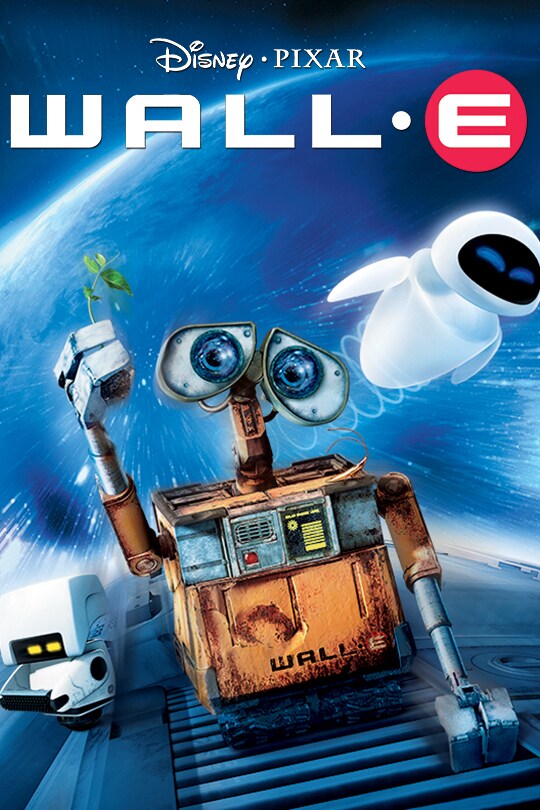
I’ll leave you with this. We are at a precipice. We have the potential to impact generations to come. Why leave that to a machine? Teaching our current students that they have the power to become amazing researchers, doctors, lawyers, scientists. To use the beautiful brains we’ve been given. What a waste to let AI “do the work.” Teach our students to do the work. To understand, to challenge what has and is being done. That’s where innovation lies. Let’s feed motivation to our students and give them practical tools to use in the real world. Put on those librarian capes, challenge your students and watch Wall-E.
References
More Curricular (2026). The memory gap: why 83% of students can’t remember what they wrote with AI. https://www.morecurricular.co.uk/post/the-memory-gap-why-83-of-students-can-t-remember-what-they-wrote-with-ai
Yates, K. (2025). Citation cartels, ghost writing and fake peer-review: fraud is causing a crisis in science–here’s what we need to do to stop it. Live Science. https://www.livescience.com/human-behavior/citation-cartels-ghost-writing-and-fake-peer-review-how-fraud-is-causing-a-crisis-in-science-and-what-we-can-do-about-it-opinion