Ready-To-Hand AI
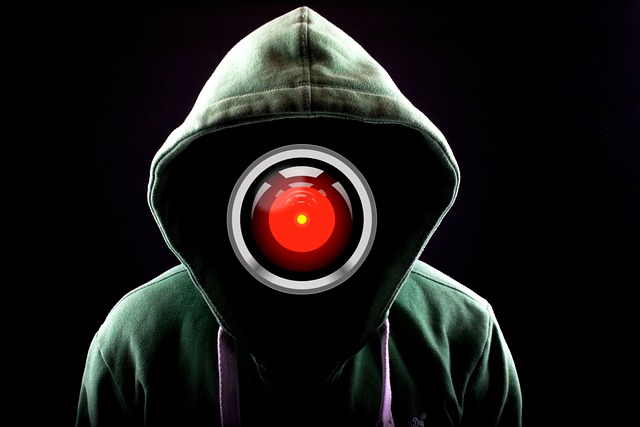
Perhaps some of you are like me and remember how the hero in the movie “WarGames” saved the day when he initiated that the supercomputer the North American Aerospace Defense Command (NORAD) had set-up to override the human factor and which could launch an all-out counterattack, the WOPR (War Operation Plan Response, pronounced “whopper”), play through on its own all of the “intelligent” scenarios of Tic-Tac-Toe and “learn” the futility of waging a nuclear war.
Interestingly an earlier form of machine learning MENACE, a backronym for Matchbox Educable Noughts And Crosses Engine, was a likely inspiration for this climatic plot twist. Noughts and Crosses is what the British call Tic-Tac-Toe, and MENACE was invented in the 1960s by British scientist Donald Michie, who set out to develop a trial-and-error device for the mechanization of game-learning. “Menace: the Machine Educable Noughts And Crosses Engine: Teaching a bunch of matchboxes how to play tic-tac-toe” is a brief article about how it works. If you want to play it virtually, go here: https://www.mscroggs.co.uk/menace/.
About a decade after “WarGames,” however, philosopher Hubert Dreyfus updated an earlier work of his which he titled What Computers Still Can’t Do, and in it he describes the four types of intelligent activity. Each one seemingly building on the lower level. He wrote, “Area IV might be called the area of nonformal behavior.” He goes on to say, “This includes all those everyday activities in our human world which are regular but not rule governed. The most striking example of this controlled imprecision is our disambiguation of natural languages. This area also includes games in which the rules are not definite, such as guessing riddles. Pattern recognition in this domain is based on recognition of the generic, or of the typical, by means of a paradigm case. Problems on this level are open structured, requiring a determination of what is relevant and insight into which operations are essential, before the problem can be attacked. Techniques on this level are usually taught by generalizing from examples and are followed intuitively without appeal to rules” (Dreyfus 293-94).
Well, the development of machine learning has come a long way since the mid to late twentieth century, or has it? Dreyfus’ critique describes the impediments thus far to artificial intelligence in three ways. Computers cannot be programed to recognize “the global organization and indeterminacy which is characteristic of perception and embodied skills” … “What is being asked for is a way of dealing with the field of experience before it has been broken up into determinate objects, but such preobjective experience is, by definition, out of bounds for a digital computer” (Dreyfus 296-97). A computer cannot create a set of needs that requires discernment of essential and inessential data during the creative act of looking at a problem which exhibits “the flexibility of a human being solving an open structured problem” (Dreyfus 298-99). “Since computers are not in a situation” they also fail to know and understand the world except as data; “whereas human beings organize the world in terms of their interests so that facts need be made explicit only insofar as they are relevant” (Dreyfus 299-300).
Artificial intelligence and its utility are now being hotly debated because these limits still exist and AI tools for writing, productivity, design, image generation, and more have become mainstream. Whatever your stance on whether computers can truly learn, the ethical use of such tools is an important ongoing discussion. Therefore, it is imperative to have some understanding of what’s out there. Here is a list of 100 AI tools in a variety of categories.


 Adam Balcziunas
 Alex K.
 Alexandrea Glenn
 Andrea Pritt
 aprilnkelley
 Ashley Purvis
 Bethann Rea
 blj13
blj13 Brendan Johnson
 Amanda Boyer
 Bret Stiffler
 Bonnie Powers
 Christopher Lemery
 clarewithers
 clblibrarian
 Kelly Clever
 Charlotte M. Johnson
 colemanluzerne
 CRD of PaLA
 crdvirtualjournalclub
 cre5314
 csgarth
 Erin B.
 danajkerrigancv
 denisewetzel1
 Darren G. Poley
 elm43
elm43 James D'Annibale
 Annie Jansen
 Jill Hallam-Miller
 jennifercribbs
 Jenn Monnin
 Jen Hasse
 Jessica Showalter
 johnmeier1
 Kelly Safin
 Kim Karim
 Kristen Seikaly
 Kayla Van Osten
 Cecelia Lasley
 librarianjsmith
 Linda Neyer
 mabogino1
 Matthew McNelis
 Meg Massey
 Maggie Savidakis-Dunn
 Rebecca
 miskatoniclibrarian
 Maureen Bentz
 Michele G. Anfuso
 Nicole Miyashiro
 paulmcmonigle
 Rob Sieczkiewicz
 ronlmccoll
 Sam Bardarik
 shannahollich
 smartin592
 Ula Lechtenberg
 It's Academic
Nice write up Darren. I’ve been trying to read up on AI but I wasn’t familiar with these ideas.