PA Forward and Academic Libraries
The following blog post is by Debbie Malone, 2012 PaLA President:
The Pennsylvania Library Association’s new marketing and advocacy initiative, PA Forward, is growing, and we want to invite academic libraries to participate more fully. I see this project as a nice companion to ACRL’s Value of Academic Libraries initiatives. PA Forward aims to leverage the power of libraries to build literacy levels and to communicate the importance of libraries.
We are looking for specific examples of academic libraries working with their local communities to advance literacy. For example, DeSales University has partnered with the Southern Lehigh Public Library to provide a series of small group basic literacy workshop on using the Internet and Word processing software, and Bloomsburg University librarians work with local high school teachers and students in a model UN program and a gifted program. I am sure there are many more such interesting projects across the state. Please take a few moments and let me know about your community literacy project. Email me at Debbie.malone@desales.edu or add a comment to this post.
Thanks,
Debbie Malone
Write for Us
 Do you have a topic you would like to address? A story you want to share? A challenge you faced and have a solution for? If you are interested in writing for the CRD Blog, we’d be happy to have your contribution. We are looking for writers from any academic institution in Pennsylvania–university, college, or community college.
Categories about which to write include, but are not limited to the following: academic libraries, assessment, copyright, gaming in libraries, mobile applications, outreach, and technology.
Send us your posts and we will put them on the blog as a guest post. E-mail crdpala [at] gmail [dot] com if you have questions or to send us your post!
Barbara Fister is CRD Luncheon Speaker
As CRD Chair, I’m thrill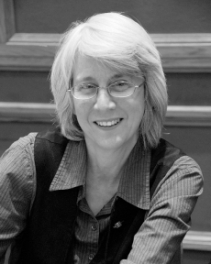 ed that Barbara Fister has agreed to be the CRD Luncheon Speaker at this year’s PaLA Annual Conference. Barbara is a working librarian, coordinating library instruction at Gustavus Adolphus College in MN, with the chops to write and speak on vital topics for higher ed and libraries, including open access, publishing, reading, and learning.
I’m a big fan of Barbara’s writing and regularly read her Inside Higher Ed blog Library Babel Fish, as well as her posts on the LJ Academic Newswire and ACRLog. I’ve shared her webpage written for Gustavus Adolphus faculty with other librarians so many times I’ve lost count, “Seeing the Library from a Student Perspective“, because it’s so spot on. Her writing is thought-provoking and fun to read. And I should also mention that she writes crime fiction (in her spare time), having published three novels: Through the Cracks, In the Wind, and On the Edge. (Makes you wish you could be a student in one of her courses!)
I asked Barbara to talk about what was on her mind at the time of the conference, sort of an “unluncheon” luncheon talk if possible, about those vital topics for higher ed and libraries and to also have fun with her talk. What she came up with hits the mark exactly: “…a mashup of information literacy/student learning things that are on my mind and open access/publishing/technology/copyright and how those things intersect. ”
The title of her talk is “Playing for Keeps: Lifelong Learning in the Ludic Library” (look it up!), which she describes thus:
We take information literacy seriously, yet in a sense, the best researchers are playful. How might concepts of play inform our practice in libraries made for learning? What if we reconceptualized research from the systematic acquisition and use of intellectual property to a more creative and open approach to engaging with ideas in motion? What does it mean to be information literate in a world in which “publish” is a button?
I want to think about what we teach when we say “the truth has lots of footnotes and big words” but really mean “the kind of truth I’m used to working with has lots of footnotes and big words, and it’s not really truth, but it’s the way people like me present it to the world. There’s some good stuff in there, but some of it’s really pretty rubbishy. Let’s think about what makes it good, and how else you might go looking for the truth.” And then not “go to the library and shop for some truth; check the ‘peer-reviewed’ so you get the right ingredients” but “check out the library. A lot of people are making neat stuff in there, and you can too.”
Make a note of Barbara Fister’s CRD Luncheon appearance on your calendar now: Tuesday, October 2, 2012. And be prepared to think while having fun!
by: Tom Reinsfelder, Christina Steffy, and Amy Deuink
Professional development is an important part of the library profession. It’s easy to get caught up in day-to-day tasks, especially at a time when many librarians and libraries are overworked and understaffed. Budget constraints may also limit what it’s possible to do. But making time to communicate and network with our peers can be educational and invigorating.
Attending Local Events
As academic librarians we are a part of larger institutions committed to learning and the exploration of new ideas. It is true that many local events or conferences may not be specifically directed at librarians, but the content is often relevant to our work. Local events provide some of the easiest and most inexpensive ways to take advantage of professional development opportunities and create meaningful partnerships with others. Take a look around and see what is available.
- Attend on-campus events focused on topics such as student development, improving teaching methods, uses of new technology or software, or assessment of student learning. Then find ways to use your new knowledge to improve your library and build connections with others.
- Look beyond your campus, introduce yourself to individuals working at other local libraries (don’t limit yourself to only academic libraries). Attend their events. We can all learn a lot from each other and there is often a significant overlap in the audiences we serve.
State / Regional Events
In addition to local events, it’s also important to attend state and regional events. Joining a local chapter of an organization allows you to meet people outside of your immediate local network. Attending state and regional events allows you to see trends that are occurring outside of your immediate local area, while the information is still targeted to what is happening around you in terms of the economy, budget, and even in terms of local resource sharing opportunities.
Read more…
New Ithaka S+R Research Website/Blog
Ithaka S+R has a new website and blog!
For those of you who have not heard of Ithaka S+R, they are a research and consulting service that helps academic, cultural, and publishing communities in making the transition to the digital environment.
If you have a regular rotation of professional development resources that you read through, you may want to add Ithaka S+R to your list. For example, their most recent post discusses barriers to online learning, a topic relevant to any distance librarian! Furthermore, while this consulting service does not focus exclusively on Libraries and Librarians, we are identified asone of their major constituents. As result many of their reports respond directly to issues of relevance to Academic Librarians.
Read more at: Ithaka S+R Reports for Libraries